Red-foot, Blue-foot, Cocos, Nazca: Tropical seabirds moving into the Pacific Northwest

Red-footed Booby among Heermann's Gulls
Red-footed Booby, thought to be a 2nd year intermediate morph, among Heermann’s Gulls in Port Townsend, WA; August 2024.

There are no Indigenous words for these birds in the Pacific Northwest (PNW).

Sailors called them “boobies,” meaning stupid, because they were unafraid of people. They are large, colorful, tropical seabirds, historically only found at the southern edges of the continental United States – Florida, the Gulf Coast, and (rarely) southern California, to quote from my old 1966 Golden Field Guide, the beige one with the three buntings on the cover. That book only mentions three boobies: Blue-faced (since renamed Masked and now with Nazca split off from it), Brown (now with Cocos split off from it), and Blue-footed. Red-footed was so rare it wasn’t mentioned.

booby page from field guide

Here is the range of the Red-footed Booby, as posted on their Birds of the World species account:
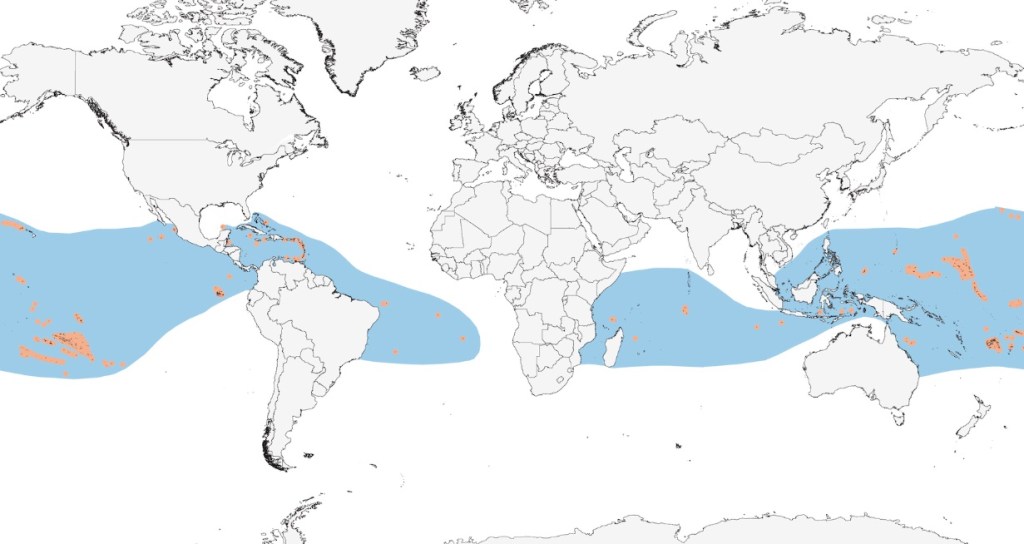
range map of Red-footed Booby

Now, four boobies – Red-footed, Nazca, Cocos, and Blue-footed – are annual in California (where all have been removed from the “review list”) and regular in the Pacific Northwest (PNW, defined here as Alaska, British Columbia, Washington, and Oregon). Prior to the 1980s, the PNW had only a single booby record – a Blue-footed found dead in 1935. Since then, boobies of one species or another have been documented 146 times. 86% of those have been in the last 11 years.

Even adjusting for increased reporting in recent decades, the increase in booby sightings has been among the most hair-raising and mind-boggling developments in the bird world.

Red-footed Booby

The PNW’s first Red-footed Booby was in 2015 in Alaska. Since 2018, they’ve become nearly annual. There are now 13 records:

AK: 6 – Aug 2015; Sept 2015; Sept 2019; June 2021; Sept 2022; Aug 2023

BC: 1 – Sept 2018 

WA: 4 – Sept 2018; Sept 2023; Oct 2023; July 2024

OR: 2 – May 2019; Nov 2019

Red-footed Booby in the PNW graph

The Red-footed Boobies in the PNW most likely emanate from breeding colonies off southern Mexico or the Galapagos. Most were found on vessels far offshore or dead on beaches. The Port Townsend bird represents the most reliable and confiding individual that can be enjoyed by thousands of people.

Most have occurred in August and September, paralleling similar seasonal movements of Brown Pelicans and Heermann’s Gulls, both species which nest primarily in Mexico, migrate up the coast to the PNW in summer, and return in fall. It’s no surprise that Port Townsend’s Red-footed Booby often roosts with several hundred Heermann’s Gulls, its potential traveling companions.

The pattern in California, with a larger sample size, is illustrative of the pattern of increase of boobies into PNW waters. For Red-footed, California’s first record was in 1975. This grew to 19 records by 2012. Since then, they’ve had about 200, including an invasion of 37 birds (though some may involve the same bird moving around) in 2018, the same year the PNW had two. The following year, with 105 records, the California Bird Records Committee removed it from their review list. They now occur regularly, with sometimes dozens of reports each year. These are largely limited to southern California. North of Cape Mendocino, California still has only two records (2021 and 2023).

Red-footed Booby in CA map

Nazca Booby

Split off from the Masked Booby in 2000, many records – and disproportionately older records from before the split and the advent of 400mm lenses – are now treated as Masked/Nazca, as identification cannot be confirmed. Here, I focus only Nazca Booby records, though surely some were around earlier.
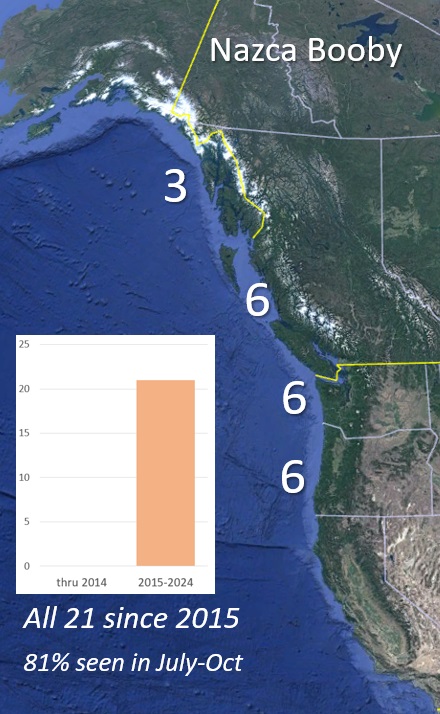
Nazca Booby in the PNW graph

Largely from the Galapagos, the first Nazca Booby in the continental US didn’t occur until one was found dead on Ventura Beach, California in 2013. (This was during the Refugio oil spill. I was involved in the bird injury assessment for the California Department of Fish and Wildlife at the time, and played a small role in this record by ensuring that the carcass was properly examined and identified by Kimball Garrett. The carcass was in poor condition and may have pre-dated the spill.)

Its pattern of occurrence in the PNW is remarkably like that of the Red-footed Booby – the first record was in 2015; it is now nearly annual; and it occurs primarily in late summer and early fall.

AK: 3 – Aug 2017; Sept 2023; Aug 2024

BC: 6 – July 2019; Sept 2020; Feb 2022; July 2022; July 2023; Oct 2023

WA: 6 – Aug 2020, Aug 2022, Sept 2022, Sept 2023, Oct 2023, Feb 2024

OR: 6 – Sept 2015; Sept 2018; Sept 2019; Dec 2021; Feb 2023; Sept 2023

Again, their pattern in California mimics that of Red-footed, with a dramatic increase in records beginning in 2013, a big surge in 2018 (30 records), removal from the review list in 2019, and 20 to 45 birds per year since then, totaling over 150 reports.

Nazca Booby in CA map

Cocos Booby

The Cocos Booby was formerly known as the brewsteri subspecies of Brown Booby. While the Brown Booby occurs worldwide, the form in the eastern Pacific was split off as the Cocos Booby this summer. The name comes from the tectonic plate, as does the impetus for the name of Nazca Booby.

Cocos and Brown Booby range map
Here I’ve annotated their Birds of the World range map with the new Cocos Booby, and I’ve also extended its range based on recent records.

Though the most expected booby on the West Coast, they have still exhibited a dramatic increase in recent years. Before 2006, there were only 96 records in California and 8 in the PNW.

Cocos Booby in the PNW graph

Now they are resident breeders in California (on the Channel Islands, since 2017), and annual in the PNW. They were removed from California’s review list in 2007, from Washington’s in 2018, and from Oregon’s in 2023.

They don’t come from as far away as the Galapagos, and can show up year-round. In both California and the PNW, they’ve occurred in every month of the year, though most are in late summer and fall.

Records of the related Brown Booby in the East have spread remarkably inland, in Limpkin-esque fashion, across the Midwest to the St. Lawrence River. There are now Brown or Cocos Booby records for over 40 US states. These maps compare Brown/Cocos Booby records from 1970-2005 and from 2006-2024.

From 1970-2005, Cocos and Brown Boobies were strictly coastal, except in the Southwest, where birds from the Gulf of California may show up in nearby deserts after storms.

Brown/Cocos Booby in the US 1970-2005
Brown and Cocos Booby, 1970-2005
Brown/Cocos Booby in the US 2006-2024
Brown and Cocos Booby, 2006-2024

You’ll notice just the purple rectangles in the bottom graph, 2006-2024. Even when I shortened the period to just 2020-2024, eBird told me I had exceeded the 2000 point maximum to show the individual points.

Blue-footed Booby
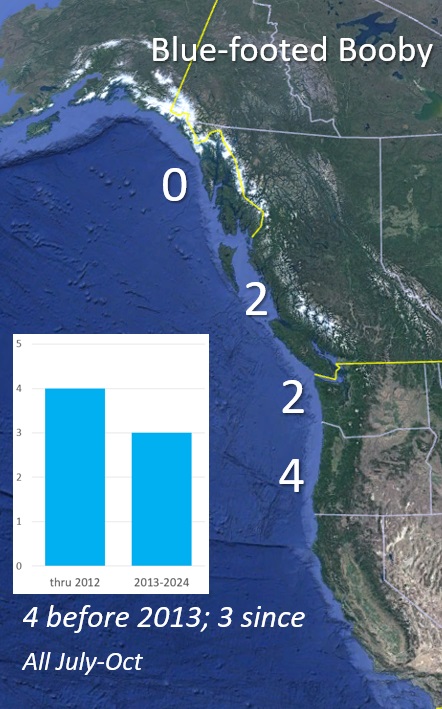
Blue-footed Booby in the PNW graph

The Blue-footed is our most local booby, with large nesting colonies in the Gulf of California. They do not range widely at sea, and thus are not as prone to the wanderings of the species above.

Their northward incursions are like those of Brown Pelicans, with whom they nest in the Gulf of California. In years with high nest success followed by a collapse of prey fish, hungry juveniles spread north up into the Salton Sea, the Colorado River, and up the West Coast. Thru 2012, California had 114 records. In 2013, they had over 200. That incursion year also brought records to BC and OR.

AK: none

BC:  2 – July 1995; Sept 2013

WA: 2 – Sept 1935; Aug 2006

OR:  4 – Sept 2002; 2 in Oct 2013; Sept 2018

But incursions like the one in 2013 are more than one-off episodes. Like the Cocos Booby, they are expanding north as breeders. They started nesting on the Channel Islands in 2021 (2020 if you count a hybrid pairing with a Cocos Booby).

Blue-footed Booby in CA map

Why is all this happening?

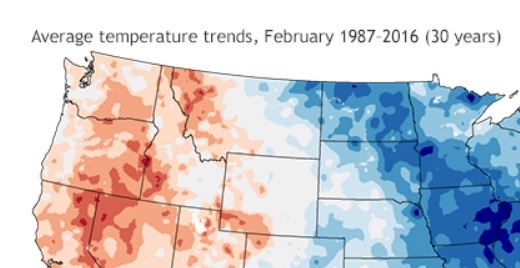
The obvious answer is climate change.  After all, these are wide-ranging seabirds who can travel great distances in search of food, and sea surface temperatures are rising dramatically.
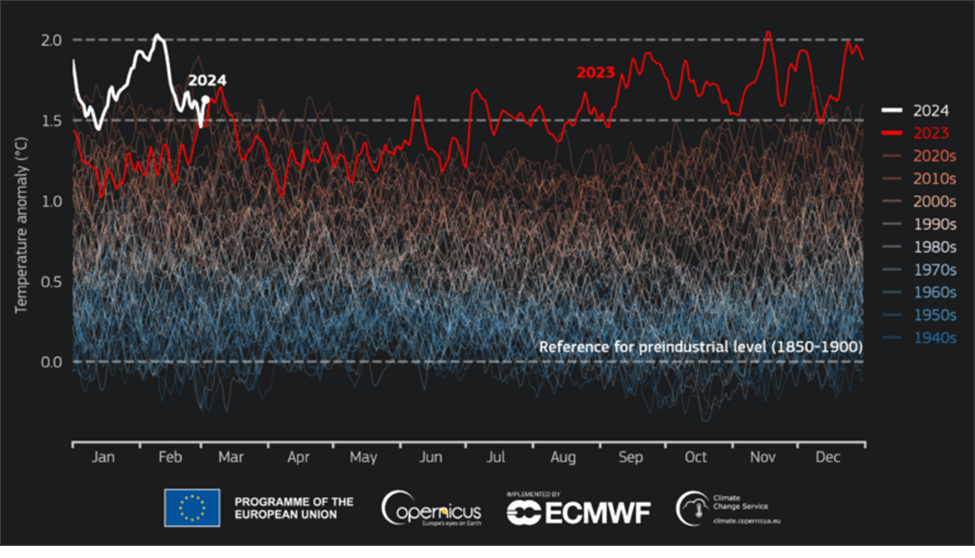
SST over time
This graph, which highlights the dramatic increases in worldwide sea surface temperatures in 2023 and 2024, also shows the gradual rise during the last few decades.

The infamous Blob began in late 2013, creating unprecedented sea surface temperatures (SST) in the North Pacific. By 2015 and 2016, it reached the West Coast, resulting in the collapse of fisheries (everything from Alaska Cod to Dungeness Crab) from Alaska to Mexico and beyond. Humpback whales breeding in Hawaii declined 34%.

SST during the Blob
The Blob in the North Pacific was the largest marine heat wave ever recorded.

Temperatures remain high. Bluefin tuna are reported from the Salish Sea, and mola molas are increasing in Alaska. Meanwhile, warmer waters negatively impact the food chain in the waters around the Galapagos. Boobies might not just be pulled to the PNW by warmer waters, but may also be pushed out of the tropics because fish become too hard to find.

SST today
SST last month

The changes probably started before the first boobies showed up in the PNW. Reid et al (2016), writing in Global Change Biology, documented ecosystem-wide regime shifts in the mid-1980s, resulting in “a major change in the Earth’s biophysical systems from the upper atmosphere to the depths of the ocean and from the Arctic to the Antarctic.”
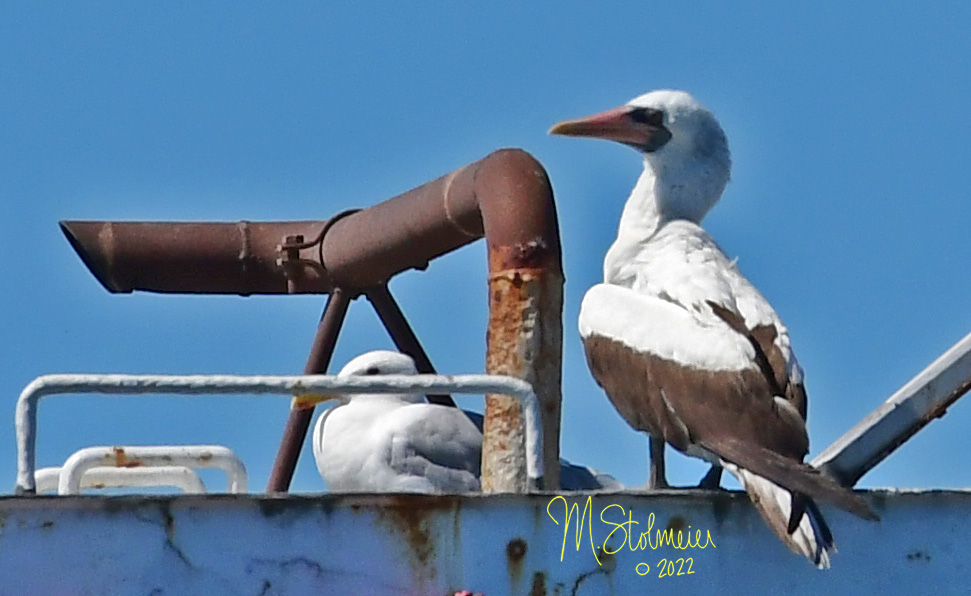
Nazca Booby on a barge in Puget Sound.
Nazca Booby on a barge in Puget Sound. Photographed by Matt Stolmeier. August 2022.

With climate velocity – the speed of climate change – increasing since then, one can imagine a series of regime shifts occurring practically every year. The concern among scientists is that, because the current rate of change is at least 10x faster than the fastest documented changes from prehistoric times (such as during the Paleocene-Eocene Thermal Maximum, or the PETM), many plants and animals cannot adapt fast enough. The PETM, while a spike in the prehistoric record, saw temperatures increase 5C over 5,000 years; that’s 1C per 1000 years. The graph above shows an increase of 1.5C in 123 years; that’s 1C every 82 years. Animals never noticed the PETM warming, and they literally evolved through it. Today, an individual booby may experience a changing climate within their lifetime.
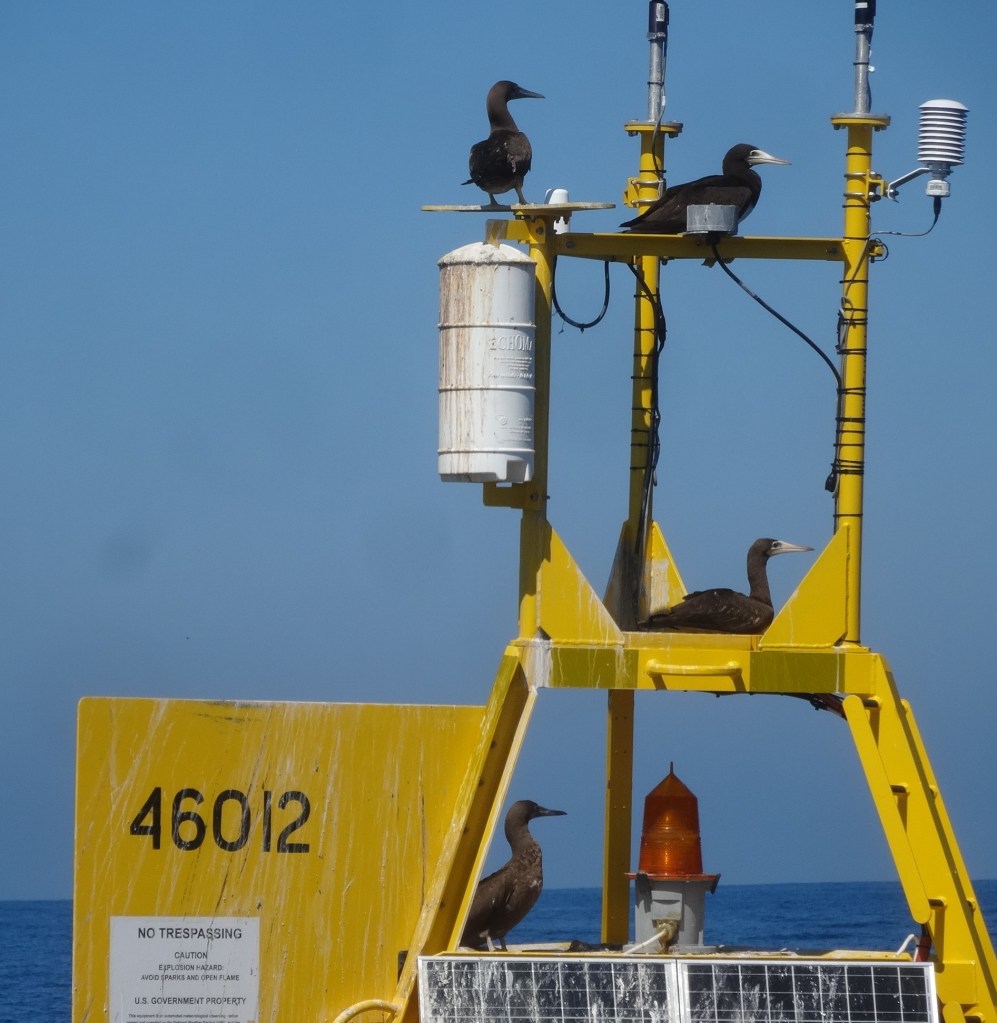
Four Cocos Boobies on the NOAA weather buoy off Half Moon Bay.
Four Cocos Boobies on the NOAA weather buoy off Half Moon Bay. I took this pic from a Shearwater Journeys trip. September 2014.

In oceans, food webs begin with nutrients and plankton and end with fish and fish-eaters such as boobies. Water temperature is everything. Each species adapts – or not – to climate change in different ways, crossing various thresholds at different times. Boobies fly long distances to find food. It remains to be seen whether they can adapt to changing ocean conditions, but it certainly appears they are trying.

Port Townsend's Red-footed Booby on the Hawaiian Chieftain
Port Townsend’s Red-footed Booby on the high wire between the two masts of the Hawaiian Chieftain. August 2024. There is an Indigenous word for this bird in Hawaii: ‘Ā.

UPDATE: For more on Port Townsend’s Red-footed Booby, including who found it when and where experts think it came from, see Port Townsend’s Red-footed Booby: A messenger from the future.

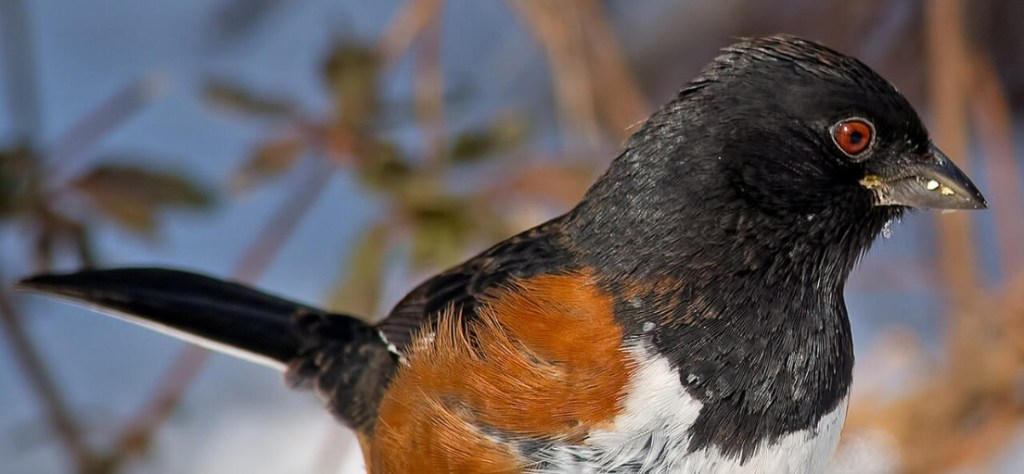
Eastern Towhee: Can the white-eyed subspecies survive even 1.5C climate change?

Pale-eyed and red-eyed forms diverged approximately 18,000 years ago.
Photo by Melissa James/Macauley Library.
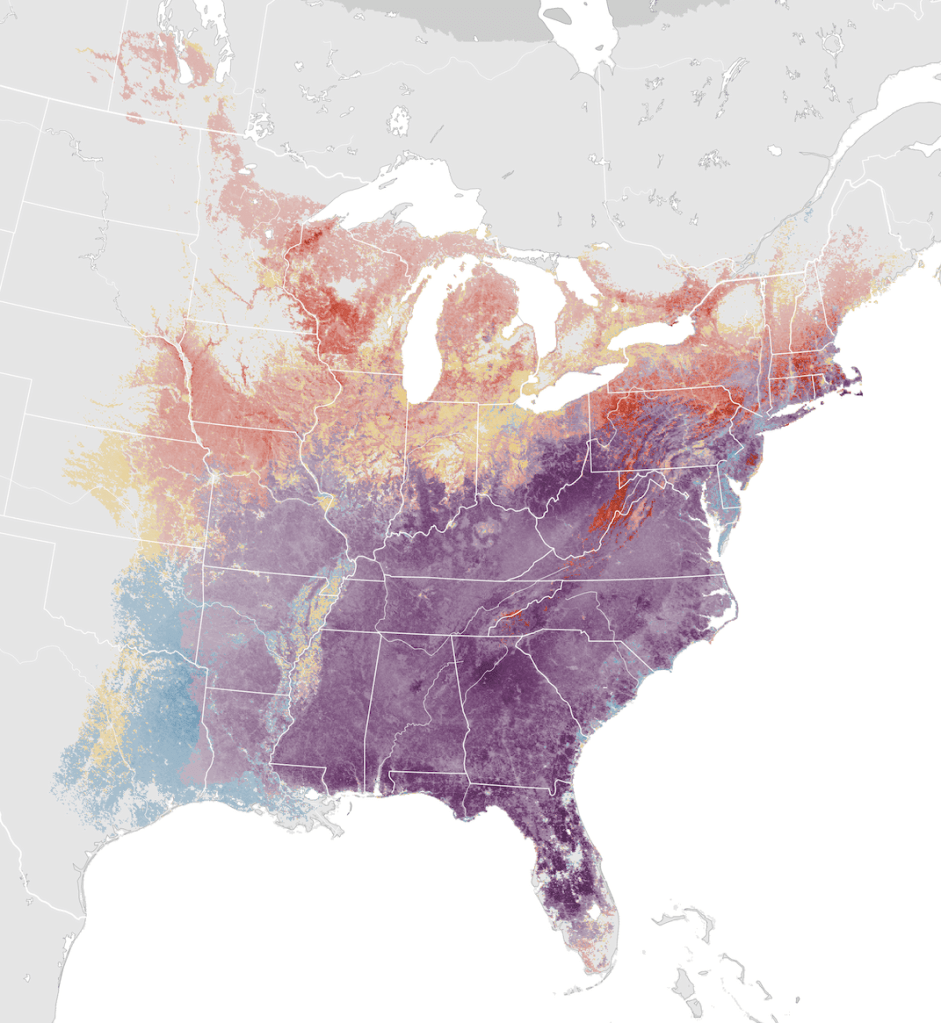
eBird abundance map for Eastern Towhee. It is resident in the southeast, but expands north in summer.

The Eastern Towhee, a bird of scrub and thickets, is a common resident in the southeast United States. One subspecies migrates north in summer.

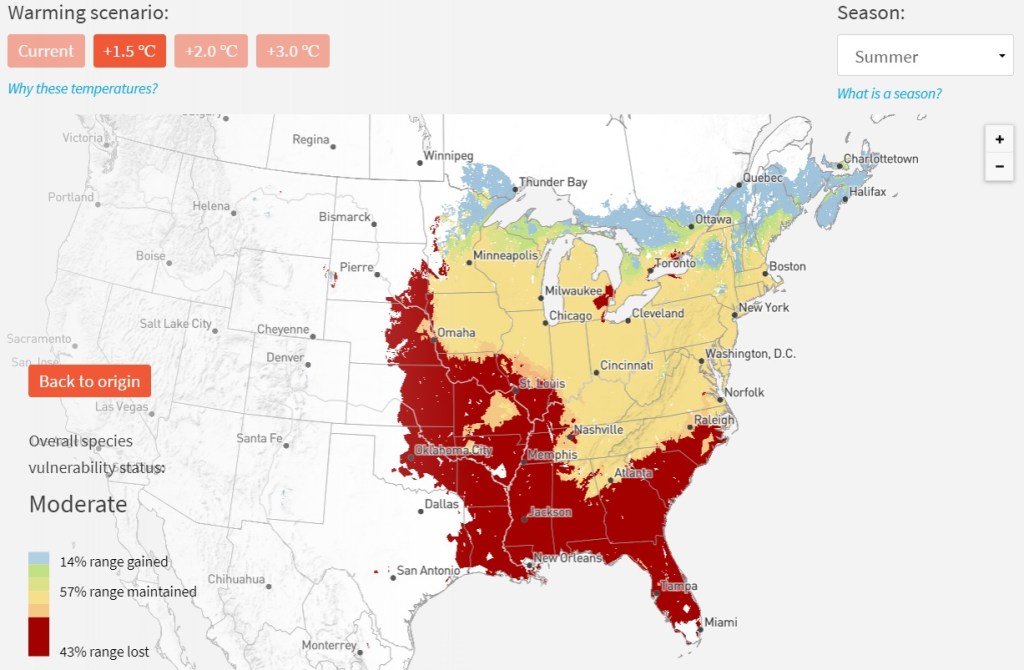
They are a prime example of a species that is considered “Least Concern” by the International Union for Conservation of Nature (IUCN), but “High Risk” in National Audubon’s assessment of birds under climate change. In their 3.0 C scenario, they predict it would lose 83% of its current breeding range, while gaining only 23%.

This is National Audubon’s projection for the Eastern Towhee’s breeding range under just a 1.5C scenario. This would spell extinction for the white-eyed birds of Florida and the deep South.
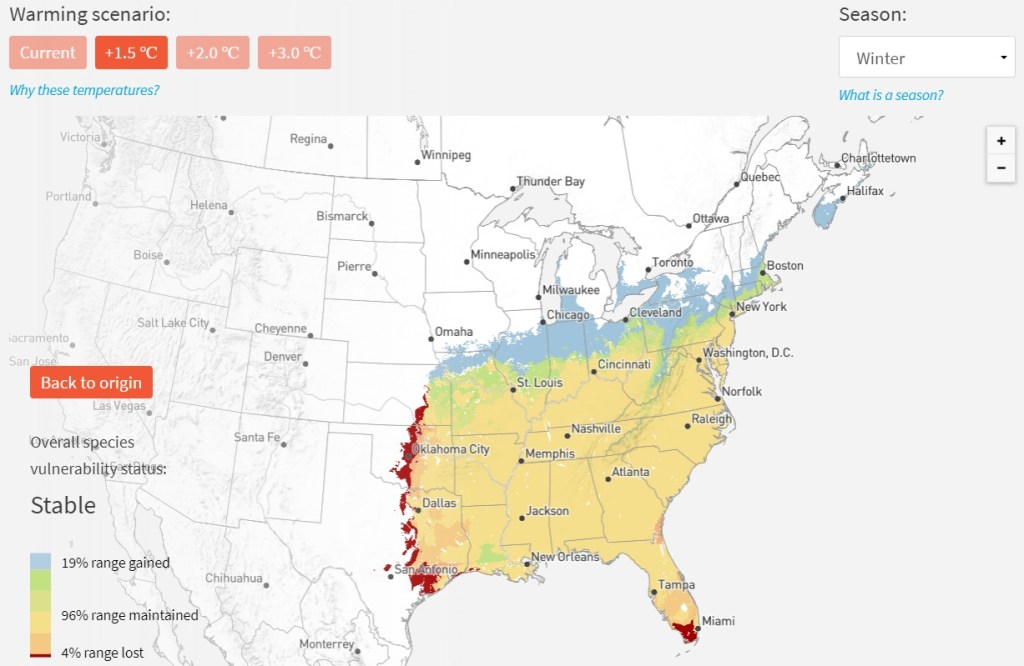
Their winter range is not anticipated to change much.

These projections are consistent with recent literature showing poleward shifts of species ranges– of the northern edge of their range, of the southern edge, and of their range’s geographic center. The predictions for Eastern Towhee are among the most dramatic.

Recent research also suggests that non-migratory and short-distance migrants are more adaptable to climate change than are long-distance migrants, and more able to shift their ranges. Indeed, we are already seeing that with Eastern Towhee. The Audubon projections appear to be in progress.

Based on Breeding Bird Survey (BBS) data, the Eastern Towhee breeding population in Florida has declined over 50% since the late 1990s. The timing of this is consistent with worldwide ecological shifts which began in the mid-1980s.

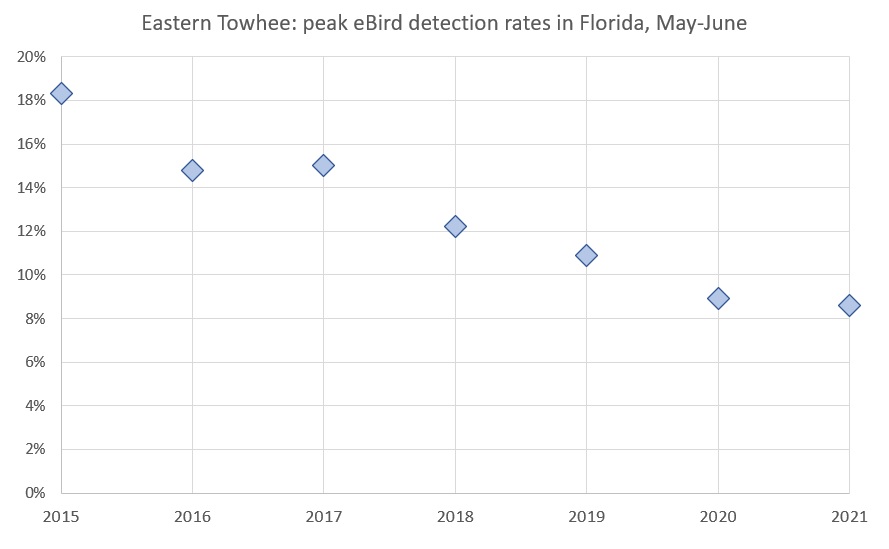
The white-eyed subspecies appears to be already in trouble. eBirders in Florida in May and June are encountering the species half as often as they were just six years earlier.

eBird data from Florida, focusing on frequency of lists reporting the species during the May-June period, shows that the maximum frequency has fallen from 18.3% in 2015 to 8.6% in 2021.

Not all range shifts are due to climate. As a scrub specialist, the Eastern Towhee prefers habitat that is in the act of regrowth, such as after a fire or being cleared. But they don’t want a forest either. To quote the Birds of the World species account for Eastern Towhee: “As farmland is abandoned, successional changes produce suitable midseral habitats that towhees favor, and their numbers increase. But, successional time is against towhees, and their numbers decrease as seres age.” That may be the explanation for the Georgia data (orange dots), which show a decline in the late 60s and early 70s, possibly due to forest growth or land clearance for development, and then a leveling off.  

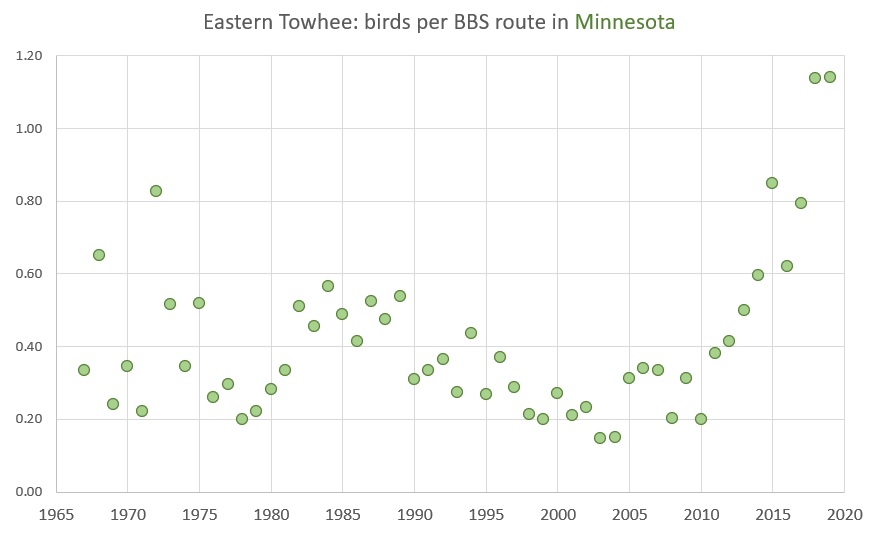
As the climate warms, many species are expanding north and/or declining in the southern part of their range. But these need not happen simultaneously. Opportunities for suitable habitat may open doors in the north, and doors may close in the south, at different times. There is evidence of Eastern Towhee expansion in Minnesota, but look at the vertical axis; it does not compare with the losses in Florida.

In Florida, the white-eyed subspecies faces extinction based on National Audubon’s 1.5C scenario. They appear to have declined dramatically in the past two decades.

Photo from National Audubon website that provides range change projections under 1.5C, 2.0C, and 3.0C scenarios.

For more on climate change impacts on birds, I invite you to join the Birds and Climate Change Facebook group.

Northward expansion of Northern Cardinal, Carolina Wren, Tufted Titmouse, and Red-bellied Woodpecker

A number of recent academic papers have described northward shifts of bird species in both North America and Europe, driven by climate change. These papers usually present aggregated results from dozens of species; they rarely provide details for any specific species. These maps are intended to offer that.

While there are tremendous species-specific differences, non-migratory resident birds (such as Northern Cardinal, Carolina Wren, Tufted Titmouse, and Red-bellied Woodpecker) appear to be the most adaptable and have expanded their ranges the most. This seems to be primarily driven by warmer winters and, for some species, is further augmented by bird feeders.

I created these maps using eBird, so the usual caveats apply– they don’t necessarily include all records (though many historical out-of-range records are indeed included), and eBird reporting, which became widespread only after 2010, continues to increase dramatically each year. To draw the lines, my intent was to capture the primary range area — and more — but I deliberately excluded the furthest ten to fifteen outliers for each line.

CLICK TO ENLARGE GRAPHICS

Northern Cardinals (once called Kentucky Cardinals) have been expanding north for decades, but have increased their rate.
Carolina Wren is a classic example of a species knocked back by harsh winters, finding some refuge around bird feeders, and then continuing to expand in warmer winters. See a graph of this at my previous post here.
Like many species, Tufted Titmouse has especially expanded northeast up the St. Lawrence River corridor.
To get a feel for what this expansion actually looks like in one place, see the graphs below from Christmas Bird Counts. Similar graphs could be made for all of these species.

For some examples of western species expanding north from California and southern Oregon into the Pacific Northwest, see this post: The invasion of the Pacific Northwest: California’s birds expand north with warmer winters.

I invite you to join the Facebook group dedicated to this topic: Birds and Climate Change.

Two of the academic papers that report climate-driven range expansions in eastern North America are listed below, along with their abstracts.

Prince, K. and B. Zuckerberg. 2016. Climate change in our backyards: the reshuffling of North America’s winter bird communities. Global Change Biology 21(2): 572-585.

Much of the recent changes in North American climate have occurred during the winter months, and as result, overwintering birds represent important sentinels of anthropogenic climate change. While there is mounting evidence that bird populations are responding to a warming climate (e.g., poleward shifts) questions remain as to whether these species-specific responses are resulting in community-wide changes. Here, we test the hypothesis that a changing winter climate should favor the formation of winter bird communities dominated by warm-adapted species. To do this, we quantified changes in community composition using a functional index–the Community Temperature Index (CTI)–which measures the balance between low- and high-temperature dwelling species in a community. Using data from Project FeederWatch, an international citizen science program, we quantified spatiotemporal changes in winter bird communities (n = 38 bird species) across eastern North America and tested the influence of changes in winter minimum temperature over a 22-year period. We implemented a jackknife analysis to identify those species most influential in driving changes at the community level and the population dynamics (e.g., extinction or colonization) responsible for these community changes. Since 1990, we found that the winter bird community structure has changed with communities increasingly composed of warm-adapted species. This reshuffling of winter bird communities was strongest in southerly latitudes and driven primarily by local increases in abundance and regional patterns of colonization by southerly birds. CTI tracked patterns of changing winter temperature at different temporal scales ranging from 1 to 35 years. We conclude that a shifting winter climate has provided an opportunity for smaller, southerly distributed species to colonize new regions and promote the formation of unique winter bird assemblages throughout eastern North America.

Saunders et al. 2022. Unraveling a century of global change impacts on winter bird distributions in the eastern United States. Global Change Biology

One of the most pressing questions in ecology and conservation centers on disentangling the relative impacts of concurrent global change drivers, climate and land-use/land-cover (LULC), on biodiversity. Yet studies that evaluate the effects of both drivers on species’ winter distributions remain scarce, hampering our ability to develop full-annual-cycle conservation strategies. Additionally, understanding how groups of species differentially respond to climate versus LULC change is vital for efforts to enhance bird community resilience to future environmental change. We analyzed long-term changes in winter occurrence of 89 species across nine bird groups over a 90-year period within the eastern United States using Audubon Christmas Bird Count (CBC) data. We estimated variation in occurrence probability of each group as a function of spatial and temporal variation in winter climate (minimum temperature, cumulative precipitation) and LULC (proportion of group-specific and anthropogenic habitats within CBC circle). We reveal that spatial variation in bird occurrence probability was consistently explained by climate across all nine species groups. Conversely, LULC change explained more than twice the temporal variation (i.e., decadal changes) in bird occurrence probability than climate change on average across groups. This pattern was largely driven by habitat-constrained species (e.g., grassland birds, waterbirds), whereas decadal changes in occurrence probabilities of habitat-unconstrained species (e.g., forest passerines, mixed habitat birds) were equally explained by both climate and LULC changes over the last century. We conclude that climate has generally governed the winter occurrence of avifauna in space and time, while LULC change has played a pivotal role in driving distributional dynamics of species with limited and declining habitat availability. Effective land management will be critical for improving species’ resilience to climate change, especially during a season of relative resource scarcity and critical energetic trade-offs.

Mapping the expansion of the California Scrub-Jay into the Pacific Northwest

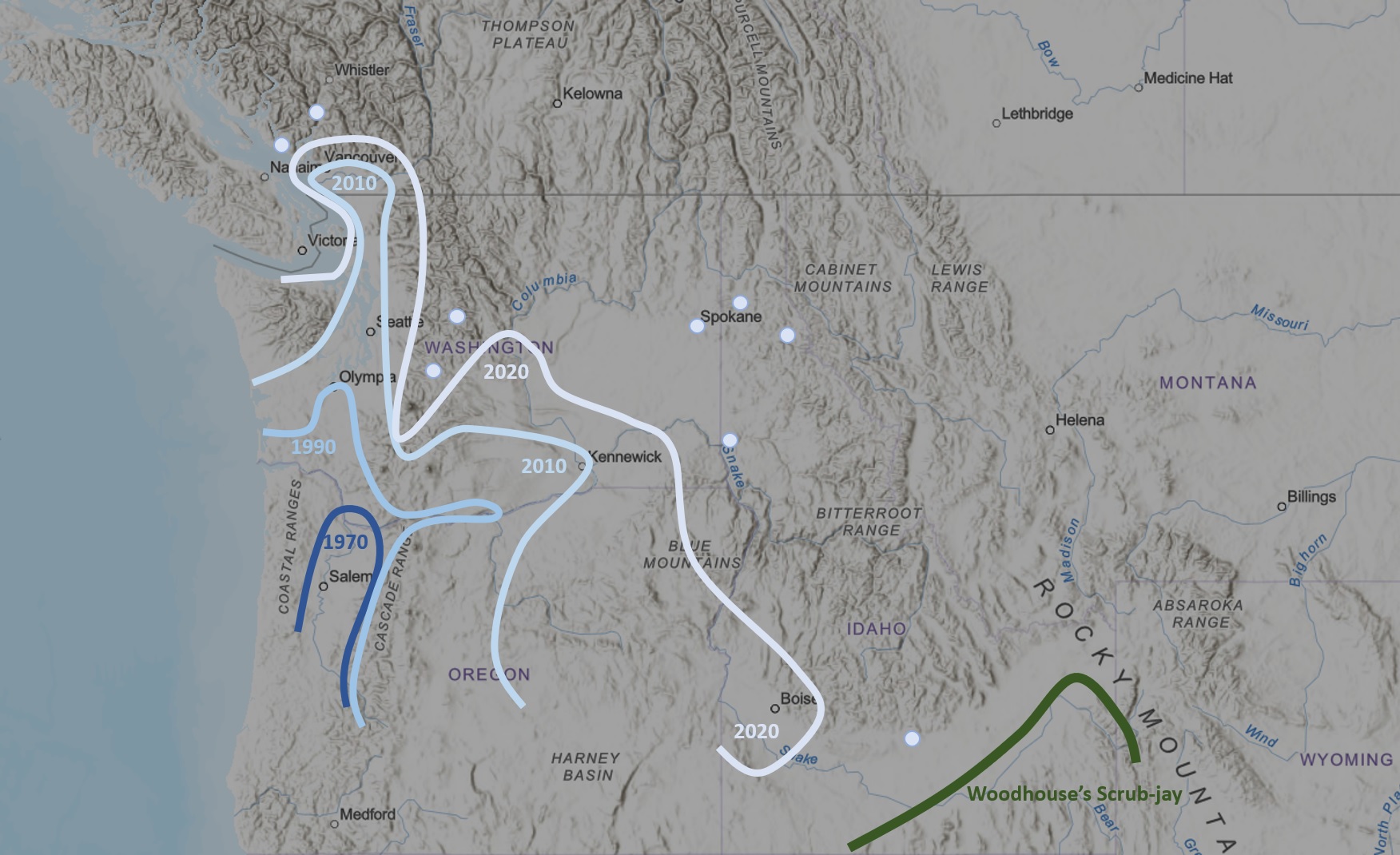
This blog post is merely to provide a visual illustration, by way of a map, of the expansion of the California Scrub-Jay across Washington, British Columbia, eastern Oregon, Idaho, and even Montana (one record so far). It is intended to complement my more detailed article, “Tracking Expansion of the California Scrub-Jay Into the Pacific Northwest”, in the Washington Ornithological Society (WOS) News, August-September 2021 edition.

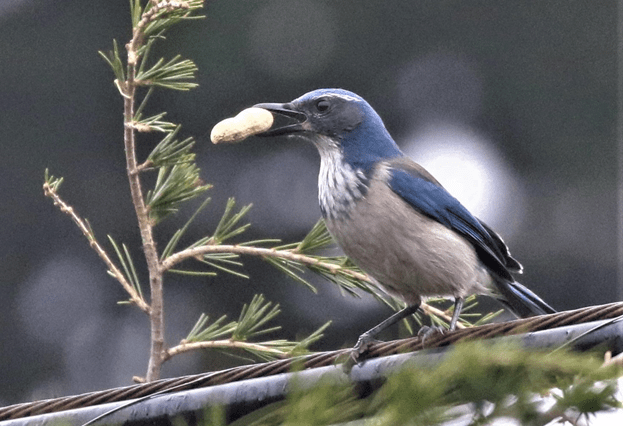
California Scrub-Jays are often first detected at bird feeders in suburban areas. As aggressive nest predators, jays should not be subsidized by anthropogenic food sources. In short, please don’t feed the corvids. Port Townsend, WA. April 2021.

As becomes clear in the article, these are not hard lines. The jays are advancing gradually, not in a solid wave. Typically, a single jay will appear well outside the known range (e.g. Spokane). Within a year or two, there will be several. Then they’ll be breeding. Then they will begin expanding further. Meanwhile, a wave of jays will be backfilling the new territory, with densities increasing annually. The lines in this map are as much art as science, but are intended to show the primary region were jays were “regular and expected”. There were always outliers, pioneer dispersers expanding the range. Records beyond the 2020 line are shown as pale blue dots.

CLICK MAP TO ENLARGE

The expansion of the California Scrub-Jay mimics that of several other species, mostly non-migratory or short-distance migrants, rapidly expanding from California and Oregon into the Pacific Northwest.

The jay’s expansion has already surpassed that predicted by the Audubon Society’s climate model under a 3.0 degree Celsius scenario, shown here.

The jay’s expansion, when considered in the context of timing and trends in other species, is likely a function of a warming climate combined with suitable food sources. For more discussion of this, see the WOS article linked above.

They seem to be particularly taking advantage of warmer winters in the lower Columbia River Basin.

It will be interesting to see where the 2030 scrub-jay “contour line” will be. I predict they’ll be on Vancouver Island from Victoria to Campbell River, as well as up the Sunshine Coast, up the Okanagan Valley to Kelowna and possibly Kamloops, and east to Idaho, from Coeur d’Alene in the north throughout the Snake River Valley in the south.

After that, they face some formidable hurdles. The biggest obstacles to their expansion further north and east will be habitat with limited food sources (e.g. high mountains). That said, they’ve already shown some ability to travel up mountain valleys and potentially cross the Cascades north of Mount Rainier.

Like most corvids, California Scrub-Jays are big time cachers, storing extra food for future use. I took this photo in southern California, October 2017, when a family of jays were repeatedly stripping an oak, two acorns at a time, flying over a nearby ridge to cache them, and then returning again and again throughout the morning.