Stephen Carr Hampton is an enrolled citizen of Cherokee Nation, an avid birder since age 7, and a former resource economist for the California Department of Fish & Game, where he worked as a tribal liaison and conducted natural resource damage assessments and oversaw environmental restoration projects after oil spills. He writes most often about Native history and contemporary issues, birds, and climate change.
This blog, combined with Memories of the People, my other blog focused on Native issues, will be slowly moving to my new Substack. It offers more options for the reader and is easier to manage from my end. Everything will be free, always.
If you are subscribed here, I’ve transferred your subscription over to the Substack. This means you’ll get an email every time I post (about once a week).
At the Substack, I will be re-posting some of the posts from here, updated with new information as warranted.
I will maintain this blog for the time being, though new material will probably be at the Substack. We’ll see how this works out.
There are a lot of opportunities to benefit the birds in your neighborhood. Here are some basic principles, focusing on habitat, bird feeders, and bird houses and nesting. I focus on the Pacific Northwest, but this can be generally applied elsewhere.
Habitat
Chestnut-backed Chickadee on eggs in a nest box in my yard.
Plant native trees! Chickadee parents need 6,000 moth caterpillars to raise a nest of chicks. They only get them from native trees – mostly alders, willows, birch, and bitter cherry. All this said, most non-native plants at least offer cover (e.g. Himalayan blackberries) and some offer berries that birds like (e.g. cotoneaster, mountain ash). Birds Connect Seattle offers some great guidance regarding planting for birds.
Be careful mowing, weeding, and doing yardwork April thru July. There may be towhees, juncos, and Song Sparrows nesting on the ground. I nearly decapitated baby towhees once. They were in a little clump of grass I let grow because my push mower couldn’t get there. Then one day I got out the weed whacker. I hear similar stories from people every year. They were pruning, mowing, clearing brush, moving a wood pile (with a wren nest) etc. and came upon an active nest.
A Spotted Towhee nest in a section of the yard I decided to just let go. They later nested in some weeds next to a garden box.
Better yet, leave some unkempt corners of your yard. The birds will use it. Some species even like being near human traffic – it protects them from other predators. Just don’t become an accidental predator! Usually the birds will let you know you are too close by constant calling.
Bird Feeding
Bird feeding is a great way to connect with birds and get to know them. I feed birds, especially in winter. But there are some do’s and don’ts.
First, try to avoid feeding House Sparrows, European Starlings, Brown-headed Cowbirds, and large numbers of corvids (e.g. jays and crows). The first two are invasive and introduced, and are widely known to displace native cavity-nesting birds, such as chickadees, wrens, nuthatches, and swallows. Cowbirds are native to the Great Plains, but invasive in the PNW. Their numbers are artificially augmented by human habitat destruction. They are known to displace a wide variety of native birds.
Finally, those colorful jays and clever crows are fierce nest predators, especially of cup nesters, such as robins, goldfinches, warblers, flycatchers, vireos, tanagers, and grosbeaks. Studies show that, where jays and crows are fed – and they are especially attracted to peanuts – other cup-nesting birds struggle to reproduce. In one study, the neighborhood robins suffered 99% nest failure where corvids were fed. I have a post focused on this: The maddening truth: Feeding crows and jays harms other birds. PLEASE DO NOT OFFER PEANUTS.
To avoid these undesirable outcomes, I never use peanuts and I only put out seed in winter – September thru March, when the junco horde and Golden-crowned Sparrows are here. I also avoid suet with peanuts. In summer, I restrict my bird feeding to just the hummingbird feeders and maybe some suet (though that can attract starlings).
The highlight of my yard birding, however, is not the feeders — it’s my little fountain and pond. It runs year-round and attracts all the feeder birds, plus migrating insectivores: kinglets, warblers, vireos, tanagers, and thrushes. I created a post on how to create a great water feature for less than $100: My backyard fountain and the birds that come to it.
A MacGillivray’s Warbler and an Orange-crowned Warbler at my little fountain pond.
Bird feeding concentrates birds, especially in winter. This can spread avian diseases. Common indicators of disease in the PNW are a House Finch with a growth around its eye or a siskin you can walk up to and pick up. If you see these things, take down your feeders immediately and wait at least two weeks.
Another potential concern with bird feeding is window strikes. The most important thing is feeder location. If goldfinches are hitting your window, the feeder is too close. Much has been written about how to address this problem, so I won’t go into it here. Hawk decals and plastic owls don’t work. The little dots apparently do. Here’s what I did when I had this problem at my previous home – mylar ribbons.
Bird houses
In the PNW, bird houses will be used by the cavity-nesting birds I mentioned above: chickadees, wrens, nuthatches, and swallows. Again, there are some do’s and don’ts.
Photo from the Olympic Peninsula Audubon Society. The hole can be an oval, a diamond, or some other shape – just never more than 7/8″ tall. The extra wood for the hole cover prevents birds from enlarging the hole.
First, nest hole size and design is critical. Way too many backyard bird houses inadvertently raise House Sparrows, causing more harm than good to the local bird community. That’s because the entrance holes are too big. A hole more than 1 1/8″ in diameter is too big. These House Sparrows then go on to kill the eggs, babies, and even adults of native birds. PLEASE DO NOT RAISE HOUSE SPARROWS. Monitor the box and remove House Sparrow nests if you see them forming (theirs are real messy, with dry straw sticking every which way).
Washington Department of Fish and Wildlife offers this helpful diagram. This will exclude House Sparrows.
It is highly recommended to put nest boxes in shade, especially afternoon shade, to protect it from heat. Heat waves kill chicks. For swallows, they like open areas, so sometimes shade is not available. In that case, you can put heat shields on the boxes. See Mel Hafting’s post here about that (scroll down below the Purple Martin section).
One of my five boxes. I take down my boxes and clean them out each fall, and then put them back up. If they weren’t used, I move the location a bit. Birds will begin scouting for nesting sites as early as March.I made this box after seeing boxes for Lucy’s Warblers in Arizona. I thought wrens might use it. Sure enough, Bewick’s Wrens love it. The first year, the gaps where they enter were too big, and they were parasitized by a cowbird. (The female cowbird kept an eye on the nest for weeks!) This year I made the entrances smaller, and the wrens fledged four chicks.This box (not mine) has not been maintained. They put up a hole reducer, presumably to discourage House Sparrows, but woodpeckers have created a new hole on the side of the box. House Sparrows nested there this year. This intergrade Yellow-shafted x Red-shafted Northern Flicker spent two winters coming to my suet.
If you have questions, put them in the comments below and I’ll answer.
Here’s my dive into the fine print — corroborated with input from the USFWS and Spotted Owl surveyors — into the supposed plan to shoot 450,000 Barred Owls over the next 30 years. It’s not going to happen. My article in Post Alley:
Red-footed Booby, thought to be a 2nd year intermediate morph, among Heermann’s Gulls in Port Townsend, WA; August 2024.
There are no Indigenous words for these birds in the Pacific Northwest (PNW).
Sailors called them “boobies,” meaning stupid, because they were unafraid of people. They are large, colorful, tropical seabirds, historically only found at the southern edges of the continental United States – Florida, the Gulf Coast, and (rarely) southern California, to quote from my old 1966 Golden Field Guide, the beige one with the three buntings on the cover. That book only mentions three boobies: Blue-faced (since renamed Masked and now with Nazca split off from it), Brown (now with Cocos split off from it), and Blue-footed. Red-footed was so rare it wasn’t mentioned.
Here is the range of the Red-footed Booby, as posted on their Birds of the World species account:
Now, four boobies – Red-footed, Nazca, Cocos, and Blue-footed – are annual in California (where all have been removed from the “review list”) and regular in the Pacific Northwest (PNW, defined here as Alaska, British Columbia, Washington, and Oregon). Prior to the 1980s, the PNW had only a single booby record – a Blue-footed found dead in 1935. Since then, boobies of one species or another have been documented 146 times. 86% of those have been in the last 11 years.
Even adjusting for increased reporting in recent decades, the increase in booby sightings has been among the most hair-raising and mind-boggling developments in the bird world.
Red-footed Booby
The PNW’s first Red-footed Booby was in 2015 in Alaska. Since 2018, they’ve become nearly annual. There are now 13 records:
AK: 6 – Aug 2015; Sept 2015; Sept 2019; June 2021; Sept 2022; Aug 2023
BC: 1 – Sept 2018
WA: 4 – Sept 2018; Sept 2023; Oct 2023; July 2024
OR: 2 – May 2019; Nov 2019
The Red-footed Boobies in the PNW most likely emanate from breeding colonies off southern Mexico or the Galapagos. Most were found on vessels far offshore or dead on beaches. The Port Townsend bird represents the most reliable and confiding individual that can be enjoyed by thousands of people.
Most have occurred in August and September, paralleling similar seasonal movements of Brown Pelicans and Heermann’s Gulls, both species which nest primarily in Mexico, migrate up the coast to the PNW in summer, and return in fall. It’s no surprise that Port Townsend’s Red-footed Booby often roosts with several hundred Heermann’s Gulls, its potential traveling companions.
The pattern in California, with a larger sample size, is illustrative of the pattern of increase of boobies into PNW waters. For Red-footed, California’s first record was in 1975. This grew to 19 records by 2012. Since then, they’ve had about 200, including an invasion of 37 birds (though some may involve the same bird moving around) in 2018, the same year the PNW had two. The following year, with 105 records, the California Bird Records Committee removed it from their review list. They now occur regularly, with sometimes dozens of reports each year. These are largely limited to southern California. North of Cape Mendocino, California still has only two records (2021 and 2023).
Nazca Booby
Split off from the Masked Booby in 2000, many records – and disproportionately older records from before the split and the advent of 400mm lenses – are now treated as Masked/Nazca, as identification cannot be confirmed. Here, I focus only Nazca Booby records, though surely some were around earlier.
Largely from the Galapagos, the first Nazca Booby in the continental US didn’t occur until one was found dead on Ventura Beach, California in 2013. (This was during the Refugio oil spill. I was involved in the bird injury assessment for the California Department of Fish and Wildlife at the time, and played a small role in this record by ensuring that the carcass was properly examined and identified by Kimball Garrett. The carcass was in poor condition and may have pre-dated the spill.)
Its pattern of occurrence in the PNW is remarkably like that of the Red-footed Booby – the first record was in 2015; it is now nearly annual; and it occurs primarily in late summer and early fall.
AK: 3 – Aug 2017; Sept 2023; Aug 2024
BC: 6 – July 2019; Sept 2020; Feb 2022; July 2022; July 2023; Oct 2023
WA: 6 – Aug 2020, Aug 2022, Sept 2022, Sept 2023, Oct 2023, Feb 2024
OR: 6 – Sept 2015; Sept 2018; Sept 2019; Dec 2021; Feb 2023; Sept 2023
Again, their pattern in California mimics that of Red-footed, with a dramatic increase in records beginning in 2013, a big surge in 2018 (30 records), removal from the review list in 2019, and 20 to 45 birds per year since then, totaling over 150 reports.
Cocos Booby
The Cocos Booby was formerly known as the brewsteri subspecies of Brown Booby. While the Brown Booby occurs worldwide, the form in the eastern Pacific was split off as the Cocos Booby this summer. The name comes from the tectonic plate, as does the impetus for the name of Nazca Booby.
Here I’ve annotated their Birds of the World range map with the new Cocos Booby, and I’ve also extended its range based on recent records.
Though the most expected booby on the West Coast, they have still exhibited a dramatic increase in recent years. Before 2006, there were only 96 records in California and 8 in the PNW.
Now they are resident breeders in California (on the Channel Islands, since 2017), and annual in the PNW. They were removed from California’s review list in 2007, from Washington’s in 2018, and from Oregon’s in 2023.
They don’t come from as far away as the Galapagos, and can show up year-round. In both California and the PNW, they’ve occurred in every month of the year, though most are in late summer and fall.
Records of the related Brown Booby in the East have spread remarkably inland, in Limpkin-esque fashion, across the Midwest to the St. Lawrence River. There are now Brown or Cocos Booby records for over 40 US states. These maps compare Brown/Cocos Booby records from 1970-2005 and from 2006-2024.
From 1970-2005, Cocos and Brown Boobies were strictly coastal, except in the Southwest, where birds from the Gulf of California may show up in nearby deserts after storms.
Brown and Cocos Booby, 1970-2005Brown and Cocos Booby, 2006-2024
You’ll notice just the purple rectangles in the bottom graph, 2006-2024. Even when I shortened the period to just 2020-2024, eBird told me I had exceeded the 2000 point maximum to show the individual points.
Blue-footed Booby
The Blue-footed is our most local booby, with large nesting colonies in the Gulf of California. They do not range widely at sea, and thus are not as prone to the wanderings of the species above.
Their northward incursions are like those of Brown Pelicans, with whom they nest in the Gulf of California. In years with high nest success followed by a collapse of prey fish, hungry juveniles spread north up into the Salton Sea, the Colorado River, and up the West Coast. Thru 2012, California had 114 records. In 2013, they had over 200. That incursion year also brought records to BC and OR.
AK: none
BC: 2 – July 1995; Sept 2013
WA: 2 – Sept 1935; Aug 2006
OR: 4 – Sept 2002; 2 in Oct 2013; Sept 2018
But incursions like the one in 2013 are more than one-off episodes. Like the Cocos Booby, they are expanding north as breeders. They started nesting on the Channel Islands in 2021 (2020 if you count a hybrid pairing with a Cocos Booby).
Why is all this happening?
The obvious answer is climate change. After all, these are wide-ranging seabirds who can travel great distances in search of food, and sea surface temperatures are rising dramatically.
This graph, which highlights the dramatic increases in worldwide sea surface temperatures in 2023 and 2024, also shows the gradual rise during the last few decades.
The infamous Blob began in late 2013, creating unprecedented sea surface temperatures (SST) in the North Pacific. By 2015 and 2016, it reached the West Coast, resulting in the collapse of fisheries (everything from Alaska Cod to Dungeness Crab) from Alaska to Mexico and beyond. Humpback whales breeding in Hawaii declined 34%.
The Blob in the North Pacific was the largest marine heat wave ever recorded.
The changes probably started before the first boobies showed up in the PNW. Reid et al (2016), writing in Global Change Biology, documented ecosystem-wide regime shifts in the mid-1980s, resulting in “a major change in the Earth’s biophysical systems from the upper atmosphere to the depths of the ocean and from the Arctic to the Antarctic.”
Nazca Booby on a barge in Puget Sound. Photographed by Matt Stolmeier. August 2022.
With climate velocity – the speed of climate change – increasing since then, one can imagine a series of regime shifts occurring practically every year. The concern among scientists is that, because the current rate of change is at least 10x faster than the fastest documented changes from prehistoric times (such as during the Paleocene-Eocene Thermal Maximum, or the PETM), many plants and animals cannot adapt fast enough. The PETM, while a spike in the prehistoric record, saw temperatures increase 5C over 5,000 years; that’s 1C per 1000 years. The graph above shows an increase of 1.5C in 123 years; that’s 1C every 82 years. Animals never noticed the PETM warming, and they literally evolved through it. Today, an individual booby may experience a changing climate within their lifetime.
Four Cocos Boobies on the NOAA weather buoy off Half Moon Bay. I took this pic from a Shearwater Journeys trip. September 2014.
In oceans, food webs begin with nutrients and plankton and end with fish and fish-eaters such as boobies. Water temperature is everything. Each species adapts – or not – to climate change in different ways, crossing various thresholds at different times. Boobies fly long distances to find food. It remains to be seen whether they can adapt to changing ocean conditions, but it certainly appears they are trying.
Port Townsend’s Red-footed Booby on the high wire between the two masts of the Hawaiian Chieftain. August 2024. There is an Indigenous word for this bird in Hawaii: ‘Ā.
This was the expression hurled at many of us on a local birding listserv. The ironic thing is, we didn’t start the conversation. We simply intervened.
The original topic was bird names – the proposal to change the names of birds named after people. The reactions by many of the anti-change proponents have created a toxic environment, exemplifying why changes are needed in the birding world. I’ve written earlier how birding can save the world, but we need a whole lot more people connected and involved.
The listserv was Washington state’s Tweeters, a kind of generic statewide space for birders that has been around for decades. I’m not going to name names or go into great detail about who wrote what; you can look it up if you want. I’ll just use generic monikers from hereon.
This was not the first animated discussion on this topic at the Listserv. That happened back in the fall of 2023, when the AOS announced they would initiate a process to change all eponymous bird names. (For more on the details of that – and my posts on that topic – see below.) In November 2023, the Moderator eventually intervened with a clear statement, calling “a halt to this topic.”
That was the right call. Even if some don’t realize how offensive their statements are – and I’m being generous here – intentions don’t matter as much as impacts. The online comments were alienating to many new birders, young birders, and people of color. The Listserv was not a good forum for discussion.
But, over time, despite the ban, a steady trickle of anti-change emails occasionally appeared on the Listserv. In June 2024, several anti-change proponents began feeding off one another, supporting each other’s gripes and including bits of misinformation and inflammatory questions which had already been addressed in many public forums. One of them asked how they could get involved in the anti-change efforts.
This question, posted on the public Listserv rather than in a private backchannel, implied they could use this public space to plan their anti-change campaign, essentially asserting that the Listserv was their club house.
But it was not a private echo-chamber. Everybody could see what they wrote, and they surely knew that. Seeing no intervention by the Moderator, I stepped in, reminding them that this topic was out of bounds and explaining how what they were doing was “gate keeping” – a pubic action that was intended to preserve the status quo and drive certain others away.
I quickly received dozens of mostly private emails thanking me for stepping in.
At the Listserv, a dam kind of broke loose and, using a sports referee term, the game was out of control. As the flame war raged, one person used the racist-tainted trope, “Shut up and bird” – a phrase that openly declares that the Listserv is a safe space for white rage, where non-compliant others can be disregarded or put in their place. This person received no condemnation by the Moderator (at least not a public one). In the end, the only person sanctioned was one of the people against whom that taunt was leveled.
The whole episode, which has been repeated in various ways across dozens of other social forums in the past year, sent a message to new birders, younger birders, and birders of color: You are welcome as long as you keep your mouth shut and act like everyone else – everyone else being the older white birders who, historically, made up over 90% of the birding community. This is “whitewashed diversity” – you are welcome at the table if you don’t upset the status quo.
In the so-called culture wars regarding race – which have existed in this land since Bartolomé de Las Casas took on Christoper Columbus, Eastern whites rallied against Indian genocide, and abolitionists fought slavery – white liberals (WLs) have welcomed people of color at the table while conservatives have not wanted them anywhere near the house. But that welcome has not always been comprehensive – many WLs supported ethnic cleansing and the creation of Indian “reservations” because it was better than genocide; and some abolitionists, including Abraham Lincoln, favored shipping Blacks back to Africa.
Birders are mostly WLs. But let’s look at what is happening at the birding table today. Imagine a literal table, a sumptuous banquet laid out, with gallant lords and ladies at the feast. Their wealth, of course, was obtained over generations through the ethnic cleansing and enslavement of the Others. But now, generations later, they welcome the Others at the table. They call it diversity.
Now imagine the Others consider themselves equals at the table. They begin to voice their opinions, suggesting changes to the menu, the décor, and etiquette of the feast. Here the WLs bristle:
“What benefit would that make?”
“I don’t think more people will come if we make these changes.”
“Oh my god, what will they want to change next?”
“These changes will do nothing.”
“Where is the cost/benefit analysis of this?”
As the discussion heats up, the WLs have one final retort: “These requests have only created division.” As if the Others started the conflict.
If you look closer, it often turns out that the most outspoken voices against the Others are the chef, who is widely renown, the interior decorator, who everyone knows, and the master of ceremonies, who has held their position for forty-two years. (At the Listserv described above, the Moderator had close connections to such people.) They make the rules and exert their outsized influence on any potential implementation or rejection of proposed changes. They also control the conversation, make the rules about who talks when, and intervene when necessary. Or not.
Diversity is only real when voices are heard and respected, and where power is shared. Otherwise, the Others are just tokens of whitewashed diversity. It is no wonder they are bailing established Listservs, Audubon societies, and other historical structures for their own social forums and affinity groups.
We’ll still bird. And we’re building our own tables.
Entitled The Birds That Audubon Missed, Kenn Kaufman‘s new book is about much more than just those birds and John James Audubon. What Song of the Dodo was to ecology, this book is to American ornithology – an often fascinating and rollicking tale about the stumbles and successes of early ornithological pioneers. Kaufman was gracious enough to send me an advanced copy; the book comes out in two weeks and can be pre-ordered here. For me, it inspired these reflections.
Though included in Audubon’s book, there are still no records of Great-crested Grebe in North America.
Traveling without binoculars, early ornithologists relied on shotguns and specimens to distinguish new species. They focused on things like toe palmations – an early name for the Willet was Semipalmated Snipe. They got a lot wrong. Out of shotgun range in the middle of lakes, Western and Clark’s Grebes were widely considered to be Great-crested Grebes, a European species, for nearly half a century. Sexually dimorphic and highly migratory, the Red Knot was divided into eight different species across Europe and America. Meanwhile, birds that looked alike – small plovers, Catharus thrushes, Empidonax flycatchers – were often lumped.
Small-headed Flycatcher — Some of the birds described by Audubon are a puzzle to figure out, if they ever existed at all. He may have made this one up.
A huge caveat, of course – and Kaufman makes this clear – is that we’re talking about white European colonizers here. Because much of their work coincided with ethnic cleansing, the early settlers also lacked meaningful exchange of knowledge with their Native counterparts. Without both binoculars and shotguns, early Indigenous knowledge-keepers had one advantage – they focused on bird songs and calls, naming most species using onomatopoeias. It would be decades, if not a century, before European ornithologists began listening to birds as keys to their identity. It was only then that those thrushes and flycatchers were separated. Traill’s Flycatcher was only split into Alder and Willow Flycatchers during my lifetime.
The result is that modern ornithology stands on the shoulders of giants who had very wobbly knees, stumbling around the continent like brazen men, refusing to ask directions.
Many local chapters are changed “Audubon Society” to “Bird Alliance.”
No one was more wobbly and brazen than Audubon, desperately trying to make a living publishing his art and describing new species. In the end, about half the species he described had already been previously described by other European scientists, not to mention Native peoples. Today many of these birds are represented by eponymous bird names with descriptive scientific names (e,g., Euphagus cyanocephalus became Brewer’s Blackbird, and Peucaea aestivalisbecame Bachman’s Sparrow), because the scientific names strictly adhere to the first name they were given. The English names were more flexible.
Kaufman, ever gracious, puts a positive spin on all this, focusing on how recent our knowledge is, and how much there is still to learn about the birds we all love.
The son of a Haitian slave plantation owner, Audubon did not seem predisposed to seek out local Indigenous knowledge. Somehow he ignored the iconic ethereal song of the Swainson’s Thrush.
There are 21 subspecies of Spotted Towhees, but only three of them occur in the Pacific Northwest. Even then, there is confusion.
Our local oregonus birds, like so many PNW subspecies, are dark and dusky. I call them Nearly-spotless Towhees. But sometimes in winter we see more spotted ones. In my quest to uncover the differences between curtatus and arcticus, the most likely candidates, I discovered there are more questions than answers.
Figure 1: The breeding ranges of oregonus, curtatus, and arcticus, the only three subspecies that occur in the northern US and southern Canada. The data (in red) is from summer eBird reports. The solid lines reflect the crude subspecies map in Birds of the World (in Figure 2 below). The dotted lines and question marks were added by me; the dotted lines reflect obvious breaks in breeding densities along the Continental Divide, rather than transecting riparian corridors where there are lots of towhees. An analysis of their songs (at the bottom of this post) suggest my dotted lines are more accurate, and the breeding birds in interior British Columbia, Washington, and Idaho are actually curtatus, not arcticus.
The confusion goes back to the 1800s. To quote from Rick Wright’s Sparrows of North America (2019), the taxonomy of Spotted Towhees is a source of “much confusion.” He’s actually quoting William Brewster from 1882. Yet, 137 years later, Wright spent the next 15 paragraphs describing decades of confusion – which persists to this day.
According to the Birds of the World (BOW) species account: “There exists no review of subspecies and no modern, quantitative study of geographic variation” outside of Mexico and the Pacific Coast (which was studied by Swarth in 1913).
Because there are so many subspecies – some of questionable legitimacy – they are grouped. Even the groupings are confused.
CLICK TO ENLARGE
Figure 2: Spotted Towhee subspecies with BOW and Pyle groupings.
At present, BOW divides the 21 subspecies into 5 groups. Of relevance to the PNW, oregonus is in the oregonus Group, curtatus is in the maculatus Group, and arcticus is by itself, presumably because it the only Spotted Towhee that is entirely migratory and it also shows the most sexual dimorphism – that is, the female arcticus is quite distinctive.
(There are other Mexican subspecies separate from all of this, such as soccorroensis, which has been considered a separate species altogether.)
Because eBird uses the BOW approach, birders in PNW coastal regions encountering a heavily-spotted Spotted Towhee typically see these options on their app:
By “maculatus Group,” eBird, at least in the PNW, implies curtatus. Though arcticus is not listed, it does tempt birders to figure out how to distinguish arcticus from curtatus, because simply using “maculatus Group” on eBird implies the bird is not arcticus.
Oregonus is largely resident (though some go south in winter). Curtatus retracts from the northernmost part of its breeding range. Highly migratory, arcticus winters entirely south of its breeding range. Both are candidates to visit the West Coast of Cascadia, though curtatus is far more likely.
Despite its proximity (and the BOW range map), there are no confirmed eBird records of arcticus in Washington, and Wahl et al (2005), Birds of Washington, assert only oregonus and curtatus are expected. British Columbia has just two winter records for arcticus (2014 and 2016), both from south Vancouver Island, and one July record from just north of the Washington/Idaho border (perhaps based on the BOW map?).
Peter Pyle’s Identification Guide to North American Birds, 2nd Edition (2023) suggests a very different taxonomy (though tentative, as we all still await a DNA study). His 1st edition was similar to BOW, but even then he had arcticus with curtatus in what he called the Interior Group. In his 2nd edition, oregonus is limited to just itself; the rest are in the coastal megalonyx Group. (Peter tells me he’s suggesting reducing Spotted Towhee’s 21 subspecies down to seven, based on morphology.) As with his 1st edition, all the interior subspecies north of Mexico City are in the same group, which he now calls the arcticus Group. The maculatus Group is reduced to just four subspecies in southern Mexico and Guatemala.
By putting curtatus and arcticus together in the same group (and suggesting they be merged?), Pyle makes our lives easier – we don’t need to worry about the identification challenge to use the eBird subspecies offerings. Except Pyle calls it the arcticus Group, while eBird calls it the maculatus Group.
Let’s set aside the taxonomic and range map questions. Can we even tell them apart? Answer: sometimes.
Identification
Focusing on oregonus, curtatus, and arcticus, I’m relying on BOW, Wright, Pyle 1st and 2nd editions, photos on eBird, and personal observations (at least for the first two subspecies). Note that upperpart color tone varies depending on lighting, and the differences are subtle. Likewise, dorsal spotting appears to vary tremendously across individuals, and varies with angle of view and posture of the bird due to feather ruffling. Tail spots (the big white spots on the underside) may be the most definitive, yet there is overlap between forms and often they are difficult to see.
These sources also discuss how pale or bright the rufous flanks are. I’ve not included this, as the photos seem quite variable in this regard, probably due to lighting.
Of all the Spotted Towhee subspecies, Sibley only illustrates oregonus (which he calls the Pacific Northwest form) and arcticus (the Great Plains form), the least- and most-spotted forms.
oregonus
curtatus
arcticus
Upperpart color tone
Male: glossy black; any streaking/mottling variable, but often quite limited. Female: dull black, sometimes with a hint of brown, with faint bold black and dark gray streaks on the back.
Similar to oregonus, but less glossy, more flat black in male.
Male: dull to grayish black with bold black and gray streaks on back. Faint olive tone to rump. Female: brownish; with narrow blonde streaks on back.
Dorsal spotting
White spots largely limited to the shoulder area, with a line of white spots along the scapulars; back largely dark.
White spots coalescing into bright white streaks in shoulder area, with smaller spots extending onto back.
Similar to curtatus with even more white spotting. May have blondish streaks on back.
Tail spots
About ¼ to 40% the length of the tail. (Pyle: 12-25 mm long on r6)
About 1/3 to ½ the length of the tail. (Pyle: 22-35 mm long on r6)
Can be ½ to 3/4 the length of the tail. (Pyle: 27-42 mm long on r6)
The National Geographic Society guide, 3rd edition, illustrates these tail spots and undertail coverts – dark in oregonus; paler in every other form. I assume curtatus would be similar to montanus. Note that tail spot sizes have considerable variability (see chart above). Thanks to Dave Irons for alerting me to this illustration.
The photos below are mine or from eBird. It is frustratingly difficult to find photos of females in summer when they should be on their breeding range, and thus known.
Figure 3a: oregonus male; Port Townsend, WA; 6 Jan 2022. A typical nearly-spotted look. Note slight mottling on back.Figure 3b: oregonus male; Port Townsend, WA; 4 Mar 2024.Figure 3c: oregonus male; near Issaquah, WA; 21 Jun 2019 (from https://ebird.org/checklist/S67832978 Glen Chapman). This bird is showing a lot of white.Figure 3d: oregonus male; Port Townsend, WA; 27 Jun, 2023 (from https://ebird.org/checklist/S142894263 Michael Long). Illustrating rather small tail spots, only about 1/4 the length of the tail.Figure 3e: oregonus male; Port Townsend, WA; 16 Mar 2024. This one has larger tail spots, about 40% of the length of the tail, which would overlap with curtatus. But the undertail coverts are dark rufous.Figure 3f: oregonus female; Port Townsend, WA; 10 Mar 2024. A typical female, showing some back streaking, visible in good light.Figure 4a: curtatus male; near La Grande, OR; 30 Jun 2023 (from https://ebird.org/checklist/S143142401 Glenn Pannier). Much more boldly streaked white than any oregonus.Figure 4b: curtatus male; near Summer Lake, OR; 25 Jun, 2012 (from https://ebird.org/checklist/S100771094 Scott Carpenter). Note the tail spot, nearly 1/2 the length of the tail, and the undertail coverts are paler.Figure 4c: curtatus female; south of Asotin, WA; 25 May, 2023 (from https://ebird.org/checklist/S139221422 Dave Koehler).Figure 5a: arcticus male; near Crawford, NE; 15 Jun 2019 (from https://ebird.org/checklist/S57397630 Steven Mlodinow). Note the tail spots over 1/2 the length of the tail, and the paler undertail coverts. Figure 5b: arcticus male; South Sioux City, NE; 27 Oct, 2022 (from https://ebird.org/checklist/S121410819 Bill Huser). Note the boldly streaked back, though this bird is currently showing only modest white spots, which could be due to ruffled feathers. Many arcticus pics on eBird are wintering in areas where Eastern Towhee occurs. That’s why they got their picture taken and were identified to subspecies.Figure 5c: arcticus male; south of Bismarck, ND; 16 Jun, 2021 (from https://ebird.org/checklist/S90269105 Ted Wolff). Note the large white tail spots, well over 1/2 the length of the tail.Figure 5d: arcticus female; near Dickinson, ND; 4 May, 2018 (from https://ebird.org/checklist/S45246538 Jesse Kolar). Note the brownish hood and buffy streaks on the back.Figure 5e: arcticus female; Ontario, CAN; 12 Feb 2021 (from https://ebird.org/checklist/S81352507 Brad Carey). Another out-of-range arcticus pic, illustrating the distinctive fawn brown female with buffy streaking on the back.
Songs
An analysis of their songs suggest a different story — that oregonus and curtatus are very close to each other, but arcticus is quite separate, and with aspects similar to Eastern Towhee.
Spotted Towhees give two types of songs: a buzz or trill; and a slower electronic rattle or what I call the “shaka-shaka” song (example: https://macaulaylibrary.org/asset/587645701). I focus only on the former, and limit my window to May thru July, focusing on breeding birds in their summer range. They all give a distinctive “mew” call, quite different from Eastern Towhee, and rarely a few odd calls, such is a sharp “piew” that sounds like an Evening Grosbeak (example: https://macaulaylibrary.org/asset/447207011)
On to the buzz or trill songs. There are basically three different types:
The buzz (dark green on the map). Example: https://macaulaylibrary.org/asset/584320661. This is often too fast to see the distinctive notes (vertical lines) on an eBird sonagram, unless it’s a very high quality recording. It seems more common on the Pacific slope (thus, oregonus), but is also given in the curtatus range. I could lump #1 and #2 here, as there seems to be a cline between them.
The fast trill, often with a high-pitched introductory accent note or squeak (light green on the map). Example: https://macaulaylibrary.org/asset/464938911. The accent note seems more common and pronounced in the interior (the curtatus range). The same bird can give both the buzz and the fast trill.
The trill with 2 to 6 sweet or scratchy intro notes, or even an intro trill (light blue on the map). Example: https://macaulaylibrary.org/asset/104621711. This song is the only one recorded on eBird in the arcticus zone, and it may be diagnostic for arcticus. Birds further east and around the Black Hills seem more likely to have more than two intro notes or an intro rattle. This song can be quite similar to Eastern Towhee, though Eastern typically has two different intro notes. With arcticus, the intro notes are alike. I found one exception, an arcticus with two different intro notes: https://macaulaylibrary.org/asset/220722981. (I can add another recording to the data from my personal experience with arcticus. Here is a song which I recording along the Cannonball River, Standing Rock Sioux Nation, in June 2024. It has 3 to 4 intro notes: https://macaulaylibrary.org/asset/620346161.)
CLICK TO ENLARGE
Figure 6: Trill songs by type, as posted to eBird, using only data from May – July, all years.
The map of song types also suggests the BOW map of subspecies is indeed off. The song type I’m associating with arcticus seems largely limited to east of the Rockies, though it does cross the Continental Divide and extend further west near Idaho Falls and also into eastern Utah near Dinosaur National Monument (not on map). That is beyond the scope of this post.
Summary
A heavily-spotted Spotted Towhee in western British Columbia or Washington, presumably in winter, is far more likely to be curtatus than arcticus. In eBird you would choose “maculatus Group,” even though, for Pyle, that would mean a form from Oaxaca or further south. Identification can be made by the back spotting and size of tail spots, though both are subject to overlap in appearance.
Figure 7: apparent curtatus male; Port Townsend, WA; 22 Nov 2022. Out-of-range winter bird in my backyard.
arcticus vs curtatus
arcticus can be separated from curtatus if: 1) it sang its distinctive song (unlikely in winter?); 2) the tail spots were large, more than 1/2 the tail length; 3) this was supported by a streaked back (with blonde or grayish streaks); and/or 4) it was a female, which are distinctive.
Thanks to David Bell and the Cascadia Advanced Birding Facebook group for alerting me to Pyle’s treatment of these birds, and for inspiring me to do this deep dive. And thanks to all who posted pics and audio to eBird! I’ll never look at towhees the same again.
References
Bartos Smith, S. and J. S. Greenlaw (2020). Spotted Towhee (Pipilo maculatus), version 1.0. In Birds of the World (P. G. Rodewald, Editor). Cornell Lab of Ornithology, Ithaca, NY, USA. https://doi.org/10.2173/bow.spotow.01
Dunn, J.L. and Alderfer, J. eds., 1999. Field guide to the birds of North America, Third Edition. National Geographic Books.
Pyle, P., 2023. Identification guide to North American birds: a compendium of information on identifying, ageing, and sexing” near-passerines” and passerines in the hand. 2nd Edition. Slate Creek Press.
Pyle, P., 1997. Identification guide to North American birds: a compendium of information on identifying, ageing, and sexing” near-passerines” and passerines in the hand. Slate Creek Press.
Wahl, T.R., Tweit, B. and Mlodinow, S., 2005. Birds of Washington.
Wright, R., 2019. Peterson reference guide to sparrows of North America. Peterson Reference Guides.
I realize a lot of people are pretty burnt out on this issue, myself included. But, in the face of persistent efforts by detractors to petition the AOS for a case-by-case approach to bird name changes, some important backstory is necessary.
Here goes: The controversy over changing English bird names began at least 24 years ago. The current proposal, to change all the eponymous English names, is connected to that history. The process that changed the name of McCown’s Longspur, while it succeeded in creating a new name for that one species, essentially killed the case-by-case approach.
I was a member of the Ad Hoc English Bird Names Committee, but I only reached the conclusions above after our task was done. In the fall of 2023, we made recommendations to the American Ornithologists Society (AOS) regarding changing “harmful and exclusionary English bird names.” You can read our recommendations, along with all the justifications, in detail at this link.
Now I’m adding more to the story. After our committee disbanded, I did a personal deep dive – one that I probably should have done from the start – into the backstory of this debate, to understand just where our Ad Hoc Committee fit in this history.
Here is what I learned.
2000: The duck
There has been a simmering conflict between AOS leadership and the North American Checklist Committee (NACC) that goes back at least to the Long-tailed Duck proposal in 2000. The South American Checklist Committee (SACC) is also part of the story, but I’ll focus mostly on the NACC.
In 2000, a proposal came before the NACC to change a bird name not because of some refinement in taxonomical understanding, but for a cultural or social reason. The bird was the Oldsqu*w, a name that incorporates a painful slur about Native women. (The word is derived from an Algonquin word for woman. Over time, it was appropriated by European men, given new meaning, and spread by cavalry and pioneer wagons across the continent. It often appeared in first-hand accounts of impregnated captive Native women held in US forts. This term is especially insulting and dismissive in Indigenous cultures, where women traditionally held, and still hold, positions of much greater influence and respect than their European counterparts.)
The proposal to change the name of the duck came from the US Fish and Wildlife Service in Alaska, where coordination with Alaska Natives is a necessity and an obligation. After what must have been considerable internal debate, the NACC agreed to change the name to Long-tailed Duck, begrudgingly. If you read their explanation, they went out of their way to say they were “not doing this for reasons of political correctness,” but only to bring the name into alignment with English-speaking counterparts in Europe, who already called it the Long-tailed Duck. They didn’t mention the partnership issues in Alaska at all. Their inflammatory comment was a shot across the bow. They were making clear they were pressured into the name change, and resented it, and so contrived an alternative justification for it.
The Supreme Court of birds
The most surprising thing I learned while on the Ad Hoc Committee is that the NACC has changed little since 2000. The majority of the members on the committee back then are still on it today. That’s because they have no term limits. When there is a vacancy, such as when someone dies, the existing members choose the replacement. Thus, they are an island unto themselves, with no external appointments and little oversight from the parent organization. Structurally, they are more protected than the Supreme Court – and have less turnover.
In such a context, of course, a committee can act with a sense of entitlement and impunity. I was shocked when a few of their members criticized the mission of our Ad Hoc Committee publicly. As a former high-level manager with the California Department of Fish and Game, we would never permit one arm to attack the other in public. These attacks cast a shadow over our meetings, as if the NACC carried more weight than the millions of other bird name users. While I acknowledge there was an organizational awkwardness in that the Ad Hoc Committee was tasked with making recommendations regarding part of another committee’s purview (English bird names), there were appropriate internal channels for communication. Most significantly, a member of the NACC was also a member on our committee (with whom we always had respectful and professional discussions).
2011: The dove
Eleven years later, the NACC considered another proposal to change just the English name of a species. Remarkably, the proposal came from within the committee, from Van Remsen, one of its most preeminent ornithologists. Having been on the committee since (so long I can’t figure out when), he was on it during the Long-tailed Duck discussion in 2000.
Remsen immediately recognized that considering a change for social reasons was not the norm. He opened his proposal, entitled “Change English name of Columbina inca from Inca Dove to Aztec Dove,” this way: “I‘m serious. At least I want us to think about this one. As you know, I‘m strongly opposed to meddling with English names, and I regard stability as paramount. And as far as I know, this species has been called “Inca Dove” forever. But in this case, it‘s not just a bad name, but also a completely misleading, nonsensical, embarrassing name that should not be perpetuated – I think it reflects badly on us as a committee…. Its perpetuation only confirms to Latin Americans how ignorant most Americans are of anything beyond our borders.”
His primary issue, however, was not political correctness, but factual incorrectness. The dove’s name was “misleading,” Remsen argued. His colleagues rejected the proposal 5-4 (with presumably Remsen, as the author of the proposal, abstaining). Many names are misleading, they argued. One dissenter summarized the prevailing view, “The name doesn’t reflect our ignorance, but Lesson’s. This vote is for stability.” This illustrated two key themes in NACC jurisprudence: 1) mistakes of the past are allowed to stand, no matter how offensive; and 2) stability, critical for taxonomy, will be applied to English names as well as scientific names.
Another dissenting member stated, “I was a reluctant yes on this, but then canvassed some respected birders and was met with complete non enthusiasm. English name changes always invite acrimony and I fear that result here.” This comment reveals two more characteristics about the NACC. Despite their credentials in taxonomy, they are notably sloppy when it comes to social science, much less public relations. The survey pool of “respected birders” were likely older white males, the demographic most likely to be described that way, and presumably acquaintances. At the very least, the dissenter does not go out of their way to say they were Latinos, either from Mexico or South America, or that the sample was representative in any way. Second, the dissenter fears acrimony, and thus gives high priority to how the users of English bird names, mostly white Americans, will view a name change, even if the name involves a bird which lives primarily south of the US, or involves a moral issue affecting non-white people. In short, they do not want to offend a certain subset of bird name users.
Their comments paint a picture of a committee unprepared for public relations, yet cavalierly unafraid of developing opinions on issues outside their field of expertise.
2011: The honeycreeper
The same year the Inca Dove proposal narrowly failed, the NACC considered one other proposal to change just the English name of a bird. The proposal came from Hanna Mounce, a PhD ornithology student involved in protecting the critically endangered Maui Parrotbill.
The use of Hawaiian names for Hawaii’s birds is common – Elepaio, Apapane, Iwii, Amakihi. But the indigenous name for this bird had been lost from local memory. It was thought to be extinct after 1890. The English name was given after it was rediscovered in 1950. Parrotbill is misleading, to borrow Remsen’s word for the non-Aztec Inca Dove. Parrotbills are an entirely separate family of birds, which includes babblers and the Wrentit. The Maui Parrotbill is actually a Hawaiian honeycreeper, which are part of the finch family.
Of the 21 Hawaiian honeycreepers, only two carry official English monikers, the Maui Parrotbill being one of them. Seeking community support for preservation actions, Hawaiians – specifically, the Maui Forest Bird Recovery Project and the Hawaiian Lexicon Committee – initiated a re-naming process to replace the name lost to colonization. In 2010, the name Kiwikiu was selected. Like many indigenous names, the name included a reference to its appearance, with double-meanings for its habits and habitat. A re-naming ceremony was held on the slopes of Haleakalā, where the last few hundred Kiwikiu still cling to existence. In the name change proposal, it was noted that Kiwikiu “is now widely used in avian conservation in Hawaii.”
Today, despite the lack of official NACC support, the name Kiwikiu is in widespread use in Hawaii, in scientific publications, and by the US Fish and Wildlife Service.
Compared to the Aztec Dove proposal, the Kiwikiu had a lot more going for it. First, it addressed a taxonomically misleading name, and second, it had a groundswell of local support driven by conservation concerns to save one of the world’s most critically-endangered species.
The NACC, however, was unmoved. They rejected the proposal 10 to 0. In reporting their decisions, the NACC publishes their votes and comments online, redacting the names of the committee members. Thus, all the reader sees is a vote and their rationale. In this case, they also saw unprofessional disrespect and racial bigotry. The comments included: “NO. The last thing we need is yet another ridiculous Hawaiian language name.” Another said the new name was “contrived, unfamiliar, and unpronounceable.” As for “parrotbill” referring to a completely unrelated family of birds, this was dismissed as “at most a minor issue.” One committee member conceded that “the name Maui Parrotbill is a lousy one” but added “I’d leave as is…. Has it ever been called a Kiwikiu by anyone?” Apparently, anyone did not include the Hawaiians involved it its protection.
Among the NACC, Remsen’s advocacy garnered four votes for the dove, but the Hawaiian bird conservation community could not sway a single one.
2018: The jay
What would happen if a bunch of white people, with close ties to the NACC, wanted to change an English name for social reasons? We found out in 2018 with the Gray Jay. The proposal came from seven Canadians, all academic ornithologists, one who was a member of the NACC, and another the president of the Society of Canadian Ornithologists. Where the honeycreeper was represented by an unknown soldier, the jay had inside connections and a prestigious army.
Personally, I do like the name Canada Jay better.
The Gray Jay, they argued, should be renamed the Canada Jay for several reasons. First, it was called that before a cascade of name changes in 1957. Second, they were considering it for their national bird. And third, the spelling of “gray” was American, not Canadian, and therefore not acceptable as a national bird. In their justifications, they included a possible threat to the NACC’s authority: the Canadian government could justifiably choose the Gray Jay as their national bird, but rename it, at least for official government purposes, the Canada Jay, just as Hawaiians were already doing with the Kiwikiu.
With intimate knowledge of the NACC’s policies and procedures, they targeted a procedural mistake in 1957. They argued that the name should have reverted to the old historic name of Canada Jay at that time.
The NACC embraced this argument by a vote of 9 to 1. Astoundingly, four of the “yes” votes were without comment. Those who commented embraced the technical argument that the name should have, following their rules, resorted to Canada Jay in 1957. Several mentioned that they had no real concern that the jay occurs well south of the border. And several mentioned the potential of it being a candidate for national bird. Finally, one summarized their rationale with let’s “be cordial to the Canadians.”
The lone detractor was curmudgeonly unbiased. They dismissed the importance of the national bird campaign and argued that 1957 was “the starting point for English names for birds,” so Gray Jay should remain.
While the cultural concerns of Native Americans regarding the Oldsqu*w and Native Hawaiians regarding the parrotbill were explicitly rejected, the Canadians were successful, an illustration of how white privilege and structural racism works. They rely on bylaws and policies. Social justifications are downplayed. Instead, they use inside connections to navigate the bureaucracy, while marginalized people founder on the rocks of regulatory minutia.
2019: The longspur
A year later, Robert Driver, a young academic ornithologist, submitted a proposal to change the name of McCown’s Longspur. John P. McCown, the proposal explained, had been a prominent officer in the Confederate Army. The proposal cited the AOS’s 2015 diversity statement, arguing, “All races and ethnicities should be able to conduct future research on any bird without feeling excluded, uncomfortable, or shame when they hear or say the name of the bird. This longspur is named after a man who fought for years to maintain the right to keep slaves, and also fought against multiple Native tribes.”
The NACC would no doubt have been cognizant that similar arguments could be made about Audubon and Bachman, both proponents of slavery, not to mention Clark, Scott, Abert, Couch, and others, who were active participants in ethnic cleansing, as well as Townsend, who dug up Native skulls for Sameul Morton’s Crania Americana.
Diversity arguments notwithstanding, the NACC rejected the proposal 7 to 1, with one abstention. Reading their rationale, most of the committee members embarked on a seemingly apples-to-oranges comparison of McCown’s early days collecting birds and his later life as a Confederate officer, ruling that the significance of the former outweighed the transgressions of the latter. In the words of one, McCown “made important contributions to ornithology and that his remaining life (from what we know right now) did not prove so morally corrupt that we should cease to recognize his name in association with this bird.”
In short, rather than discuss the message that these names send to bird name users today, they simply put the long-dead McCown on trial in a weird kangaroo court that compared his ornithology to his offensiveness.
This is a rather bold endeavor for an all-white committee. If any of them sought assistance in making this evaluation from Black or Native users of bird names, they do not mention it. They do state they solicited feedback from the AOS Committee on Diversity and Inclusion, though no details are provided.
Several mentioned “judging historical figures by current moral standards is problematic.” At issue were slavery and ethnic cleansing. Both were extremely controversial then. A war was fought over one. The Indian Removal Act was quite possibly the most debated piece of legislation ever considered by Congress. And that’s just among white people. Blacks generally opposed slavery in the South, and Natives opposed their ethnic cleansing. These “moral standards” have not changed. What has changed are the people at the table today.
By implying that slavery and ethnic cleansing were not considered offensive or unethical then, they offer an olive branch to past slavers and Indian killers. They seemed to defend McCown as if they were defending one of their own, a fellow ornithologist. They failed to even discuss the larger question of what message these names send to Natives and Blacks who are part of the birding and ornithology world today.
The Trail of Tears was hotly debated by white society. My ancestors, the Cherokees, were also cultural products of that era. They opposed ethnic cleansing. With respect to this and slavery, there has been little change in the moral standards of marginalized people. We would have opposed many of these bird names back then, but no one asked. The only difference now is that we are at the table and the AOS acknowledges we should be welcome there.
2020: Revised guidelines
In their McCown “ruling,” many of the committee members, including the sole voter to change the name, and the abstainer, expressed discomfort about a group of taxonomists embarking on this decidedly non-ornithological task without a clear guiding policy. In the words of the abstainer, the committee needs “a general policy about issues of this type so that we are not responding to them as one-offs.”
Anticipating more proposals of this nature, the committee revised their Guidelines for English Bird Names. It was released on June 3, nine days after the killing of George Floyd. It included Section D: Special Considerations. If the goal was to add clarity to the morass they encountered during the 2019 McCown trial, the new guidelines made little progress.
First, they opened with this: “The NACC recognizes that some eponyms refer to individuals or cultures who held beliefs or engaged in actions that would be considered offensive or unethical by present-day standards.” Again, this centers the white experience and ignores the historic ethical standards of Blacks and Natives.
I enjoyed watching these Mexica (Aztec) dancers at the Gathering of Nations Powwow in Albuquerque. April 2023.
The second disturbing element of this introduction is that the NACC seemed to contemplate putting entire cultures on trial. It would be difficult to grasp what they meant by “or cultures,” except that at least one member of the NACC has suggested, in recent public retorts about changing eponyms, that Aztec is a potentially inappropriate name. This member repeated white stereotypes about Aztecs – killing prisoners via brutal methods – and applied these actions to an entire people and culture, an argument that reeks of double standards and tropes about Native savages.
(I consider Aztec, Mayan, Chaco, Chihuahuan, Urubamba, and Ayacucho in the same way as American, Japanese, Chilean, Mexican, Ethiopian, and California – these names use human societies as geographic descriptors, not as an honorific.)
The new guidelines continued to use the framework of a criminal trial, moving into details as if they were a code of law: “By itself, affiliation with a now-discredited historical movement or group is likely not sufficient for the NACC to change a long-established eponym. In contrast, the active engagement of the eponymic namesake in reprehensible events could serve as grounds for changing even long-established eponyms, especially if these actions were associated with the individual’s ornithological career.” Just being a member of a bad group is not a crime; you must actively participate.
They also acknowledged that some names could become derogatory or offensive over time, when at first they were not, and that the new guidelines would have allowed the name of Oldsqu*w to be changed based on that alone. All questionable names, however, would be subject to the same apples to oranges comparison: “The committee will consider the degree and scope of offensiveness under present-day social standards as part of its deliberations.” The “scope of offensiveness” will be compared to their contributions to ornithology. Specifically, eponyms that “have a tighter historical and ornithological affiliation” will have “a higher level of merit for retention.” It is difficult to see how this would work: minus two points for slavery but plus one for each new specimen collected?
Yet, this is where we are: the case-by-case approach rests on a committee – primarily white and male, with no term limits or external review – essentially putting historical figures on trial, comparing a name’s “scope of offensiveness” to the historical person’s “level of merit.” At no point do the new guidelines contemplate seeking input from a wider audience.
2020: The honeycreeper revisited
As these guidelines were published, the nation was embroiled in the threat of police violence against Christian Cooper and the murder of George Floyd. Birders and ornithologists who felt excluded from the largely white cis male confines of birding, ornithology, and the environmental movement in general, created multiple affinity groups where women, LGBTQ ornithologists, and Black birders could find a home. In this context, the AOS was forced into a deeper review of its actions, particularly the actions of the NACC.
There was no formal apology from the NACC. That the name Maui Parrotbill remains unchanged to this day illustrates the power balance between that committee and its parent organization.
2020: The longspur revisited
As the Kiwikiu controversy was simmering, somehow, behind the scenes, the longspur proposal was resurrected, revised, and resubmitted. Officially, it came from Terry Chesser, a member of the NACC, as well as Driver, the original author in 2019. Packaged in Supplemental Proposal Set 2020-S, it was the only member of the set. Clearly it was an emergency measure. It was also carefully constructed to achieve the desired result – changing the name of McCown’s Longspur – while simultaneously building a narrow jurisprudence that would avoid opening the door to similar proposals.
Again, the NACC adopted the approach of putting McCown on trial. The proposal reads like a criminal indictment, focusing on McCown’s resignation as a US Army Captain in order to join the newly-founded Confederate States Army in 1861. He was not known to keep slaves. Instead, they focused on a Confederate flag he kept in his home as proof of motive.
The proposal glosses over his first 21 years in the US Army with this: “He led campaigns against Native tribes along the Canadian border before being moved to Texas to serve in the Mexican War. He later fought the Seminoles in Florida and served several other positions before the onset of the Civil War.” That’s it. In fact, McCown was involved in the ethnic cleansing of the Seminole, Ute, Shoshone, Cheyenne, Lakota, and Comanche, from Florida to Utah to the Dakotas. Of people honored with bird names, perhaps only Clark (of Lewis & Clark) was involved in more Indian killing. When McCown collected the longspur in 1851 in south Texas, the Comanche Empire was actively pushing the Euro-American frontier backwards.
Instead, the proposal goes into great detail about his switch from the US to the Confederate Army, as well as the significant role he played in the Confederate Army. Essentially, they put McCown on trial for treason. When he was killing Indians, he was following orders of the United States. When he was defending slavery, he was a rebel.
The NACC grabbed this branch, voting 11-0 to change the name. In their comments, nine of the eleven highlighted his treason. In the words of one, “McCown resigned his commission before secession, indicating he was “in on” the movement to retain slavery, and then spent the Civil War killing soldiers in the United States Army, in which he was trained, in order to maintain a slave state. That puts McCown, in my opinion, in a completely different zone from all the other eponymous ornithologists of the era who were largely cultural products of their era.”
That last line preemptively exonerates all the Indian killers, even though their behavior was considered abhorrent by all the Natives and half the whites of their era. In the weighing of apples and oranges, there will be no point deductions for ethnic cleansing, not even for McCown. Given the increasingly prominent role that Native nations are playing in wildlife conservation (motivating both the Long-tailed Duck and Kiwikiu proposals), this approach is insensitive and potentially reckless.
Another wrote: “My original NO vote was based on McCown’s rebuke of the Confederacy and the time-honored principle of not judging past people by current standards. But then we learned more about McCown, and I read a fair amount on the history of slavery… it was clear that slavery was NOT regarded as normal, but instead abhorrent, by the vast majority of Western Civilization…. Thus, it was clear that by official cultural standards at the time of the Civil War, the beyond-odious practice of slavery was not considered “normal” for the era. The USA was an outlier, despite widespread, strong abolitionist sentiment dating into the previous century.”
The white ethnocentrism here is thick. One would think that a civil war would be evidence enough that the “official cultural standards at the time” were hotly contested. Instead, this taxonomist did personal research to confirm that slavey was indeed abhorrent, using white sensibilities as a guide. They did not research the views of Black voices from the US to see if they considered slavery abhorrent. It is apparent that “official cultural standards” meant “what most white people thought,” or even, “what a white government allowed.”
Only two members did not mention McCown’s allegiance to the Confederacy. This is because they did not put McCown on trial. Instead, they took it as a given that the name was problematic and focused on a larger goal. One stated that “promoting anti-racism within AOS should be a top priority.” The other, who had also been sole Yes vote in 2019, said, “I see changing this name as promoting a more inclusive AOS and birding community.”
In changing the name to Thick-billed Longspur, the NACC put McCown on trial, found him guilty, but did it in a way that no one else could ever be guilty. In the future, the case-by-case approach, for the most part, would be a dead end.
In recent public statements, some members of the NACC have affirmed this, saying they could “defend” Scott and Townsend. Indeed, they explained exactly how above.
What happened next
Within a year, the NACC received similar proposals to change the names of Scott’s Oriole and Flesh-footed Shearwater. A research group was writing papers – published by the AOS in their journal, Ornithology – where they refused to use the English name, Townsend’s Warbler. In South America, eBird/Cornell/Clements refused to go along with the SACC regarding honorifics for two new antpittas. Bird Names for Birds formed and petitioned for more name changes. It seemed a flood of similar proposals was inevitable, which would inundate the NACC with non-taxonomic duties. It was in this context – and with that historical backstory – that the AOS put a freeze on such proposals and began the process which led to the creation of the Ad Hoc Committee.
The difference between the English and scientific names on eBird for two newly-split antpittas are another story in the ongoing saga over bird names.
One could argue that, while the NACC may not be the right body to embark on a case-by-case approach regarding English bird names, perhaps a separate, more diverse, more socially-focused committee, could. The AOS seemed to think along these lines as well. That’s why they created us, the Ad Hoc Committee. In terms of diversity, we were at the opposite end of the spectrum from the NACC. Of our 11 people, we had ornithologists, birders, government resource managers, people from Canada, the US, Chile, Colombia, and Trinidad & Tobago, men, women, Asian, Latino, Black, Native, as well as current members of the NACC, SACC, and the AOS Council.
We spent our first six months trying to figure out how a case-by-case approach might work. We eventually realized that a universally-accepted “moral standard” did not exist, that we are a land of many narratives. Clark “opened the land” for white pioneers, and was also among the first US officials to use the term “extermination” with respect to Native Americans. One person’s hero is another’s enemy. Combined with a host of other problems with eponyms – their dismissive use of first names for women, their lack of information about the bird, and the personal property implied by the possessive ‘s’ – it was no surprise that our committee ultimately recommended changing them all.
Actually, I was surprised at the time. I never expected us to reach that conclusion. Looking back, however, I’m now convinced that any committee, focused on diversity and inclusion, would end up in the same place. And that a case-by-case approach would go nowhere.
Before I get into this, here is a little bit about me. My pronouns are he/him. I am a citizen of Cherokee Nation and white-presenting (that is, I look like a white male).
1. Everyone likes birds.
Everyone. Regardless of age, gender, sexual orientation, race, socio-economic status, political orientation, urban or rural background, if you asked them if they like birds, they’ll say yes. They may complain about a few problem birds that crap on their car, but in general, people will say they like birds. And they put their money into it. The public spends about as much on backyard bird feeding as it does on movies and television. Birds are beautiful. They fly. They evoke freedom and encourage us to dream.
2. Birding is a pathway to greater environmental knowledge and belief in science.
To get to know birds is to learn about migration, seasons, weather, ecology, habitats and threats to habitats. To watch birds is to see the human/nature interface in bright daylight – the dog that chases the endangered Snowy Plover, the development that removes the woods on the edge of town, the cat that kills the sparrows that migrated here from central Alaska. Birders overcome Nature Deficit Disorder. They become ecologically educated, understanding environmental issues.
3. Birders support environmental causes and the fight against climate change.
In general, birders are environmentalists. Cooper et al (2015) found that birders (and hunters) were “4 to 5 times more likely to engage in conservation behaviors,” such as supporting environmental causes. They concluded, “Strategies that include programs to encourage both hunting and birdwatching are likely to bring about long-term gains for conservation.”
4. There are far fewer birders than there should be.
There could be a lot more, but certain demographics are underrepresented in the birding community. This includes non-white ethno-racial groups, younger people, and less educated people.
Ethno-racial categories
In their 2021 paper, Racial, ethnic, and social patterns in the recreation specialization of birdwatchers: An analysis of United States eBird registrants, Jonathan Rutter et al (no relation to Jordan Rutter of Bird Names for Birds) analyzed a survey of 30,000 eBird users. That paper, especially Table 3, is the basis for the graphs presented here. Note that the eBird data comes from 2016-17 and the US population data comes from 2011-15. There has almost certainly been an increase in diversity in both datasets since then, especially the eBird data. In 2016, eBird was still fairly limited to certain social circles. The number of eBird users has nearly doubled since then. A new survey would show far more diversity.
Going back further, in 2005, John Robinson found that, while the majority of Blacks expressed a high level of interest in the environment, very few participated in birding (or other outdoor activities) and very few had ties to environmental organizations. He famously said that “the average bird watcher will meet no more than two or three African-American bird watchers over a 20-year period.” That has changed.
This underrepresentation has been correlated with other outdoor activities, as well as membership in conservation organizations – and especially in leadership – more on that below.
With respect to birders, are we talking about backyard feeder watchers or avid listers? Rutter et al dived into this, what is termed the degree of “specialization” – how avid and dedicated one is. They asked questions such as: How often to you travel from home to look for birds? How often do you use eBird? Do you own a scope? How many species can you identify by ear? They found no effect on specialization by race. In fact, race, age, gender, knowing a close friend or relative who is a birder, income, and education combined only “explained 6.7% of the variability in how central birdwatching was to respondents’ lives.” No matter what your background, once you start, you are equally likely to head down various paths of birding obsessiveness.
The huge racial divide then, occurs at step one, the decision to start looking at birds. After that, the birds do the rest. Rutter et al concluded, “Future efforts to diversify the birdwatching community, therefore, may be most effective if focused on increasing initial participation rates of underrepresented groups.”
Gender
Nearly every study shows there are slightly more female than male birders. This holds across all ethno-racial categories. (Note, this data, collected in 2016-17, makes no reference to non-binary or refuse-to-state responses. The total in the graph sums to 99.9%. I don’t know if this is rounding error or reflects alternative responses, or if alternative responses were removed from the analysis.)
Regarding degree of specialization – how avid and dedicated and experienced they were – men scored higher than women on these questions, but only by a small margin, just 1.7 points on a scale with a median score of 17 (e.g. perhaps men averaged 17.7 and women 16.0).
While there are lots of women birders, and they are nearly as specialized as men, they are far less likely to be in leadership. Most prominent birders – the ones who lead Christmas Bird Counts, serve as eBird reviewers, serve on state or national bird records committees, work as bird guides, speak at conferences, write field guides, etc. – are white men. (A notable historical exception: the first field guide that popularized birding for the public was written by Florence Merriam Bailey in 1889.)
Looking at the top 10 or 20 birders on eBird – in any state or region for any given year – women are typically only represented by a few individuals, whether looking at number of checklists submitted or – a decidedly more competitive and obsessive measure – number of species seen in a given year.
The dearth of women in leadership continues across environmental organizations in general. In 2015, Dorceta Taylor looked at 324 such groups, finding that “though females exceed males on the staff of environmental organizations, women are underrepresented in the top leadership echelons of the institutions.”
In academia, however, change is afoot. While ornithology professors are still mostly men, this varies across universities. The new generation is far more diverse. At the 2023 AOS annual convention, women won 19 of the 23 awards. Additionally, diversity, equity, and inclusion topics were prominent among the papers and presentations.
Age
For all ethno-racial categories, birders (in green) average older than the overall population (in blue), with the breakpoint generally in the upper 40s. Again, this data is dated, and more young birders now avidly embrace eBird. White birders skew older more than any others, and have, in proportion to their population, the fewest young birders and the most older birders. Asians are at the other end of the spectrum, with the most young birders as a proportion of their population. Asian young people are more than twice as likely to take up birding than their white counterparts. Latinx, Blacks, and Native Americans are between, in that order, with the Latinx closer to the Asian graph below.
The take home here is that there are many potential birders among those under 45 – and even more under 35 and yet more under 25. And young people of color are more likely to take up birding than white young people.
Education
Relative to the overall population, birders are extremely educated. One big caveat here: It could be that there are plenty of less-educated birders, but they just don’t use eBird as much. The survey showed that nearly half (48%) of the 30,000 eBird users surveyed had advanced degrees, compared to just 12% of the other whites (age 18+). This is even more true among birders of color. Latinx birders were 10x more likely than other Latinx to have advanced degrees. Blacks and Native Americans were 6x more likely. A person with an advanced degree is 13x more likely to be a birder than a person without a Bachelors.
The October 2021 issue of Birding magazine explored the least birded counties in the nation, based on the number of eBird checklists. Of the bottom 20, 18 were in Kentucky, Mississippi, or West Virginia, all small rural counties. Sure, they have fewer people than a major metropolitan county. King County (Seattle) generates many times more eBird checklists in a single day (about 700/day) than these counties have in the history of eBird (all with fewer than 100 checklists total). At the same time, I wonder if these low rural county birding rates are partly explained by the education graph above.
Hunting is popular in these areas. 60% of duck hunters are from small towns or rural areas. Surveys of duck hunters show some similarity to birders (e.g. predominantly white), but a different trend regarding education. While they still skew slightly toward more educated, their graph mimics the general population fairly closely.
As someone who learned to bird from my father’s duck hunting blind in a small rural county, I can also assure you that plenty of lesser educated hunters and anglers love the outdoors and know birds pretty well. An advanced degree is not required for bird identification, and certainly not to be an avid birder. Lesser educated rural people could become birders. The take home here is that there are millions of potential birders among those who are less educated, and certainly among hunters who support environmental causes.
Income
Despite their exceptionally higher education level, birders do not earn more money than the general public. This is pretty consistent across all ethno-racial categories. If anything, birders earn slightly less. For example, 24% of the general public earns between $100K and $200K per year. Only 21% of birders do.
To summarize where we are, there are three main demographic groups (which no doubt have some overlap with each other) that bird at lower rates: people of color, younger people (especially whites), and less educated people. While there have no doubt been significant increases in these groups since this survey was done, it is still clear that there is a lack of birders of color and women in leadership roles. This is where there are opportunities to grow birding and the environmental movement in general. And research suggests that knowing other birders is key to start birding.
5. Because underrepresented people are not included – and are actively excluded.
In recent years, there has been a rise in historically-marginalized identity-based birding clubs and ornithological organizations, a kind of alternative birding universe where people can experience birding in a closer-knit community with different social rules, expectations, and styles of communication than in larger white-male-dominated birding circles. Here are some of those groups (and a podcast):
In Color Birding Club – we strive to make the birding experience a positive one for BIPOC folks and their allies.
Anti-Racist Avid Birders – dedicated to making the outdoors—and birding in particular— accessible and safe for people who find themselves under-represented or unacknowledged in traditional birding communities.
Always Be Birdin’ podcast – aims to change the narrative of birding. How we bird, where we bird and who is birding. Join me as I go out into the field with BIPOC birding experts, novice baby birders like myself and nature enthusiasts.
Frontiers in Ornithology – to educate and inspire youth to take their passion for birds to a higher level.
(Please let me know of more groups I should add to this list.)
There are also many local groups like the ones above, as well as for young birders. And there is Black Birders Week, supported by a wide range of organizations.
Here are some important essays and books on the same themes:
Birding is a pseudo-academic hobby that can take on the vibe of a competitive academic department with a strict, though unwritten, code of behavior. As with any hobby, there is a whole lingo associated with certain activities, especially chasing and listing. Some of it sends subtle messages about how to be a birder, and what it takes to be an Alpha dog.
I drank the Kool-Aid for years. I thought these things were important to cultivate the right kind of birders. I was a gate-keeper. Now I realize enforcing a specific culture and birding etiquette can be a turnoff to new birders, especially those from different demographic backgrounds not comfortable navigating in white male spaces, much less a very specialized and potentially competitive environment. We are, after all, talking about enjoying nature here.
Let’s take one example. Among the cardinal sins for those seeking birding Alpha status is this: do not make an identification mistake in public. When I was a young birder, I loved public debates and discussions about golden-plovers and dowitchers, vireos and accipiters; that’s how I learned. They seem harder to find now – not the birds, the open discussions.
I was recently called “incredibly brave” by a teenage birder for publicly calling attention to a difficult id problem between a rare vagrant and a common species, positing that the bird may be the vagrant. The teen had already figured out the code. The bird, as the odds have it, turned out to be the common one. Later, people were thanking me for initiating the educational discussion online. I’m not brave, just jaded enough that I’m trying to care less about my reputation and am trying to model ‘learning in public,’ which is critical to learning about birds. If gulls and Empidonax flycatchers teach us anything, it’s that everyone must be allowed to make mistakes.
The concept of “slow birding” recently evolved as an even more radical counter to the competitive and obsessive aspects of birding. Slow birding is about bird/life balance, where birding can be an act of mindfulness. The key point is this: There is no one right way to enjoy birds.
Institutional structures
Across academia and many workplaces, we have seen increased diversity over the past four decades. The US Congress has gone from 3% women in 1980 to 28% today. The same probably could not be said for bird record committees, birding tour guides or birding conference speakers.
One way the birding community creates obstacles to diversity is thru various institutional structures and processes. Sometimes it’s just the name. Outside the affinity-based birding clubs described above, most local clubs are “Audubon societies.” In addition to stereotypes of older white people peering thru trees at warblers, both the words “Audubon” and “society” are turnoffs to youth and people of color. It’s a shame because many local groups do great outreach and local conservation. They can be key points of entry for new birders.
I know many who used to work for National Audubon who now boycott them on principle. Some organizational clarification: National Audubon and various state affiliates (e.g. Audubon California, etc.) are all part of a single 501c3. That is the entity that has refused to change its name. Local Audubon societies, however, are separate 501c3’s; they can change their name any time they want. Seattle, Golden Gate, and many others have done so. The challenge now – and what has caused so much delay – is how to do so in a coordinated way, now that National is failing to provide a model for change.
Sometimes the barriers to entry are more substantial than the name; sometimes it’s the actual bylaws. The most dramatic example involves the North American Checklist Committee (NACC) of the American Ornithologists Society. They oversee lumps and splits (and, until recently, English bird names as well as scientific names). The members have advanced degrees in ornithology and are expert taxonomists. That’s no surprise. What is astonishing is that the members of this committee serve unlimited terms and new members are chosen by pre-existing members. Thus, turnover is slower than the US Supreme Court. Some of the members have been on the committee for over 30 years. Five of the eight members who were on the NACC in the year 2000 are still on today. (It has 11 members today, plus two Latina members from Mexico and Central America.) Only one of the nine Supreme Court justices today was there in 2000. The aim, of course, is doctrinal stability, but it comes at a cost. Such policies limit opportunities for younger academics to even aspire to the committee, and certainly retard diversity on the committee.
In the birding world, many state record committees, which oversee state records and evaluate observations of rarities (declaring what is “countable” for listers), have only slightly less-restrictive policies, often resulting in a revolving door of white males. For many of these committees, vacancies are filled only through the nomination by and approval of the existing committee members, just like the NACC. Given that these committees have only a dozen members at most, and there are hundreds of expert birders in most regions, it seems hard to believe there are not women and people of color qualified to serve. Some committee members I’ve spoken to say they try to reach out to other demographics to nominate them, but their efforts have not succeeded.
I’m not questioning the qualifications or bird decisions of these committees. Their service is commendable. Regardless, the appearance is of an entrenched aristocracy that appears to exclude women and people of color.
Even Christmas Bird Counts (CBCs), usually terrific opportunities for outreach, are not immune to institutional barriers to entry. There are some CBCs that are run as private clubs, closed to outsiders and beginners. On others, beginners are shunted off to less exciting routes.
Public gate-keeping
While there are plenty of legitimate questions and alternative perspectives for any issue in birding, recent discussions about birding and diversity issues (e.g. regarding committee membership and the re-naming of certain birds) have often crossed a line, being particularly insensitive to women, younger birders, and birders of color.
Recently, a friend of mine, a younger person of color and a beginning birder, joined a local former-Audubon bird club field trip for the first time. As the group began to gather – all older white men and women – the leader initiated a group gripe session about the proposed bird name changes.
I don’t know exactly what words were said, what arguments were made. Just the big picture – that an initiative, motivated by diversity and inclusion concerns, is being most criticized by white men over 65, the exact demographic that is most included and overrepresented in leadership positions – is not a good look.
(I acknowledge there are many prominent white male birders who are supportive of the bird names proposal: Kenn Kaufmann, David Sibley, Nate Swick.)
Apparently it is too much to hope that birding’s enormous diversity problem would somehow frame the overall conversation. Instead, some of the common arguments are premised as if the only people in the room are white, using entire frames of reference that exclude marginalized people from the conversation. In a public forum, these arguments essentially declare birding as white space.
Three examples that my friend may have heard:
1) When society’s morals change, the present morals should not be applied to people of the past. ~ This is a white issue. By “society,” they mean white society. Blacks have always opposed slavery, Natives have always opposed ethnic cleansing. We can debate how much white society has changed. What has most obviously changed is that now there are other voices at the table. These voices have grown up with different narratives about history and about how their families were impacted.
2) This is “wokeness” and “virtue-signaling.” ~ These are accusations by whites of whites. One doesn’t say a Black person is virtue signaling when they talk about police brutality. And one doesn’t call a Native woke when they talk about tribal sovereignty. No, woke and virtue-signaling are modern variations on “n-lover” and “squ*w men.” The use of these terms presupposes that the new initiatives are coming from white liberals. In fact, there are lots of people of color involved.
3) Competency and quality (for example, as a committee member) should always come before diversity. ~ This is insulting to women and people of color. It echos claims that underqualified people are given positions as charity, as “diversity hires.” Women and people of color have their own narrative – that they work twice as hard to get half as far. That they are, in short, often over-qualified. Diversity strengthens organizations so they don’t make the kinds of mistakes we are witnessing today, and also serve as inspirations to attract new people from across the demographic spectrum.
Another version of this is to point out how accomplished and important the angry white men are – that the bear has been poked too much, and thus the pace of change should slow down. Such arguments are both circular and ironic. The whole point is that there should not even be a bear. And if the bear is so angry about a symbolic measure, what about more concrete measures? We should all be on the same team, building a better world for birds and birders.
My friend didn’t go into detail about what arguments he heard at that bird walk. All he told me was that he won’t be going back.
6. Making birding more inclusive requires structural change and specific actions.
If the online debates don’t offer concrete solutions to make birding more inclusive, all those affinity-based groups I listed above do. Those birders are already acting! Some of the books I highlighted above are filled with ideas. I’m going to do a separate blog post later on creative ideas to increase diversity in birding. In the meantime, here are a few:
Increase diversity in leadership positions. Both Robinson (2005) and Rutter et al (2021) found that a lack of role models is a significant barrier to entry. Robinson compares Black participation in birding to golf, noting that, after the rise of Tiger Woods, the number of Black golfers nearly doubled in four years.
Change the bylaws of committees to allow for greater turnover (thru meaningful term limits). Use external nominations and external appointments or voting to fill vacancies.
Local clubs should offer a range of birding opportunities, targeting different demographics (e.g. youth, women, underrepresented ethno-racial groups). In Robinson’s survey, one respondent said that “a change in advertising and possible programs scheduled in the right areas, along with support from Blacks who back this effort, can change everything.”
Along with trips to Ecuador, promote 1MR and 5MR birding (birding within a 1 or 5 mile radius of your home), which increases bird/life balance, knowledge of local birding patches and environmental issues, local community, and birdability for those unable to travel long distances. It’s also a great way to find rare vagrants, especially at feeders in winter. In a similar vein, promote county birding and environmental big days and big years (walking and/or biking).
Outreach to hunters, who have a lot of commonalities with birders. We can be allies.
Finally, if you comment on this blogpost, don’t just say why something won’t work; focus on solutions. Positive suggestions for edits are also welcome. We’re all on the same team, birds are for everyone, and they need more allies.
Dark morph Broad-winged Hawk, Port Townsend, WA. May 19, 2021.
Robinson, J.C., 2005. Relative prevalence of African Americans among bird watchers. In In: Ralph, C. John; Rich, Terrell D., editors 2005. Bird Conservation Implementation and Integration in the Americas: Proceedings of the Third International Partners in Flight Conference. 2002 March 20-24; Asilomar, California, Volume 2 Gen. Tech. Rep. PSW-GTR-191. Albany, CA: US Dept. of Agriculture, Forest Service, Pacific Southwest Research Station: p. 1286-1296 (Vol. 191).




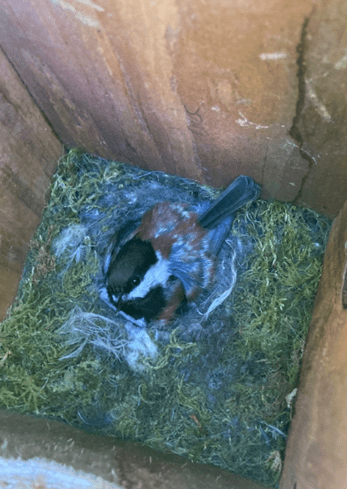
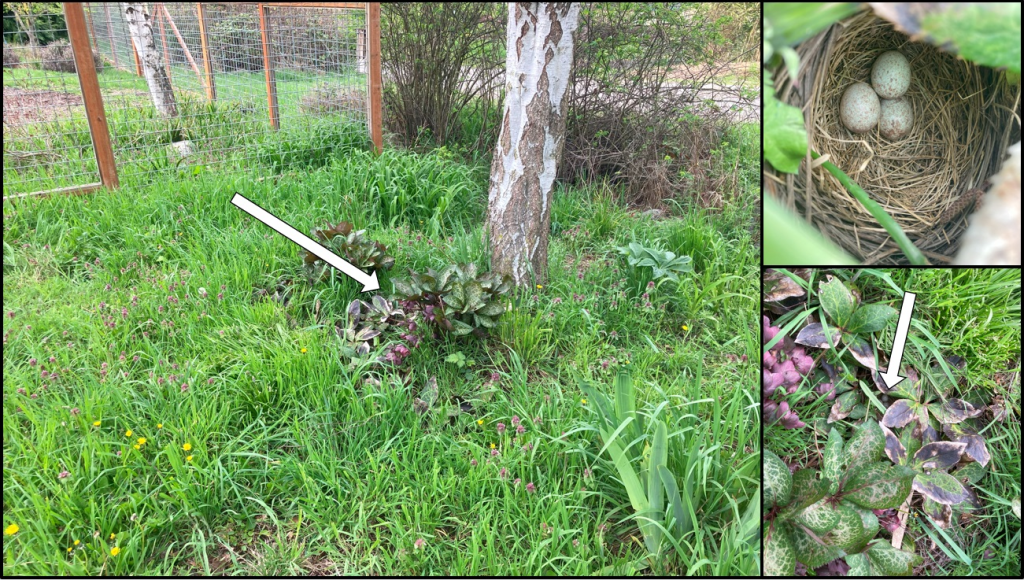


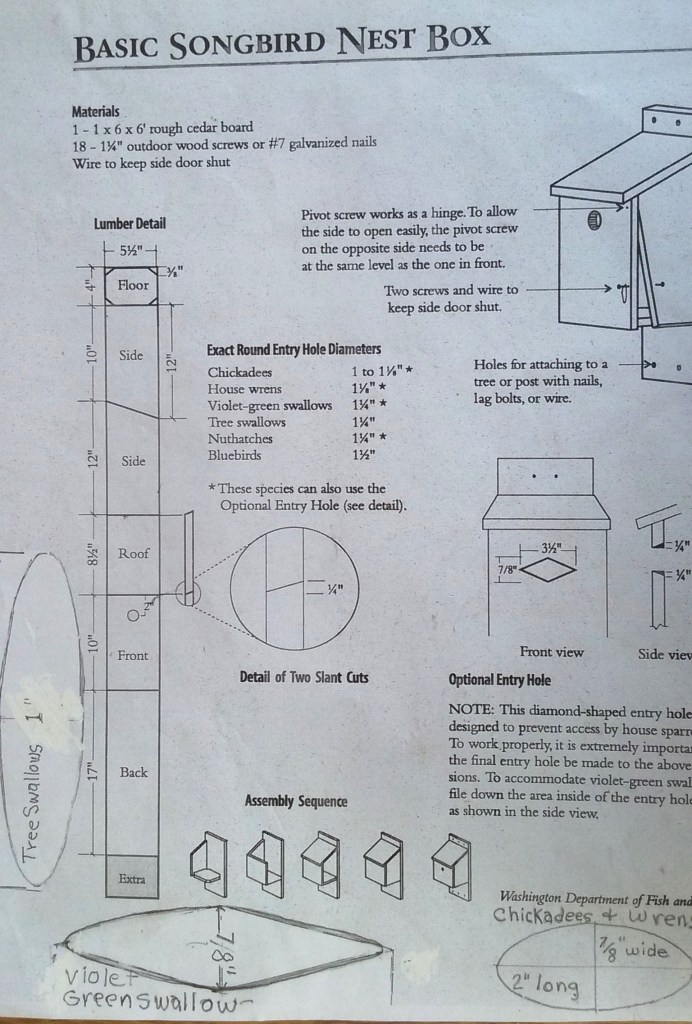

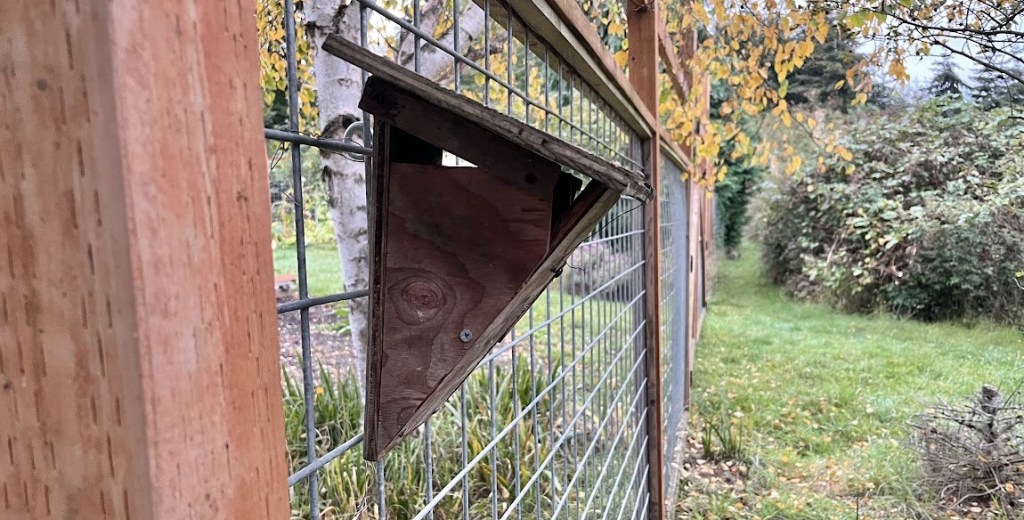
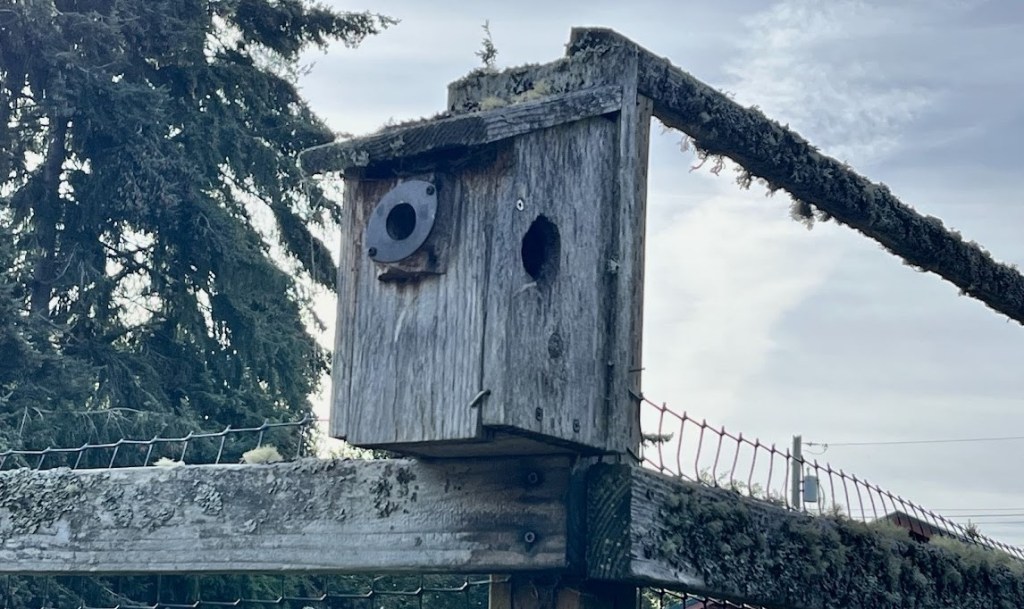

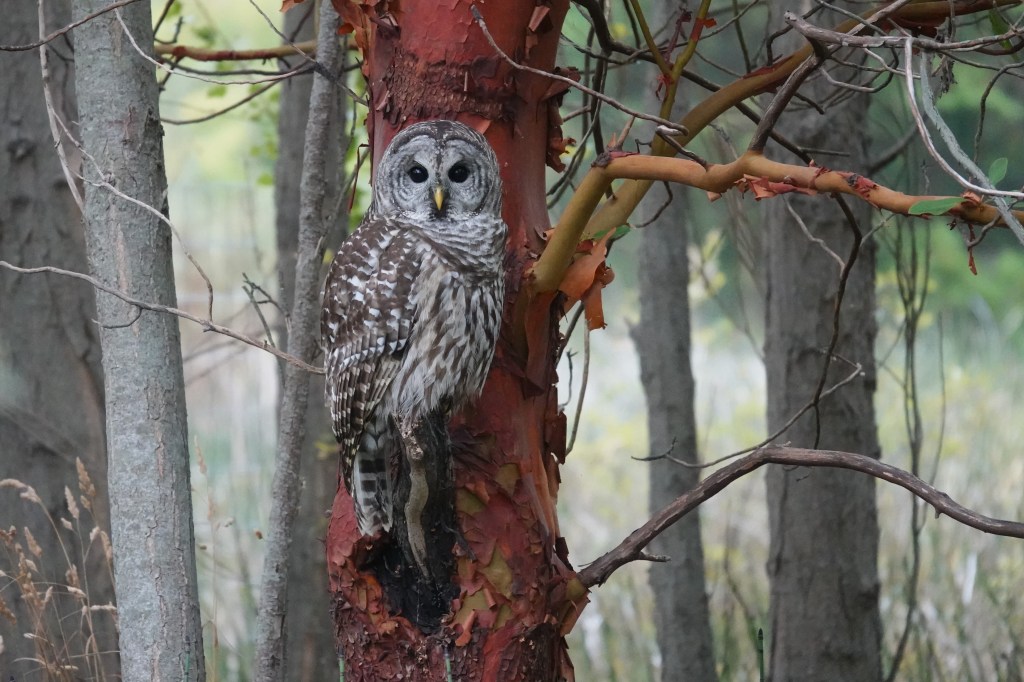


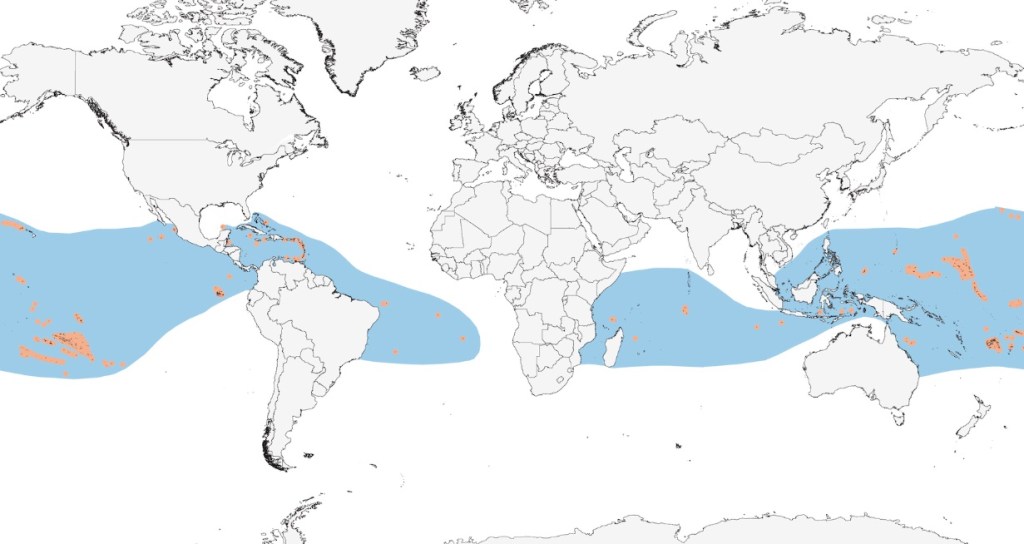


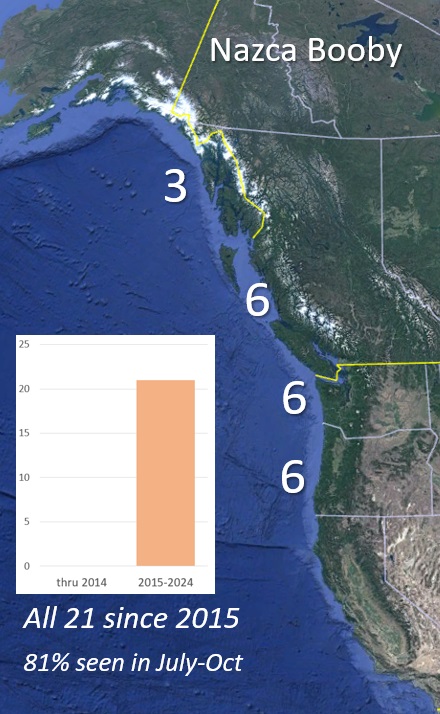


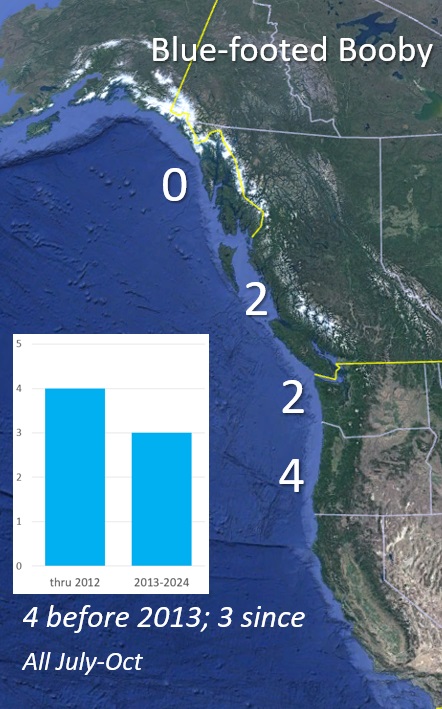

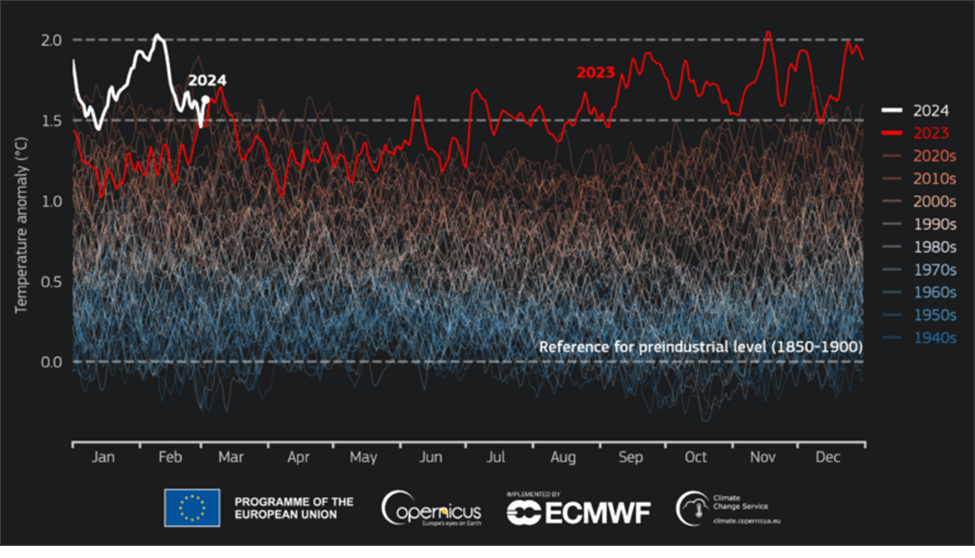


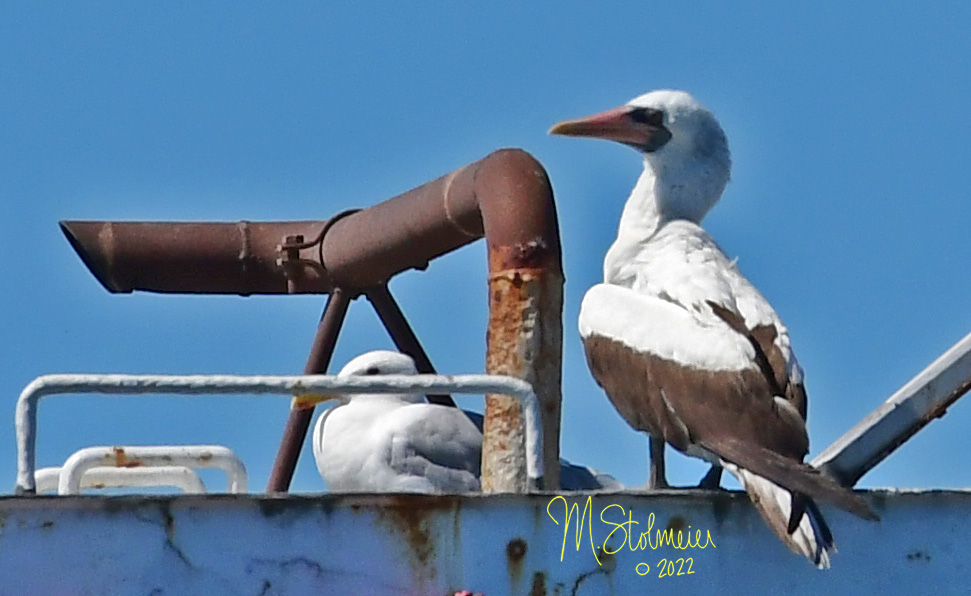
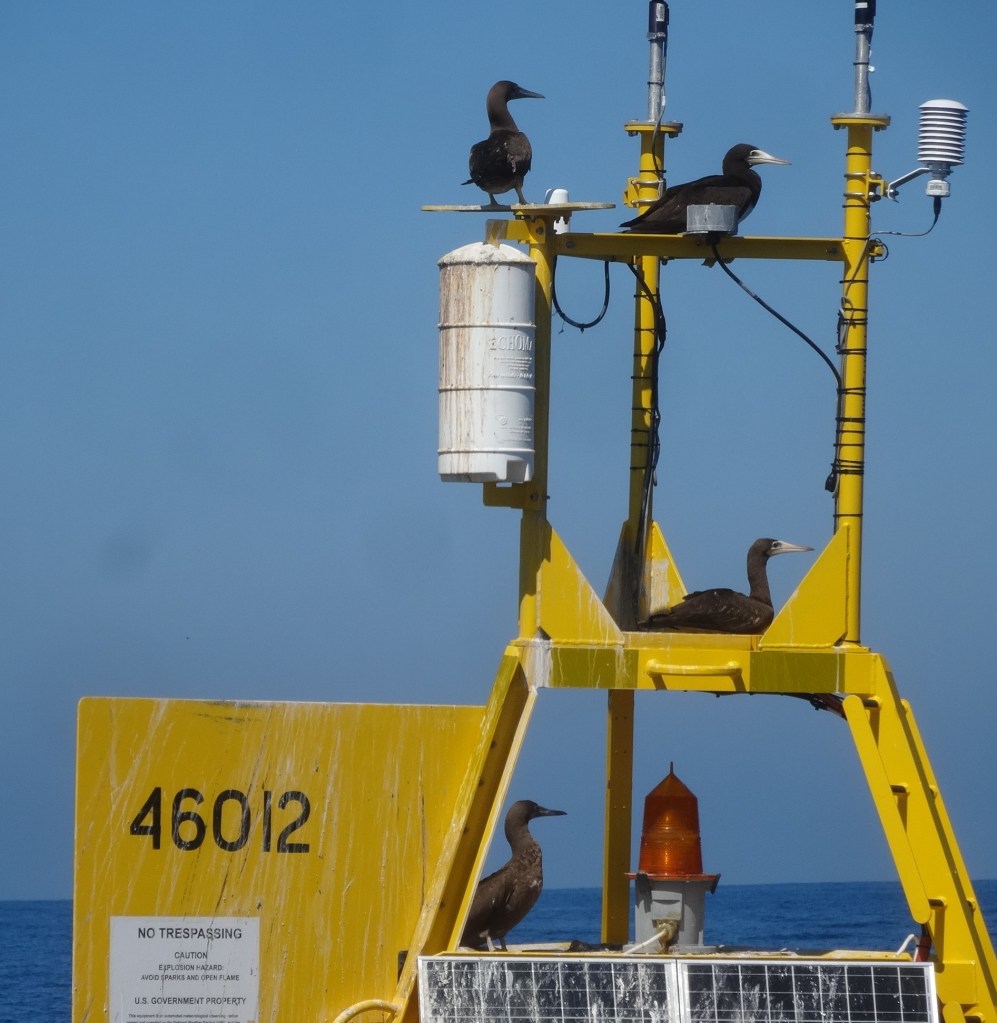


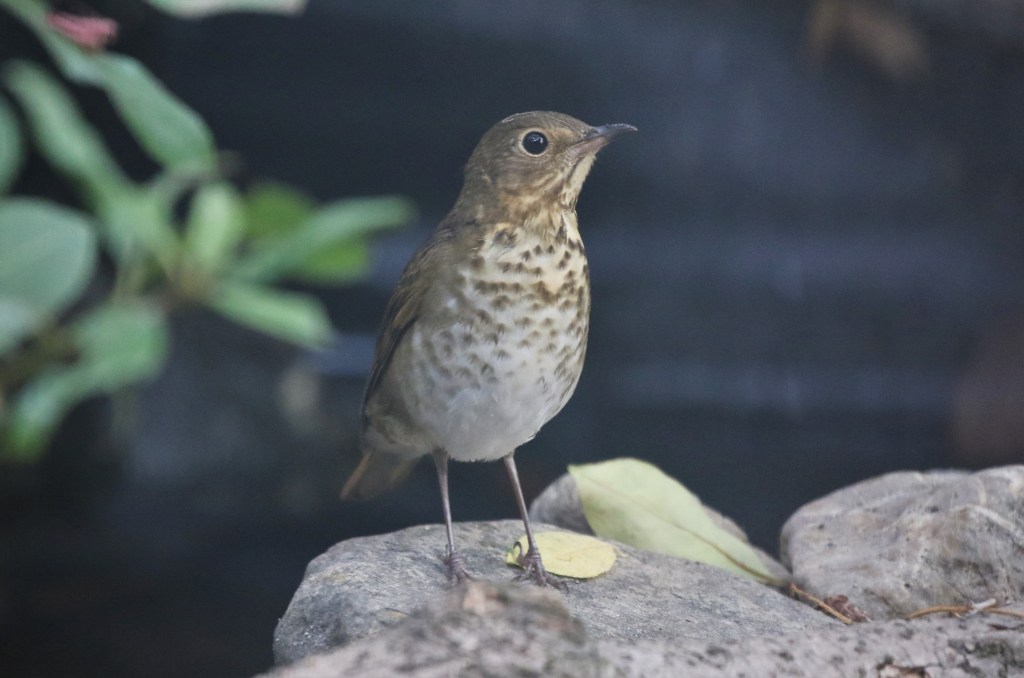


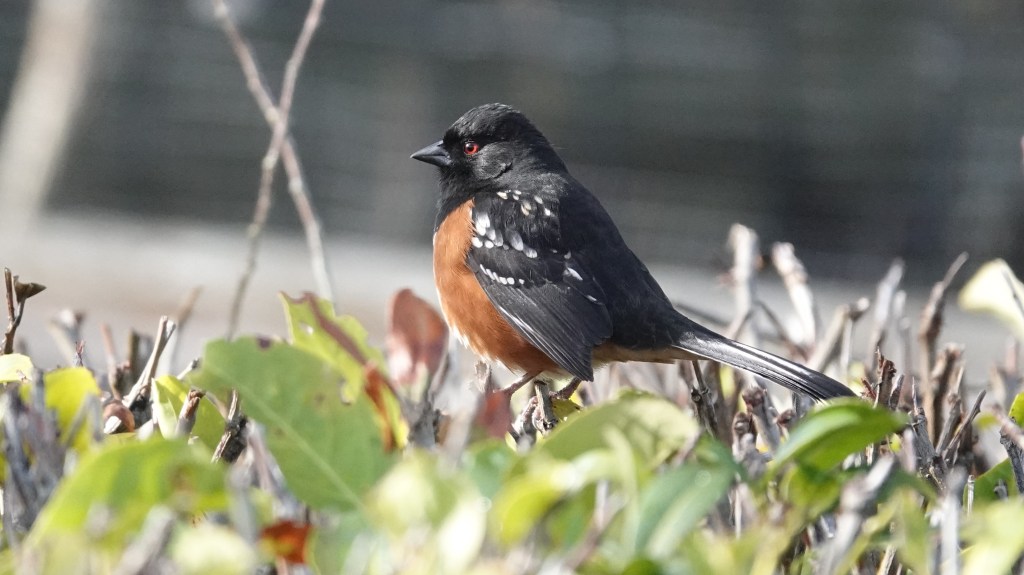

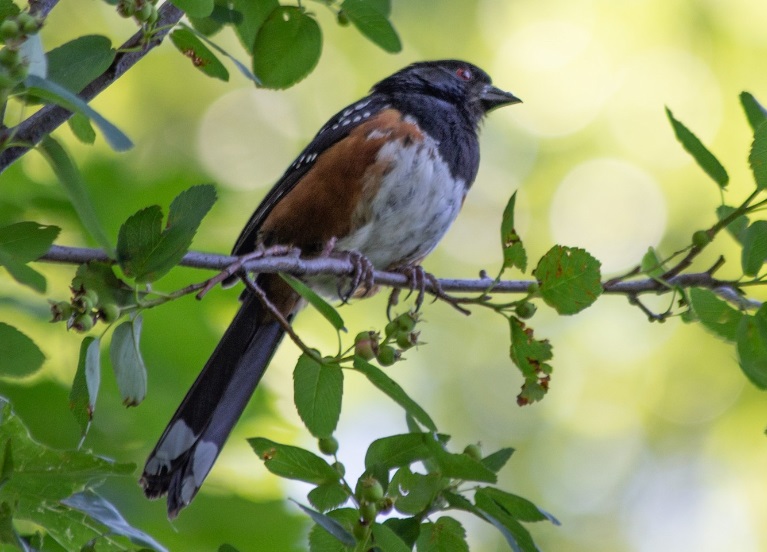


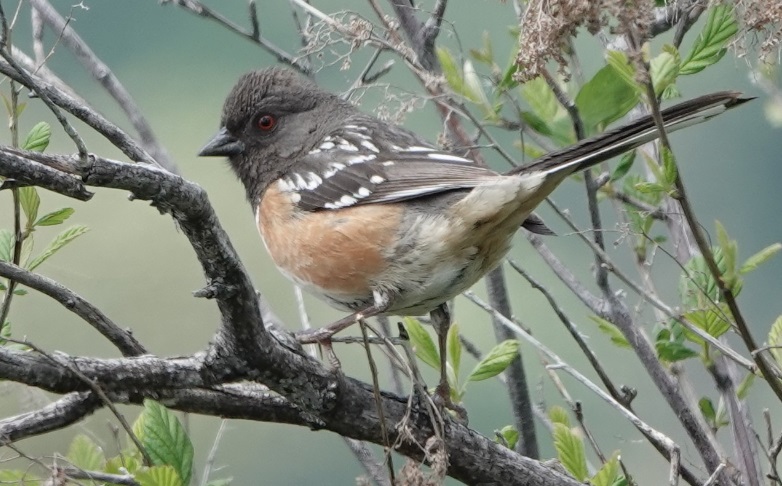

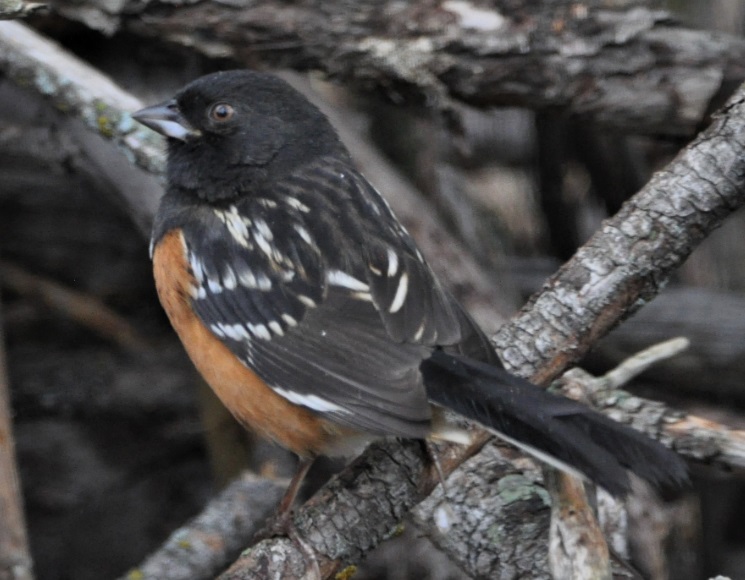


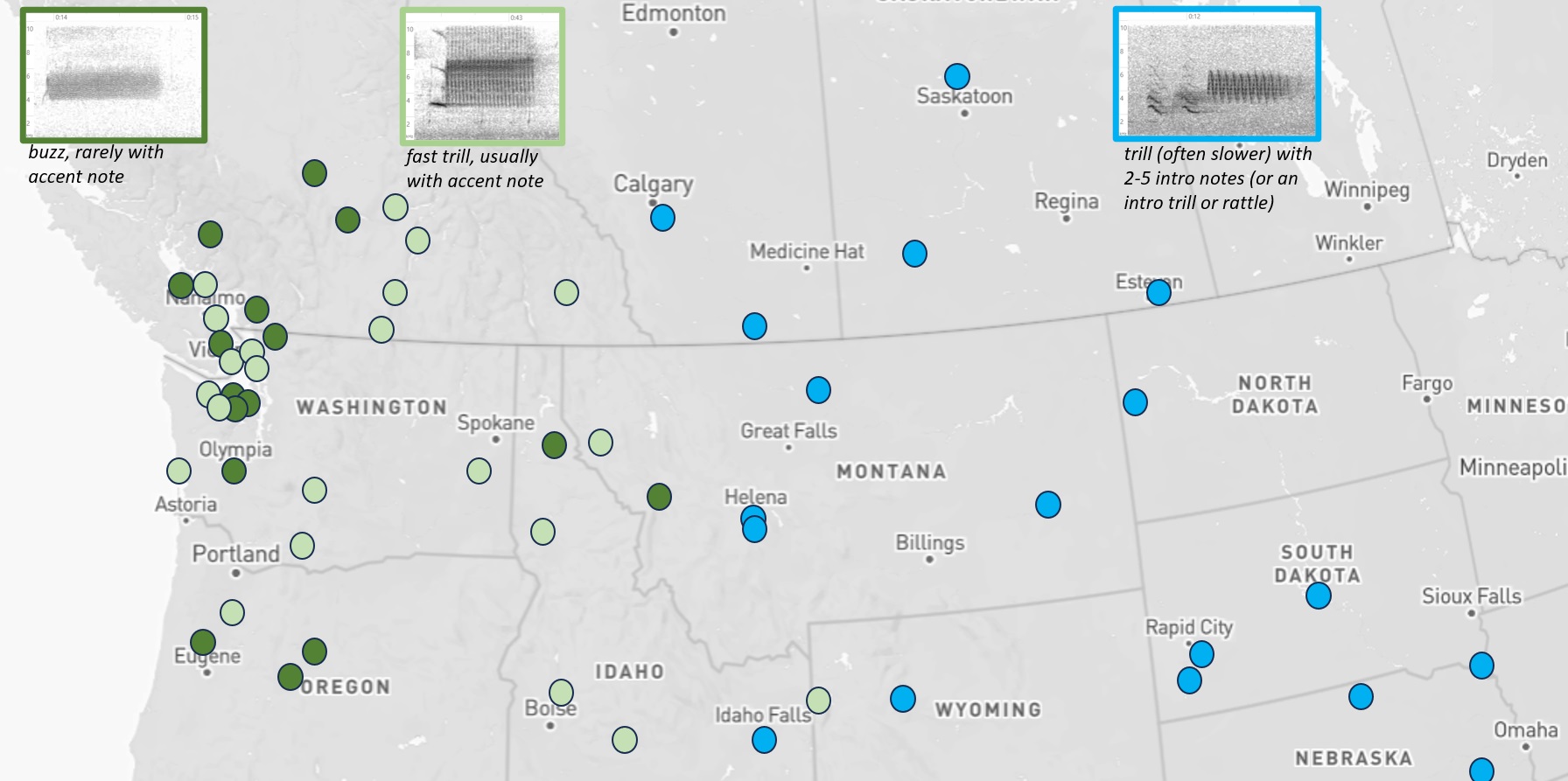
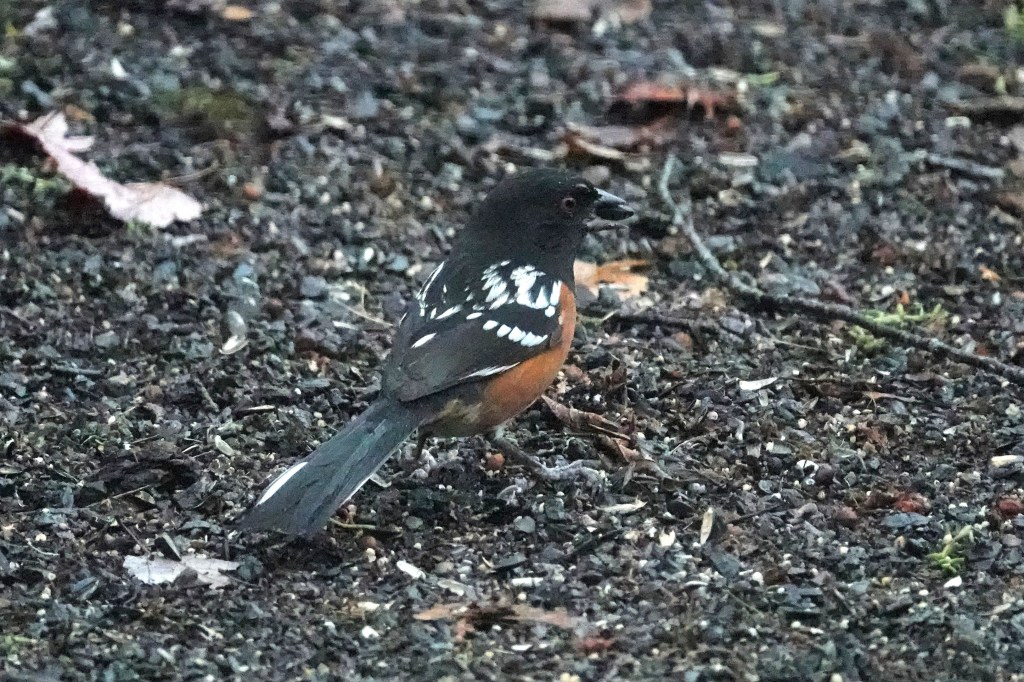
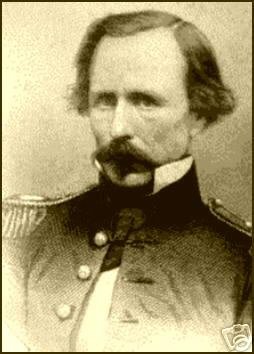
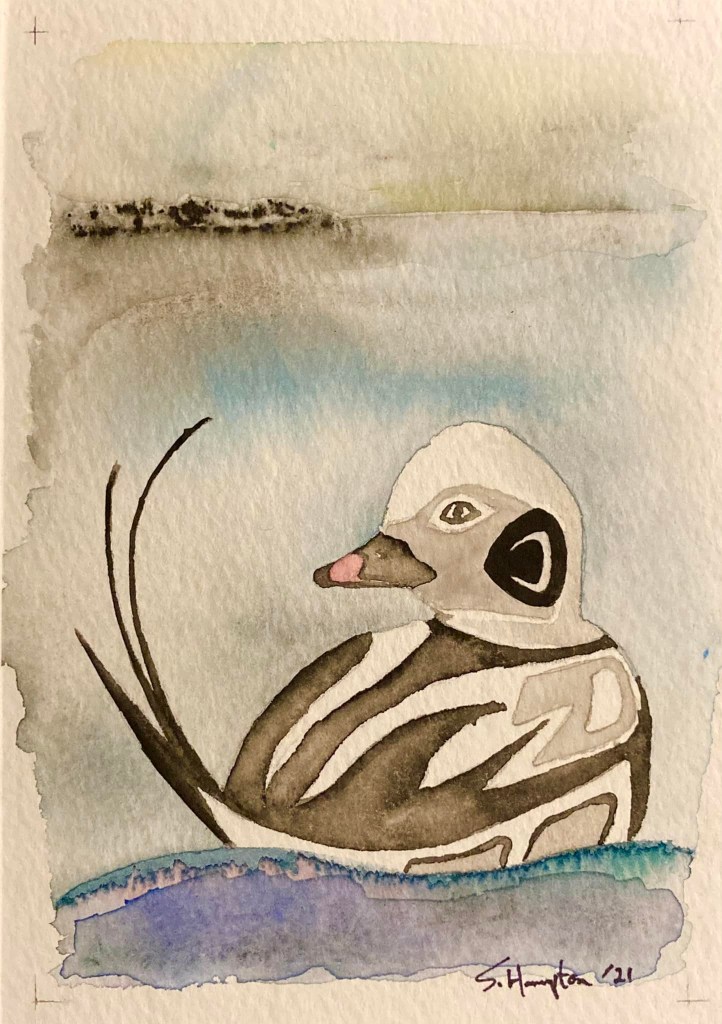
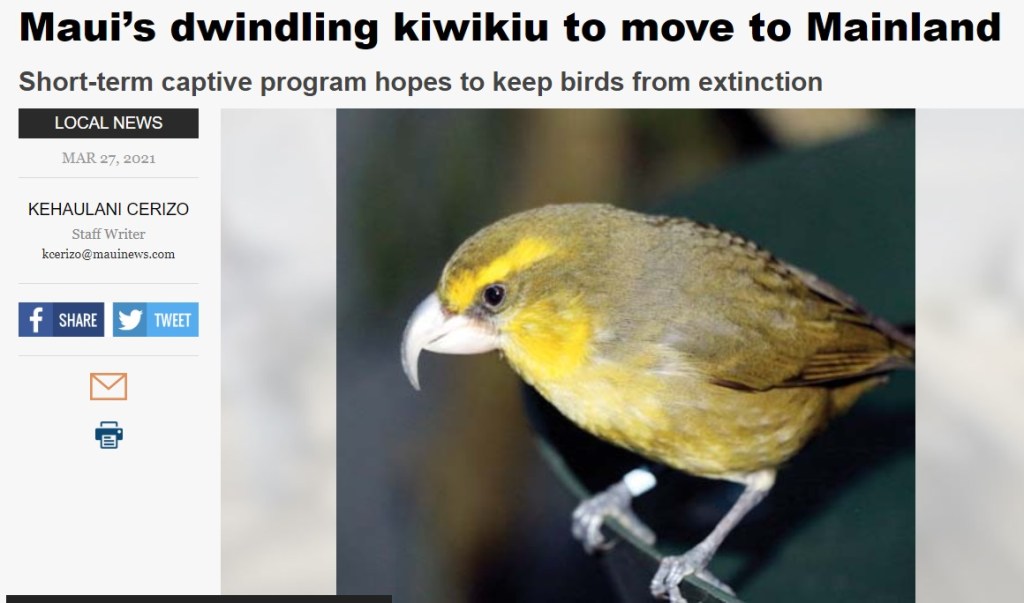


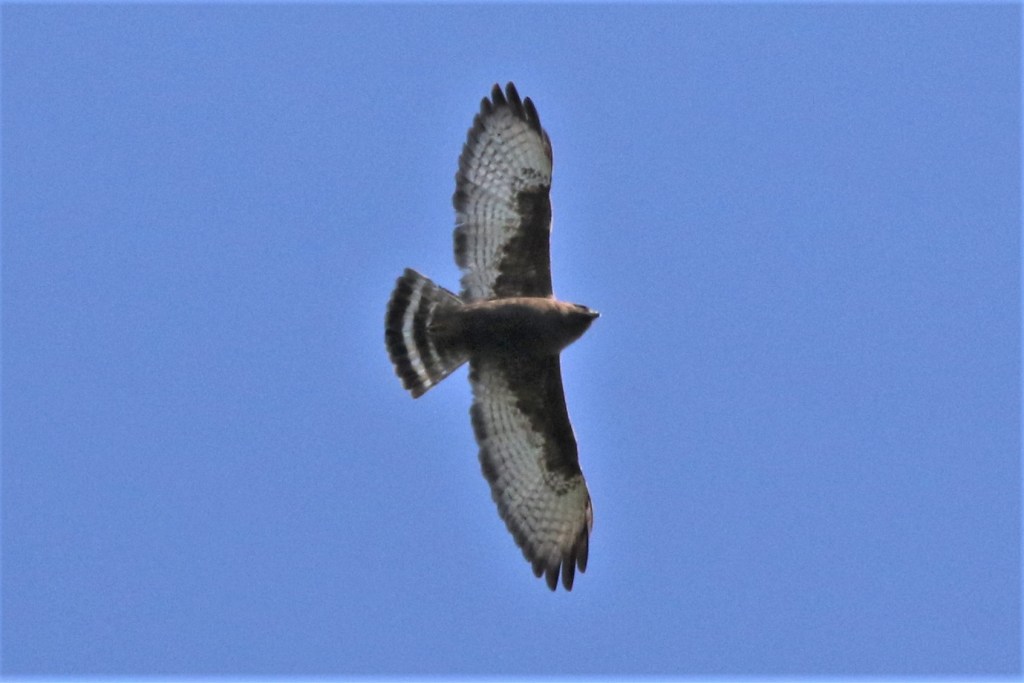
 The Cottonwood Post