To get the party started, here are my ideas for new bird names for 82 species. I also provide a lot of historic and current alternatives.

In a previous blogpost, I documented the history of honorific bird names in the United States. Some basic facts emerged. The practice became common in the early to mid-1800s, after most eastern species had already been given descriptive English names. Thus, 58% of honorific names are western species. They were often named by ornithologists after each other, or after colleagues or supporters, or their wives or daughters (first names for women). Remarkably a third do not have scientific names that match their English honorific name (e.g. Cassin’s Auklet is Ptychoramphus aleuticus, or Aleutian Auklet), almost always because the species was described twice, with the second time (usually Audubon) providing the honorific name. When it was realized the species had been previously described, they followed international protocol and reverted to the original scientific name.
Moving forward, the AOS is now considering new English names for potentially all species with honorific names. As controversial as that may be, coming up with new names is very much the fun part. Here is my personal exercise in that.
For each of these 82 species, I provide their current English name, the meaning of their scientific name, other historic names, the meaning of any subspecies names (leaving off the nominate subspecies), names in other languages, and, finally, my proposals for a new English name (or reverting to a previous name, as the case may be).
Caveats: 1) translating the scientific name is not clear-cut; there are often options for each name. 2) My research on other historic names is undoubtedly incomplete; please add more in the comments. I relied largely on the Birds of the World species accounts and Grinnell and Miller (1944) for these. 3) Translating the names in other languages is definitely as much art as science. I used some online dictionaries, but it was clear they were struggling at times with the nuance. At times I felt like a bewildered traveler unfamiliar with the local slang. I encourage Native speakers to provide clarification. I’d love to add more Native names here.
I was struck that, more often than not, other languages eschewed American English honorifics. For example, Sprague’s Pipit is known as Prairie Pipit in Danish, Dutch, German, Norwegian, Polish, Slovak, Spanish, Swedish, and Turkish. Worldwide species such as Leach’s and Wilson’s Storm-Petrel are predominately known by other names around the world (e.g. Northern and Oceanic Storm-Petrel, respectively, among other names).

This opens the door to a rich tableau of alternative names. Hands down my favorite non-English name goes to Haitian Creole’s moniker for Blackburnian Warbler: Ti Tchit flanbwayan, or Little Flamboyant Warbler. A special shout-out to Icelandic, Norwegian, Polish, and Slovak, which almost always avoid honorifics and use a descriptive moniker. I became a big fan of Norwegian, which often relies on habitat-based names (e.g. Chaparral Sparrow for Bell’s Sparrow, Yucca Oriole for Scott’s Oriole).
The Norwegian list also includes several indigenous-based names (e.g. Eskimo Goose, Navajo Thrasher, Shoshone Sparrow, and Apache Sparrow). Following guidance on tribal consultation (“nothing about us without us”), the selection of such a name should involve discussions with relevant tribes. See this post of mine about Indigenous bird names.
Regarding my proposed new names, I gave priority to previous historic names, whether they be in English or derived from the scientific name, as well as to ideas from other languages. I am confident that others can come up with gems that are better proposals than mine.
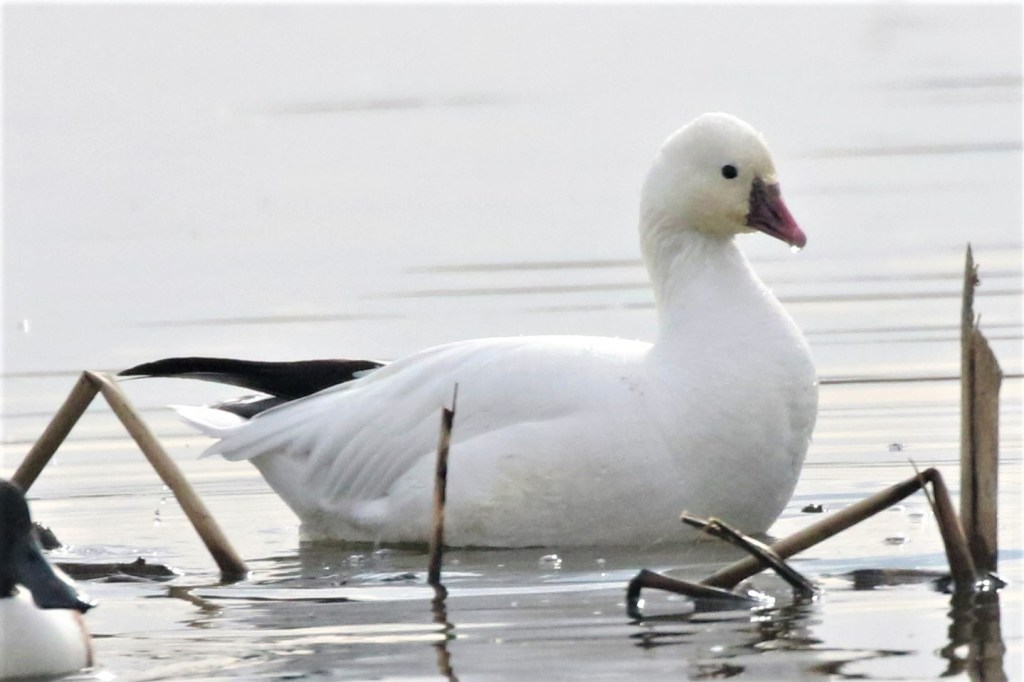
Ross’s Goose
- Meaning of scientific name: Ross’s Goose
- Other historic names: Horned Wavey, Ross Snow Goose
- Names in other languages: White (Croatian, Czech), Dwarf/Pygmy (Danish, Swedish), Eskimo (Finnish, Norwegian), Lesser/Little Snow (German, Portuguese, Slovenian, Turkish), Blizzard (Polish), Snowflake (Slovak)
- My proposals: Ivory Goose, Inuit Goose
Steller’s Eider
- Meaning of scientific name: Steller’s Eider
- Other historic names:
- Names in other languages: Bald (Czech), Siberian (Lithuanian), Lesser (Slovak, Spanish), Russian (Slovenian), Bird-that-sat-in-the-campfire (Inupiat)
- My proposals: Fire Eider, Charred Eider, Flaming Eider, Flammulated Eider
Barrow’s Goldeneye
- Meaning of scientific name: Iceland Goldeneye
- Other historic names:
- Names in other languages: American (Finish), Iceland (most languages)
- My proposals: Crescent Goldeneye, Northern Goldeneye
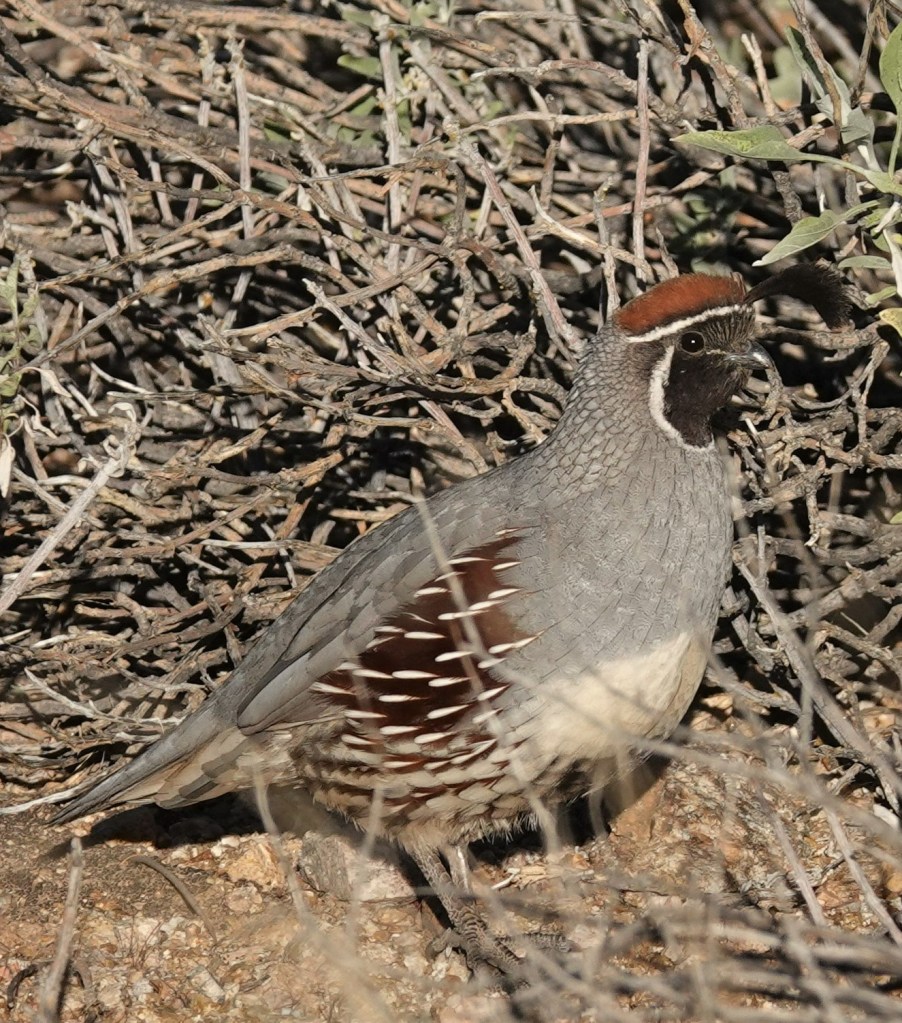
Gambel’s Quail
- Meaning of scientific name: Gambel’s Quail
- Other historic names: Desert Quail
- Meaning of subspecies names: Forgiving/Gracious, Pemberton’s, Tawny-breasted, Stephens’s
- Names in other languages: Desert (Finnish), Helmeted (German), Black-bellied (Norwegian), Pointed (Polish), Headbanded (Slovak), Oak (Swedish)
- My proposals: Mesquite Quail, Arroyo Quail, Desert Quail
Clark’s Grebe
- Meaning of scientific name: Clark’s Grebe
- Other historic names:
- Meaning of subspecies names: Transitional
- Names in other languages: Mexican (Finnish), White-faced (French), Yellow-billed (Norwegian, Polish), White-fronted (Slovak), Orange-billed (Spanish-Mexico)
- My proposals: Elegant Grebe
Vaux’s Swift
- Meaning of scientific name: Vaux’s Swift
- Other historic names: American Swift, Oregon Swift
- Meaning of subspecies names: Gaumer’s, Tamaulipas, Richmond’s, Pale-rumped, Invisible
- Names in other languages: Gray-bellied (German, Polish), Brown (Norwegian), Common (Spanish-Costa Rica)
- My proposals: Forest Swift

Rivoli’s Hummingbird
- Meaning of scientific name: Glittering Hummingbird
- Other historic names: Magnificent (when lumped with Talamanca Hummingbird)
- Names in other languages: Purple-crowned Brilliant Hummingbird (German), Glowing Brim (Icelandic), Purple (Norwegian), Thin-billed Amethyst (Polish), Honey (Slovak), Magnificent (Spanish)
- My proposals: Glittering Hummingbird
Anna’s Hummingbird
- Meaning of scientific name: Anna’s Hummingbird
- Other historic names:
- Meaning of subspecies names: Sedentary
- Names in other languages: Red-faced (Norwegian), Ruby-bearded (Finnish), Red-headed (Spanish-Mexico)
- My proposals: Winter Hummingbird, Singing Scrub-gem
Costa’s Hummingbird
- Meaning of scientific name: Costa’s Hummingbird
- Other historic names: Ruffed Hummingbird, Coast Hummingbird
- Names in other languages: Violet-headed (German, Spanish-Mexico), Desert (Norwegian), California (Polish)
- My proposals: Desert Hummingbird, Xeric Hummingbird, Desert Scrub-gem, Amethyst Scrub-gem
Allen’s Hummingbird
- Meaning of scientific name: Nuu-chah-nulth (Nootka) for “hummingbird” (so really meant for Rufous)
- Other historic names: Nootka Hummingbird (original scientific name for Rufous, with which Allen’s was lumped)
- Names in other languages: Green-backed Cinnamon/Rufous (German), Chaparral (Norwegian), California (Polish)
- My proposals: Pacific Hummingbird, Coastal Hummingbird, California Hummingbird, Chumash Hummingbird
Ridgway’s Rail
- Meaning of scientific name: Plain Rail
- Other historic names: Clapper Rail (when lumped), Red-breasted Rail
- Meaning of subspecies names: Light-footed, Belding’s, Yuma
- Names in other languages: California (Dutch, French, Polish, Slovak), Pacific Coast (Spanish-Mexico)
- My proposals: Pacific Rail
Wilson’s Plover
- Meaning of scientific name: Wilson’s Plover
- Other historic names: Belding Plover
- Meaning of subspecies names: Belding’s, Cinnamon, Thick-billed
- Names in other languages: Thick-billed (Dutch, Finnish, Norwegian, Slovak, Spanish), Necklaced (Haitian), Tidal/Tideland (Icelandic), Big-eyed (Polish), Beaked (Portuguese), Beach Puppet (Spanish-Cuba), Maritime (Spanish-Puerto Rico), Coastal (Turkish), Sea Runner (Swedish)
- My proposals: Beach Plover, Large-billed Plover
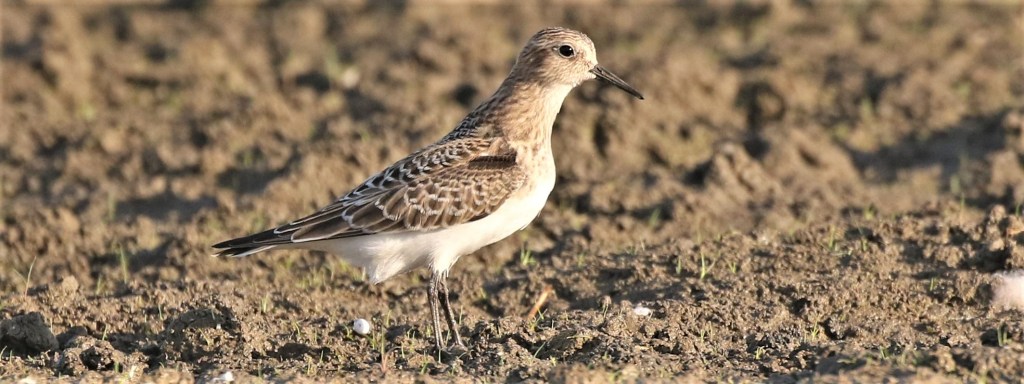
Baird’s Sandpiper
- Meaning of scientific name: Baird’s Sandpiper
- Other historic names:
- Names in other languages: Long-winged (Czech, Polish, Turkish), Eskimo (Finnish), Clay (Icelandic), Yellow-breasted (Norwegian, Swedish), Fine-billed (Portuguese, Spanish-Uruguay), Gravel (Slovenian), Plain (Spanish-Argentina, Paraguay)
- My proposals: Marathon Sandpiper, Nunavut Sandpiper, Long-winged Sandpiper
Wilson’s Snipe
- Meaning of scientific name: Delicate/Elegant Snipe
- Other historic names:
- Names in other languages: American (Danish, Dutch, Finnish, Hungarian, Polish, Russian, Serbian), North American (Czech, Spanish-Mexico), Short-legged (Haitian), Indian (Norwegian), Shrill (Spanish-Venezuela)
- My proposals: Elegant Snipe, Winnowing Snipe
Wilson’s Phalarope
- Meaning of scientific name: Tricolored Phalarope
- Other historic names:
- Names in other languages: Tricolored (Croatian, Polish, Serbian, Slovak, Slovenian, Spanish), Long-billed (Czech, Spanish-Mexico, Venezuela), American (Danish, Finnish, Latvian, Romanian), Large/Great (Dutch, Lithuanian, Turkish), White-tailed (Norwegian), Common (Spanish-Argentina, Uruguay)
- My proposals: Tricolored Phalarope
Kittlitz’s Murrelet
- Meaning of scientific name: Short-billed Murrelet
- Other historic names:
- Names in other languages: Short-billed (Finnish, German, Norwegian, Polish, Spanish), Mountain (Icelandic), Gray (Slovak), Brown (Swedish)
- My proposals: Glacier Murrelet
Scripps’s Murrelet
- Meaning of scientific name: Scripps’s Murrelet
- Other historic names: Xantus’s (when lumped with Craveri’s and Guadalupe)
- Names in other languages: Black-tailed (Croatian), California (German, Norwegian, Spanish, Swedish), Mourning (Polish), White-winged California (Spanish-Mexico)
- My proposals: California Murrelet
Craveri’s Murrelet
- Meaning of scientific name: Murrelet
- Other historic names: Xantus’s (when lumped with Scripps’s)
- Names in other languages: Mexican (Croatian, Norwegian), Baja California (German, Swedish, Turkish), California (Polish), Dark-winged (Slovak), Dark-winged California (Spanish-Mexico)
- My proposals: Mexican Murrelet, Baja Murrelet
Cassin’s Auklet
- Meaning of scientific name: Aleutian Auklet
- Other historic names: Aleutian Auklet (first described before Cassin was born)
- Meaning of subspecies names: Southern
- Names in other languages: Aleutian (German), Black (Polish), Ashy/Smoky (Slovak, Turkish), Somber (Spanish), Dark (Spanish-Mexico),
- My proposals: Pacific Auklet, Ashy Auklet
Sabine’s Gull
- Meaning of scientific name: Sabine’s Gull
- Other historic names: Fork-tailed Gull
- Meaning of subspecies names: Palearctic, Chukhotski, Voznesensky
- Names in other languages: Fork-tailed (Dutch, Spanish-Cuba, Turkish), Swallow-tailed (Hungarian, Serbian, Slovenian), Split-tailed (Latvian, Lithuanian, Romanian, Spanish-Mexico), Collared (Polish), Tern Gull (Swedish)
- My proposals: Fork-tailed Gull, Tundra Gull, Magnificent Xema
Bonaparte’s Gull
- Meaning of scientific name: Philadelphia Gull
- Other historic names:
- Names in other languages: Little Black-headed (Dutch, Turkish), Tree (Icelandic, Swedish), Canada Hooded (Norwegian), Canadian (Polish), American (Portuguese), American River (Slovenian), Little/Small (Spanish-Cuba)
- My proposals: Boreal Gull
Ross’s Gull
- Meaning of scientific name: Rosy Gull
- Other historic names:
- Names in other languages: Rosy (Basque, Catalan, Croatian, Czech, Danish, Finnish, French, German, Icelandic, Lithuanian, Norwegian, Polish, Portuguese, Slovak, Slovenian, Spanish, Swedish, Turkish)
- My proposals: Rosy Gull
Franklin’s Gull
- Meaning of scientific name: Aztec Gull (Nahuatl for “gull”)
- Other historic names:
- Names in other languages: Prairie (Finish, German, Hungarian, Polish, Portuguese, Slovak, Swedish), Rosy (Spanish-Venezuela), Little (Spanish-Paraguay and Argentina)
- My proposals: Prairie Gull

Heermann’s Gull
- Meaning of scientific name: Heermann’s Gull
- Other historic names: White-headed Gull, Belcher Gull
- Names in other languages: Mexican (Finnish, Spanish), Ashy (Norwegian), Snowy (Polish), Coastal (Slovak), Leaden/Plumbeous (Spanish-Mexico), White-headed (Swedish)
- My proposals: Isla Rasa Gull, Plumbeous Gull, Mexican Gull, Baja Gull
Forster’s Tern
- Meaning of scientific name: Forster’s Tern
- Other historic names:
- Names in other languages: North American (Czech), Prairie (Danish, Norwegian), Silver (Finnish), Fork-tailed (Haitian), Pond (Hungarian), Black-eared (Polish), Marsh (Slovak, Swedish), American River (Slovenian), Masked (Turkish)
- My proposals: Marsh Tern
Wilson’s Storm-Petrel (recently split to Subantarctic Storm-Petrel by some authorities)
- Meaning of scientific name: Oceanic Storm-Petrel
- Other historic names: Yellow-webbed Storm-Petrel
- Meaning of subspecies names: Exasperating, Chilean
- Names in other languages: Ordinary/Common (Afrikaans), Yellow-footed (Czech, Polish), Southern (Finnish, Greek), Variegated (German), Oceanic (Icelandic, Spanish-Dom Rep), Brown (Indonesian), Antarctic (Slovenian), Brownish-Gray (Spanish-Uruguay)
- My proposals: Oceanic Storm-Petrel, Subantarctic Storm-Petrel
Leach’s Storm-Petrel
- Meaning of scientific name: White-rumped Storm-Petrel
- Other historic names: Mother Cary’s Chicken
- Meaning of subspecies names: Chapman’s
- Names in other languages: Forked/Swallow-tailed (Afrikaans, Hungarian, Italian, Portuguese, Swedish, Turkish), Large (Basque), Northern (Asturian, Catalan, Czech, Latvian, Lithuanian, Spanish), Great (Danish), Storm Fairy (Finnish), White-rumped (French, Haitian), Wave Runner (German), Sea Swallow (Icelandic), Storm Swallow (Norwegian)
- My proposals: Northern Storm-Petrel
Cory’s and Scopoli’s Shearwaters
- Meaning of scientific names: Northern/Boreal and Diomedes/White Shearwater
- Other historic names:
- Meaning of subspecies names: Northern/Boreal and Diomedes/White Shearwater
- Names in other languages: Brown (Basque), Ashy (Catalan, French), Gray (Czech), Kuhl’s or Atlantic (Danish), Kuhl’s (Dutch), Macaronesian (Finnish), Sepia (German), Great/Northern (Italian), Yellow-billed (Lithuanian, Norwegian, Polish, Slovenian, Swedish), Mediterranean (Portuguese-Brazil), Fairy (Slovak), Cinderella (Spanish), Large (Spanish-Argentina, Uruguay, Venezuela)
- My proposals: Northern Shearwater for Cory’s; Diomedes, White, or Silver Shearwater for Scopoli’s
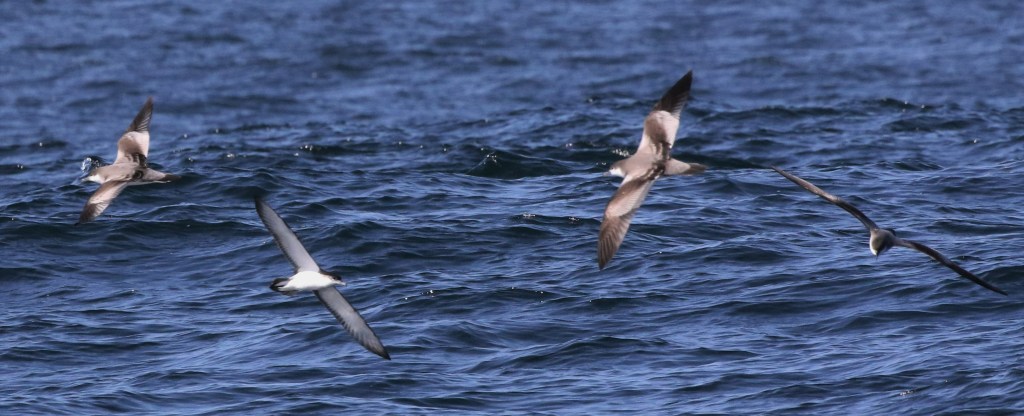
Buller’s Shearwater
- Meaning of scientific name: Buller’s Shearwater
- Other historic names: New Zealand Shearwater, Gray-backed Shearwater, Ashy-black Shearwater
- Names in other languages: Gray-backed (Czech, German, Norwegian, Polish, Slovak, Spanish, Turkish), Gray (Swedish)
- My proposals: Aotearoa Shearwater, Elegant Shearwater
Brandt’s Cormorant
- Meaning of scientific name: Paintbrush/Painted/Plumed Cormorant
- Other historic names: Plumed Cormorant, Green Cormorant
- Names in other languages: Blue-throated (Croatian, Icelandic, Norwegian, Swedish), Paintbrush (German), Plumed (Polish), Short-tailed (Slovak), Sergeant (Spanish)
- My proposals: Paintbrush Cormorant, Plumed Cormorant
Cooper’s Hawk
- Meaning of scientific name: Cooper’s Hawk
- Other historic names: Blue-backed Hawk, Mexican Hawk
- Names in other languages: Smooth (Norwegian)
- My proposals: Woodland Hawk, Blue-backed Hawk, Capped Hawk, Town Hawk, Village Hawk
Harris’s Hawk
- Meaning of scientific name: Banded Hawk
- Other historic names: Bay-winged Hawk
- Meaning of subspecies names: Bay-winged
- Names in other languages: Desert (Dutch, German), Knight (Finnish), Sand (Icelandic), Cactus (Norwegian, Swedish), Social (Polish), Bay-winged (Portuguese, Slovenian), Four-colored (Slovak), Mixed (Spanish), Red-and-black (Spanish-Mexico), Walking (Spanish-Venezuela)
- My proposals: Bay-winged Hawk, Cactus Hawk, Social Hawk, Coyote Hawk
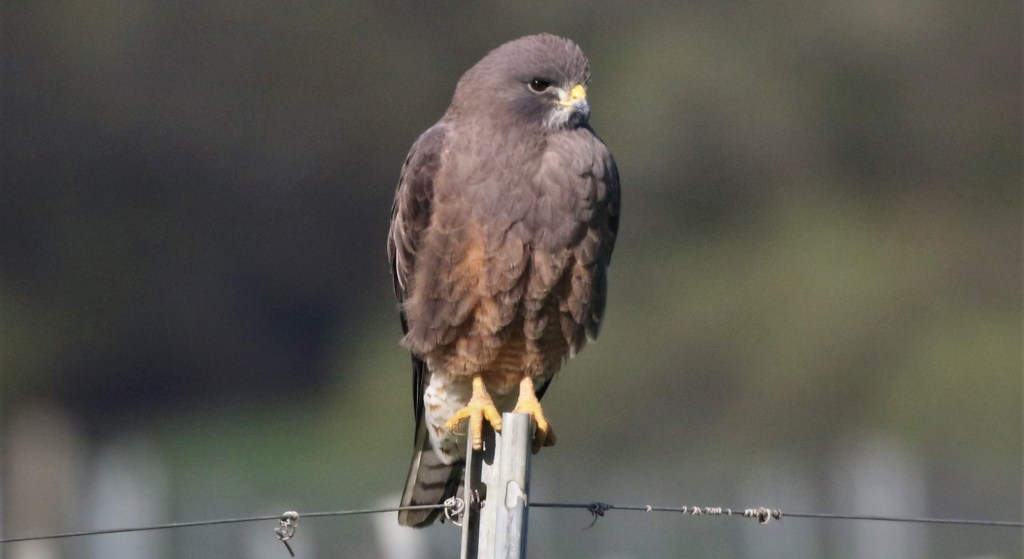
Swainson’s Hawk
- Meaning of scientific name: Swainson’s Hawk
- Other historic names: Rocky Mountain Buzzard, Canada Buzzard, Brown Hawk, Sharp-winged Hawk
- Names in other languages: White-throated (Czech), Prairie (Dutch, Finnish, German, Norwegian, Polish, Portuguese, Slovak, Swedish), Grasshopper (Spanish-Argentina, Chile, Paraguay)
- My proposals: Prairie Hawk, Plains Hawk, Grasshopper Hawk
Lewis’s Woodpecker
- Meaning of scientific name: Lewis’s Woodpecker (previously, Collared Woodpecker)
- Other historic names: Black Woodpecker (by Lewis)
- Names in other languages: Blood-faced (German), Crow Woodpecker (Icelandic, Swedish), Flycatching Woodpecker (Norwegian), Pink-bellied (Polish)
- My proposals: Wandering Woodpecker, Painted Woodpecker, Crow Woodpecker
Williamson’s Sapsucker
- Meaning of scientific name: Shielded Sapsucker
- Other historic names: Black-breasted Sapsucker, Brown-headed Woodpecker, Round-headed Woodpecker, Brown Woodpecker
- Meaning of subspecies names: Natalie
- Names in other languages: Mountain (Dutch), Pine (German, Norwegian), Shielded (Icelandic), Black/Dark-headed (Polish, Swedish), Dark (Spanish), Elegant (Spanish-Mexico)
- My proposals: Mountain Sapsucker, Montane Sapsucker, Conifer Sapsucker, Larch Sapsucker
Nuttall’s Woodpecker
- Meaning of scientific name: Nuttall’s Woodpecker
- Other historic names:
- Names in other languages: California (Norwegian, Polish, Serbian, Spanish-Mexico), Chaparral
- My proposals: Oak Woodpecker, California Woodpecker
Couch’s Kingbird
- Meaning of scientific name: Couch’s Kingbird
- Other historic names:
- Names in other languages: Texas (Dutch, German, Polish, Russian), Mayan (Norwegian), Whistling (Spanish), Mexican (Swedish, Turkish)
- My proposals: Whistling Kingbird, Mexican Kingbird, Veracruz Kingbird, Mayan Kingbird

Cassin’s Kingbird
- Meaning of scientific name: Vociferous/Noisy Kingbird
- Other historic names: Noisy Kingbird
- Meaning of subspecies names: Different-winged
- Names in other languages: Squeaky/Noisy/Screaming (Icelandic, Polish, Spanish), Scrub (Norwegian)
- My proposals: Vociferous Kingbird
Hammond’s Flycatcher
- Meaning of scientific name: Hammond’s Flycatcher
- Other historic names:
- Names in other languages: Spruce (Dutch, Norwegian, Slovak), Fir (German, Polish),
- My proposals: Lodgepole Flycatcher, Mountain Flycatcher, Montane Flycatcher
Say’s Phoebe
- Meaning of scientific name: Say’s Phoebe
- Other historic names: Black-tailed Phoebe
- Meaning of subspecies names: Peaceful/Tranquil/Quiet, Pale/Pallid
- Names in other languages: Brown (Finnish, Norwegian), Rufous-bellied (French, Swedish), Cinnamon-bellied (German), Land/Terrestrial (Icelandic), Plain (Slovak), Plains (Spanish)
- My proposals: Mesa Phoebe, Plains Phoebe, Cinnamon Phoebe, Sunrise Phoebe
Bell’s Vireo
- Meaning of scientific name: Bell’s Vireo
- Other historic names: Greenlet
- Meaning of subspecies names: Intermediate, Arizona, Least/Tiny
- Names in other languages: Brown-eyed (German), Floodplain (Slovak), Chaparral (Swedish)
- My proposals: Riparian Vireo
Hutton’s Vireo
- Meaning of scientific name: Hutton’s Vireo
- Other historic names: Dusky Vireo
- Meaning of subspecies names: Pacific (group), Island, Dusky, Parkes’s, Mountain/Sierra, Unitt’s, Oberholser’s, Connected; Interior (group), Stephens’s, Caroline’s, Peaceful, Mexican, Volcano
- Names in other languages: Greenish (Icelandic, Polish), Oak (Norwegian), Kinglet Vireo (Spanish-Mexico)
- My proposals: Oak Vireo, Live Oak Vireo
Cassin’s Vireo
- Meaning of scientific name: Cassin’s Vireo
- Other historic names: Solitary Vireo (when lumped with Plumbeous and Blue-headed)
- Meaning of subspecies names: San Lucas
- Names in other languages: Ash-green (Icelandic), California (Norwegian), Olive (Polish), Spectacled (Slovak)
- My proposals: Gray-headed Vireo, Spectacled Vireo
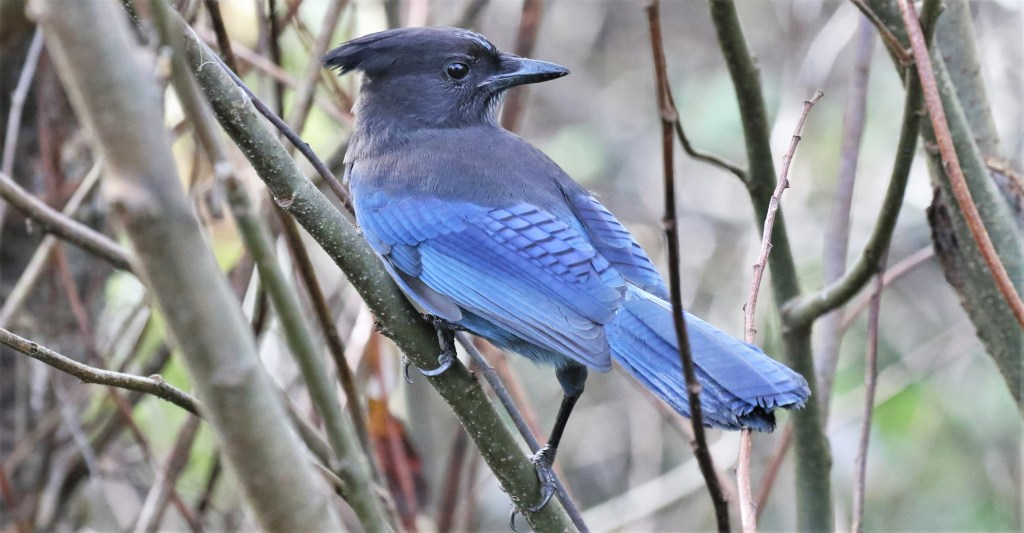
Steller’s Jay
- Meaning of scientific name: Steller’s Jay
- Other historic names: Sierra Jay, Blue-fronted Jay, California Mountain Jay, Crested Jay
- Meaning of subspecies names: Charlotte, Fronted, Coal, Connecting, Long-crested, Diademed, Phillips, Crowned, Purple, Aztec, Teotepec, Ridgway, Azure, Pleasant
- Names in other languages: Pine (Norwegian), Diademed (German), Crested (Spanish-Mexico)
- My proposals: Royal Jay, Cobalt Jay, Diademed Jay; assuming a split, Forest Jay (along the Pacific) and Mountain Jay (Rocky Mtn interior)
Woodhouse’s Scrub-Jay
- Meaning of scientific name: Woodhouse’s Scrub-Jay
- Other historic names:
- Meaning of subspecies names: Nevada, Texas, Gray, Dark-blue, Sumichrast’s, Remote
- Names in other languages: Juniper (Norwegian), Woodland (Polish), Hooded (Slovak), Necklaced (Spanish-Mexico), Inland (Swedish)
- My proposals: Juniper Scrub-jay
Clark’s Nutcracker
- Meaning of scientific name: Columbian Nutcracker
- Other historic names:
- Names in other languages: Gray (Dutch, Polish, Swedish), American (Finish, French, Russian, Serbian, Spanish), Pine (German, Norwegian)
- My proposals: Timberline Nutcracker, Pine Nutcracker, Alpine Nutcracker, Whitebark Nutcracker
Bewick’s Wren
- Meaning of scientific name: Bewick’s Wren
- Other historic names:
- Meaning of subspecies names: Desert-loving, Obscure/Hidden, Pulich’s, Sada’s, Mexican, Fine-voiced/Melodious, Thicket/Wood-dwelling, Marin, Spot-tailed, White-browed, Beautiful-tailed, Cerros Island, Magdalena, Short-tailed
- Names in other languages: Gray (Icelandic), Long-tailed (Norwegian, Spanish-Mexico), Mousey (Polish), Garden (Slovak), Black-tailed (Spanish), Thicket (Swedish)
- My proposals: Thicket Wren
Bendire’s Thrasher
- Meaning of scientific name: Bendire’s Thrasher
- Other historic names:
- Meaning of subspecies names: White/Glittering, Ruddy
- Names in other languages: Cactus (Dutch, German, Polish, Slovak), Navajo (Norwegian), Short-billed (Spanish)
- My proposals: Yucca Thrasher
LeConte’s Thrasher
- Meaning of scientific name: LeConte’s Thrasher
- Other historic names: Yuma Thrasher
- Meaning of subspecies names: McMillan’s, Desert (Vizcaino)
- Names in other languages: Desert (Dutch, German), Mohave (Norwegian, Swedish), Sand (Polish), Steppe (Slovak), Pale/Pallid (Spanish),
- My proposals: Yuma Thrasher, Sand Thrasher, Xeric Thrasher

Townsend’s Solitaire
- Meaning of scientific name: Townsend’s Solitaire
- Other historic names:
- Meaning of subspecies names: Fine-voiced/Melodious
- Names in other languages: Mountain (Dutch), Squeaky (Icelandic), Gray (Norwegian), Clarinet (Polish), Northern (Spanish, Swedish)
- My proposals: Juniper Solitaire
Bicknell’s Thrush
- Meaning of scientific name: Bicknell’s Thrush
- Other historic names:
- Names in other languages: Newfoundland (Czech), Mountain (Danish), Forest (Norwegian), Wandering (Polish), Brown (Slovak)
- My proposals: Fir Thrush

Swainson’s Thrush
- Meaning of scientific name: Burnt/Burnished Thrush
- Other historic names:
- Meaning of subspecies names: Russet-backed: Phillip’s, Musical; Olive-backed: Hoary, Appalachian, Swainson’s
- Names in other languages: Salmonberry (various Coast Salish languages, either directly or thru stories), Dwarf (Croatian, Dutch), Western (Czech), Olive (Danish, French, German, Slovak), Brown Forest (Norwegian), Spectacled (Polish, Portuguese, Spanish-Mexico), Spruce (Slovenian), Boreal/Northern (Spanish-Argentina), Beige (Swedish)
- My proposals: Ethereal Thrush, Salmonberry Thrush
Sprague’s Pipit
- Meaning of scientific name: Sprague’s Pipit
- Other historic names: Missouri Skylark
- Names in other languages: Prairie (Danish, Dutch, German, Norwegian, Polish, Slovak, Spanish, Swedish, Turkish)
- My proposals: Skylark Pipit, Prairie Pipit
Cassin’s Finch
- Meaning of scientific name: Cassin’s Finch
- Other historic names: Cassin Purple Finch, Cassin Pine Finch
- Names in other languages: Rock (Icelandic), Red-crowned (Norwegian), Red-headed (Polish, Slovak), Mountain (Spanish-Mexico)
- My proposals: Pine Finch
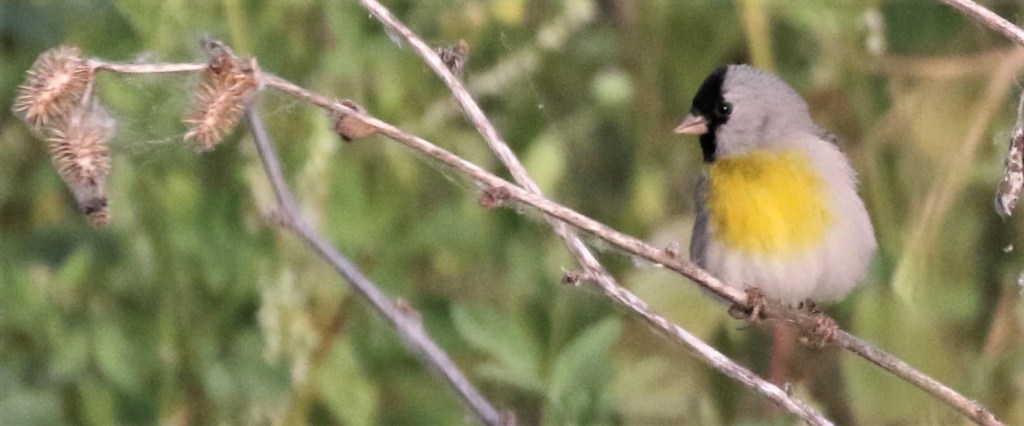
Lawrence’s Goldfinch
- Meaning of scientific name: Lawrence’s Goldfinch
- Other historic names:
- Names in other languages: Masked (Dutch, German), Gray (French, Norwegian), Gorgeous (Polish), Oak (Slovak), Black-faced (Spanish-Mexico), California (Swedish)
- My proposals: Fiddleneck Goldfinch, Golden-winged Goldfinch, Desert Goldfinch, Oasis Goldfinch
Smith’s Longspur
- Meaning of scientific name: Painted Longspur
- Other historic names: Painted Bunting
- Names in other languages: Pied (Dutch), Golden-bellied (German), Frenzied (Icelandic), Tundra (Norwegian, Swedish), Fawn (Polish), Painted (Slovak)
- My proposals: Painted Longspur
Botteri’s Sparrow
- Meaning of scientific name: Botteri’s Sparrow
- Other historic names:
- Meaning of subspecies names: Arizona, Texas, Mexican, Goldman’s, Petén, Van Tyne’s, Black-and-chestnut, Volcano
- Names in other languages: Stripe-backed (German), Straw (Icelandic), Prairie (Polish), Stubble/Grass (Slovak),
- My proposals: Sacaton Sparrow, Monsoon Sparrow
Cassin’s Sparrow
- Meaning of scientific name: Cassin’s Sparrow
- Other historic names:
- Names in other languages: Apache (Norwegian), Gray (Polish), Meadow (Slovak)
- My proposals: Skylarking Sparrow, Nomadic Sparrow, Plains Sparrow
Bachman’s Sparrow
- Meaning of scientific name: Summer Sparrow
- Other historic names: Pinewoods Sparrow (in field guides as recently as ~1950)
- Meaning of subspecies names: Bachman’s, Illinois
- Names in other languages: Pine (Dutch, French, German), Palmetto (Norwegian), Sharp-tailed (Polish)
- My proposals: Pinewoods Sparrow, Summer Sparrow
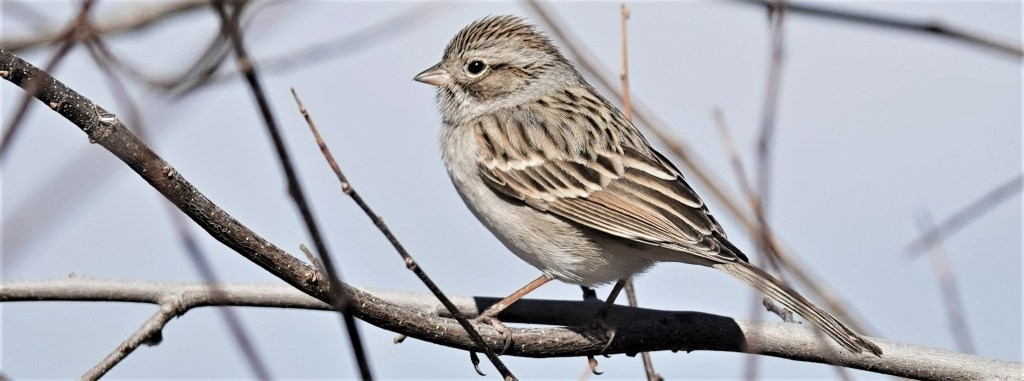
Brewer’s Sparrow
- Meaning of scientific name: Brewer’s Sparrow
- Other historic names: Pale Sparrow
- Meaning of subspecies names: Taverner’s (aka Timberline)
- Names in other languages: Pale (German), Shoshone (Norwegian), Bright-bellied (Polish), Sage (Shoshone)
- My proposals: Dawn Sparrow, Trilling Sparrow, Shoshone Sparrow
Harris’s Sparrow
- Meaning of scientific name: Mourning/Plaintive Sparrow
- Other historic names:
- Names in other languages: Black-crowned (Dutch), Eskimo (Finnish), Black-faced (French, Polish, Slovak), Spruce (Norwegian), Canada (Swedish)
- My proposals: Mourning Sparrow, Treeline Sparrow
Bell’s Sparrow
- Meaning of scientific name: Bell’s Sparrow
- Other historic names: Sage Sparrow when lumped with Sagebrush Sparrow
- Meaning of subspecies names: Gray/Hoary, San Clemente Island, Ashy
- Names in other languages: Sage (German), Chaparral (Norwegian), California (Spanish-Mexico)
- My proposals: Chaparral Sparrow
LeConte’s Sparrow
- Meaning of scientific name: LeConte’s Sparrow
- Other historic names:
- Names in other languages: Gray-eared (Norwegian), Striped Marsh (Polish), Meadow (Slovak)
- My proposals: Meadow Sparrow
Nelson’s Sparrow
- Meaning of scientific name: Nelson’s Sparrow
- Other historic names: Sharp-tailed Sparrow (when lumped with Saltmarsh Sparrow)
- Meaning of subspecies names: Other, Streak-bellied
- Names in other languages: Needle-tailed (Norwegian), Marsh (Polish), Wetland (Slovak)
- My proposals: Marsh Sparrow
Baird’s Sparrow
- Meaning of scientific name: Baird’s Sparrow
- Other historic names:
- Names in other languages: Dakota (Norwegian), Meadow (Polish), Solitary/Reclusive (Slovak), Prairie (Swedish)
- My proposals: Prairie Sparrow, Buffalo Sparrow, Dakota Sparrow
Henslow’s Sparrow
- Meaning of scientific name: Henslow’s Sparrow
- Other historic names:
- Meaning of subspecies names: Whispering
- Names in other languages: Red-winged Swamp (Polish), Weed (Slovak)
- My proposals: Tallgrass Sparrow
Lincoln’s Sparrow
- Meaning of scientific name: Lincoln’s Sparrow
- Other historic names: Forbush Sparrow
- Meaning of subspecies names: Slender/Elegant, High-dweller/Mountain
- Names in other languages: Streaked/Striped (Czech, Danish), Cane-browed (Haitian), Breast (Icelandic), Gray-browed (Norwegian), Gray-breasted Fawn (Polish), Migratory (Spanish-Venezuela)
- My proposals: Hedgerow Sparrow, Fawn Sparrow, Bog Sparrow
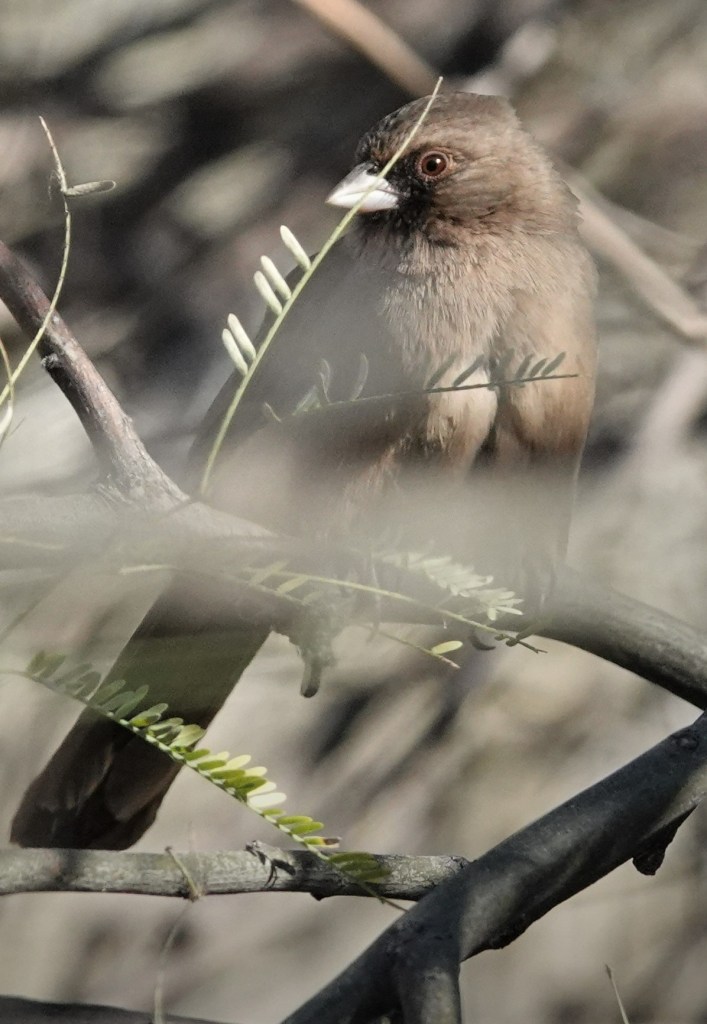
Abert’s Towhee
- Meaning of scientific name: Abert’s Towhee
- Other historic names:
- Meaning of subspecies names: Thicket, Vorhies’s
- Names in other languages: Black-chinned (Dutch, German), Masked (Norwegian, Spanish-Mexico), Black-faced (Polish, Slovak), Arizona (Swedish)
- My proposals: Mesquite Towhee, Bosque Towhee, Masked Towhee
Bullock’s Oriole
- Meaning of scientific name: Bullock’s Oriole
- Other historic names: Northern (when lumped with Baltimore), Western Oriole
- Meaning of subspecies names: Short
- Names in other languages: Turnip (Icelandic), Golden-browed (Norwegian), Orange-browed (Spanish-Mexico), White-winged (Slovak)
- My proposals: Cottonwood Oriole, Sycamore Oriole
Audubon’s Oriole
- Meaning of scientific name: Step-tailed Oriole
- Other historic names: Black-headed Oriole
- Meaning of subspecies names: Audubon’s, Nayarit, Dickey’s
- Names in other languages: Black-headed (Dutch, German, Polish, Slovak), Citrine/Lemon (Norwegian), Black-hooded (Spanish-Mexico),
- My proposals: Citrine Oriole
Scott’s Oriole
- Meaning of scientific name: Paris’s Oriole
- Other historic names:
- Names in other languages: Gold-green (French), California (German), Yucca (Norwegian), Prickly Pear (Spanish-Mexico), Black-headed (Slovak)
- My proposals: Yucca Oriole
Brewer’s Blackbird
- Meaning of scientific name: Blue/Purple-headed Blackbird
- Other historic names: Satin Bird, Glossy Blackbird, Western Blackbird
- Names in other languages: Field (Finnish), Purple (German, Polish, Slovak), Smooth/Satin (Icelandic), Purple-headed (Norwegian), Yellow-eyed (Spanish-Mexico), Prairie (Swedish)
- My proposals: Field Blackbird, Vigilant Blackbird
Swainson’s Warbler
- Meaning of scientific name: Swainson’s Warbler
- Other historic names:
- Names in other languages: Sharp-beaked (Haitian), Cane (Icelandic, Polish), Brown (Norwegian), Long-billed (Slovak), Brown-capped (Spanish-Mexico), Plain (Spanish-Venezuela)
- My proposals: Cane Warbler, Palmetto Warbler, Bayou Warbler
Lucy’s Warbler
- Meaning of scientific name: Lucy’s Warbler
- Other historic names: Mesquite Warbler, Desert Warbler
- Names in other languages: Red/Rufous-rumped (German, Spanish-Mexico, Swedish), Plain (Icelandic), Mesquite (Norwegian), Rusty (Polish), Little (Slovak)
- My proposals: Mesquite Warbler
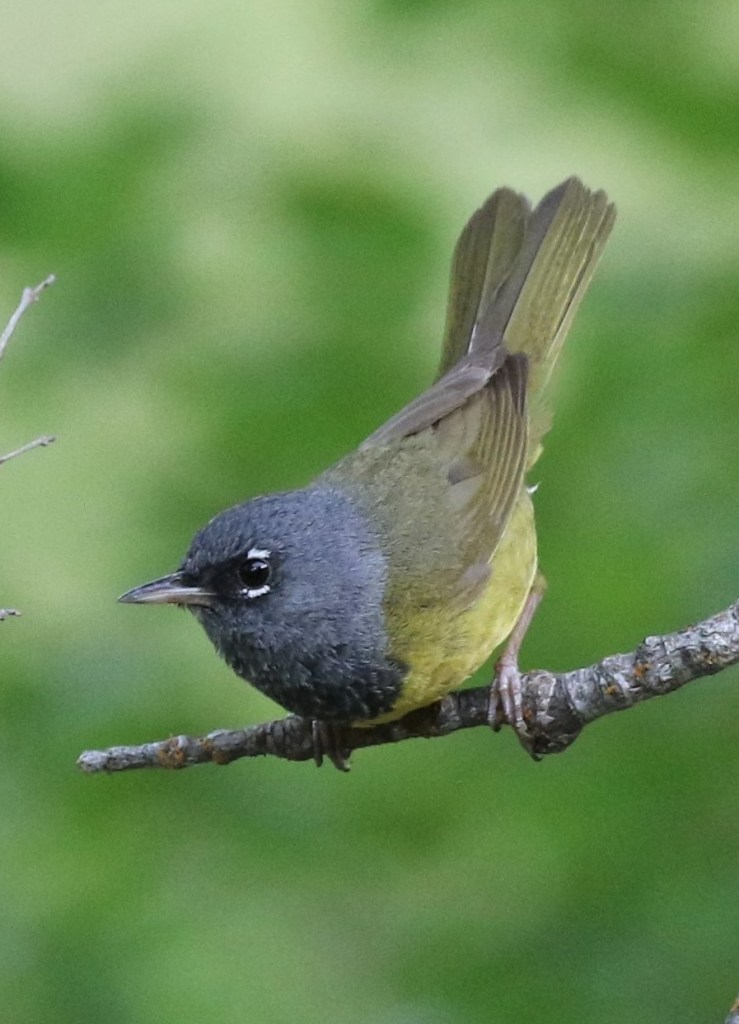
Virginia’s Warbler
- Meaning of scientific name: Virginia’s Warbler
- Other historic names:
- Names in other languages: Yellow-vented (German), Pine (Norwegian), Ravine (Slovak)
- My proposals: Juniper Warbler
MacGillivray’s Warbler
- Meaning of scientific name: Tolmie’s Warbler
- Other historic names: Tolmie’s Warbler
- Names in other languages: Mourning (Dutch), Bush/Shrub (French), Thicket/Copse (German, Norwegian), Earth/Soil (Icelandic), Lemon (Polish), Scrub (Slovak), Tolmie’s (Spanish), Black-lored (Spanish-Mexico), Gray-headed (Swedish)
- My proposals: Thicket Warbler, Riparian Warbler, Riverine Warbler, Brook Warbler
Kirtland’s Warbler
- Meaning of scientific name: Kirtland’s Warbler
- Other historic names:
- Names in other languages: Michigan (German), Firefield (Norwegian), Spotted (Slovak)
- My proposals: Jack Pine Warbler, Wildfire Warbler
Blackburnian Warbler
- Meaning of scientific name: Dusky or Dark Warbler
- Other historic names:
- Names in other languages: Hemlock (Czech, Norwegian), Fire (Danish, Spanish-Puerto Rico), Spruce (Dutch, German), Orange-throated (French, Spanish), Little Flamboyant (Haitian), Orange-crowned (Hungarian), Glossy/Glowing (Icelandic), Red-breasted (Lithuanian), Red Forest (Polish), Firecracker (Portuguese), Orange-streaked (Swedish)
- My proposals: Flamboyant Warbler, Flame-faced Warbler
Grace’s Warbler
- Meaning of scientific name: Grace’s Warbler
- Other historic names:
- Meaning of subspecies names: Yaeger’s, Remote, Beautiful
- Names in other languages: Arizona (German), Ponderosa (Norwegian), Yellow-throated (Polish), Yellow-breasted (Slovak), Yellow-browed (Spanish-Mexico), Gray-headed (Swedish)
- My proposals: Yellow-fronted Warbler, Pine-oak Warbler
Townsend’s Warbler
- Meaning of scientific name: Townsend’s Warbler
- Other historic names:
- Names in other languages: Tree (Icelandic), Spruce (Norwegian), Black Forest (Polish)
- My proposals: Evergreen Warbler

Wilson’s Warbler
- Meaning of scientific name: Little or Tiny Warbler
- Other historic names: Pileolated Warbler, Black-capped Yellow Warbler, Green Black-cap Warbler, Green Black-capped Flycatcher
- Meaning of subspecies names: Pileolated, Golden
- Names in other languages: Black-crowned (Swedish, Spanish-Mexico), Black-capped (Portugese)
- My proposals: Brilliant Warbler, Dancing Warbler, Chrysanthemum Warbler
My other blog posts about bird names for birds:
Honorific bird names facts and figures
Reflections of a Native birder: The one Indian killer bird name I really have trouble with