What you can do for birds in your yard

Orange-crowned Warbler in flight
Orange-crowned Warbler in my yard.

There are a lot of opportunities to benefit the birds in your neighborhood. Here are some basic principles, focusing on habitat, bird feeders, and bird houses and nesting. I focus on the Pacific Northwest, but this can be generally applied elsewhere.

Habitat
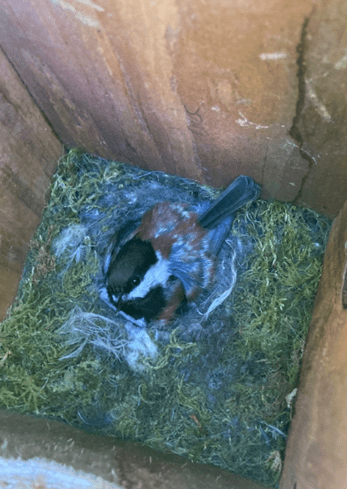
Chestnut-backed Chickadee on eggs in a nest box
Chestnut-backed Chickadee on eggs in a nest box in my yard.

Plant native trees! Chickadee parents need 6,000 moth caterpillars to raise a nest of chicks. They only get them from native trees – mostly alders, willows, birch, and bitter cherry. All this said, most non-native plants at least offer cover (e.g. Himalayan blackberries) and some offer berries that birds like (e.g. cotoneaster, mountain ash). Birds Connect Seattle offers some great guidance regarding planting for birds.

Be careful mowing, weeding, and doing yardwork April thru July. There may be towhees, juncos, and Song Sparrows nesting on the ground. I nearly decapitated baby towhees once. They were in a little clump of grass I let grow because my push mower couldn’t get there. Then one day I got out the weed whacker. I hear similar stories from people every year. They were pruning, mowing, clearing brush, moving a wood pile (with a wren nest) etc. and came upon an active nest.
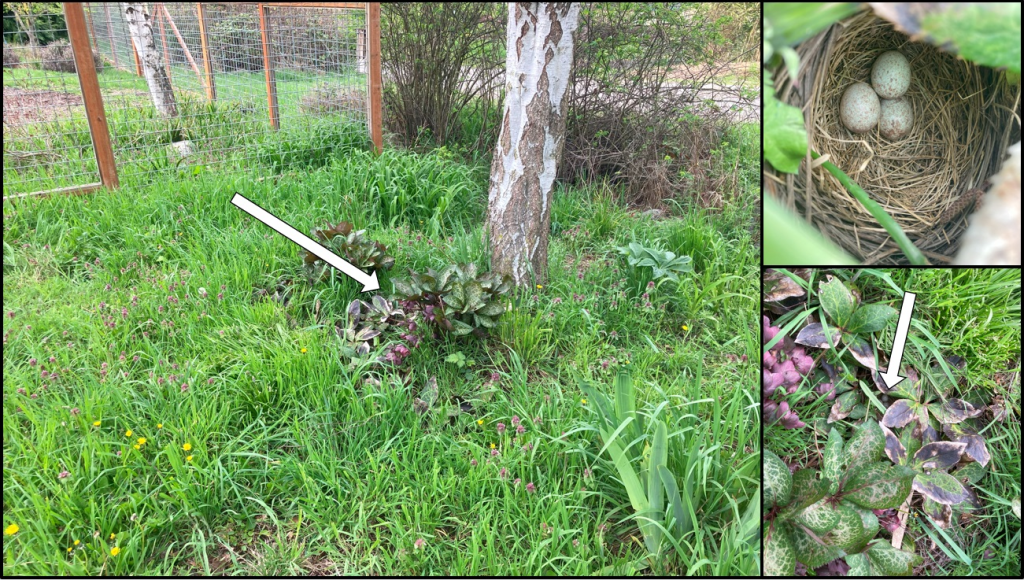
Spotted Towhee nest in high grass and shrubs
A Spotted Towhee nest in a section of the yard I decided to just let go. They later nested in some weeds next to a garden box.

Better yet, leave some unkempt corners of your yard. The birds will use it. Some species even like being near human traffic – it protects them from other predators. Just don’t become an accidental predator! Usually the birds will let you know you are too close by constant calling.

Bird Feeding

Bird feeding is a great way to connect with birds and get to know them. I feed birds, especially in winter. But there are some do’s and don’ts.

First, try to avoid feeding House Sparrows, European Starlings, Brown-headed Cowbirds, and large numbers of corvids (e.g. jays and crows). The first two are invasive and introduced, and are widely known to displace native cavity-nesting birds, such as chickadees, wrens, nuthatches, and swallows. Cowbirds are native to the Great Plains, but invasive in the PNW. Their numbers are artificially augmented by human habitat destruction. They are known to displace a wide variety of native birds.

Finally, those colorful jays and clever crows are fierce nest predators, especially of cup nesters, such as robins, goldfinches, warblers, flycatchers, vireos, tanagers, and grosbeaks. Studies show that, where jays and crows are fed – and they are especially attracted to peanuts – other cup-nesting birds struggle to reproduce. In one study, the neighborhood robins suffered 99% nest failure where corvids were fed. I have a post focused on this: The maddening truth: Feeding crows and jays harms other birds. PLEASE DO NOT OFFER PEANUTS.

To avoid these undesirable outcomes, I never use peanuts and I only put out seed in winter – September thru March, when the junco horde and Golden-crowned Sparrows are here. I also avoid suet with peanuts. In summer, I restrict my bird feeding to just the hummingbird feeders and maybe some suet (though that can attract starlings).

The highlight of my yard birding, however, is not the feeders — it’s my little fountain and pond. It runs year-round and attracts all the feeder birds, plus migrating insectivores: kinglets, warblers, vireos, tanagers, and thrushes. I created a post on how to create a great water feature for less than $100: My backyard fountain and the birds that come to it.

MacGillivray's Warbler and an Orange-crowned Warbler at my little fountain pond
A MacGillivray’s Warbler and an Orange-crowned Warbler at my little fountain pond.

Bird feeding concentrates birds, especially in winter. This can spread avian diseases. Common indicators of disease in the PNW are a House Finch with a growth around its eye or a siskin you can walk up to and pick up. If you see these things, take down your feeders immediately and wait at least two weeks.

Another potential concern with bird feeding is window strikes. The most important thing is feeder location. If goldfinches are hitting your window, the feeder is too close. Much has been written about how to address this problem, so I won’t go into it here. Hawk decals and plastic owls don’t work. The little dots apparently do. Here’s what I did when I had this problem at my previous home – mylar ribbons.

Bird houses

In the PNW, bird houses will be used by the cavity-nesting birds I mentioned above: chickadees, wrens, nuthatches, and swallows. Again, there are some do’s and don’ts.

Nest box close up
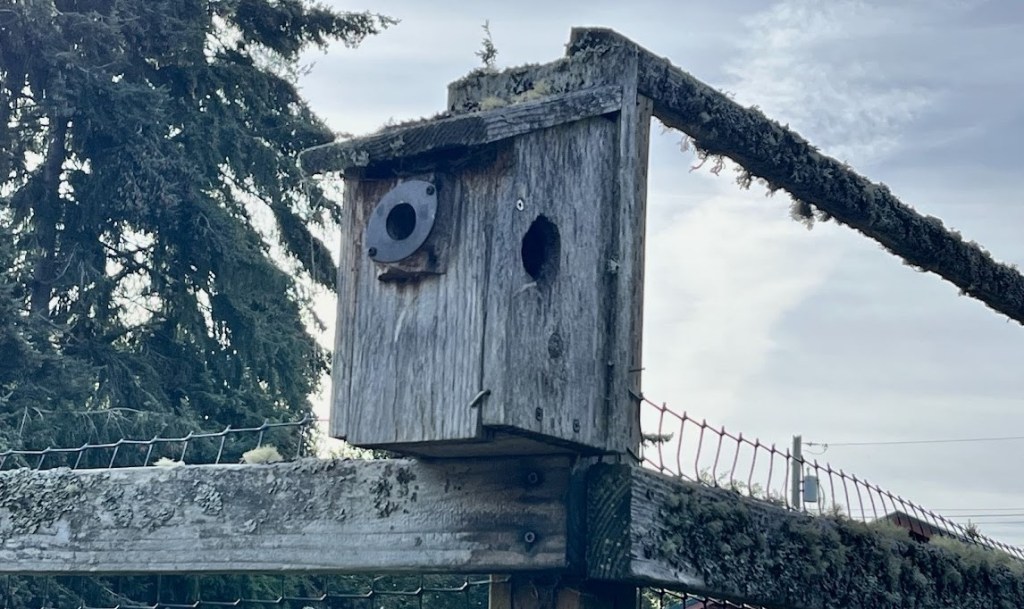
Photo from the Olympic Peninsula Audubon Society. The hole can be an oval, a diamond, or some other shape – just never more than 7/8″ tall. The extra wood for the hole cover prevents birds from enlarging the hole.

First, nest hole size and design is critical. Way too many backyard bird houses inadvertently raise House Sparrows, causing more harm than good to the local bird community. That’s because the entrance holes are too big. A hole more than 1 1/8″ in diameter is too big. These House Sparrows then go on to kill the eggs, babies, and even adults of native birds. PLEASE DO NOT RAISE HOUSE SPARROWS. Monitor the box and remove House Sparrow nests if you see them forming (theirs are real messy, with dry straw sticking every which way).
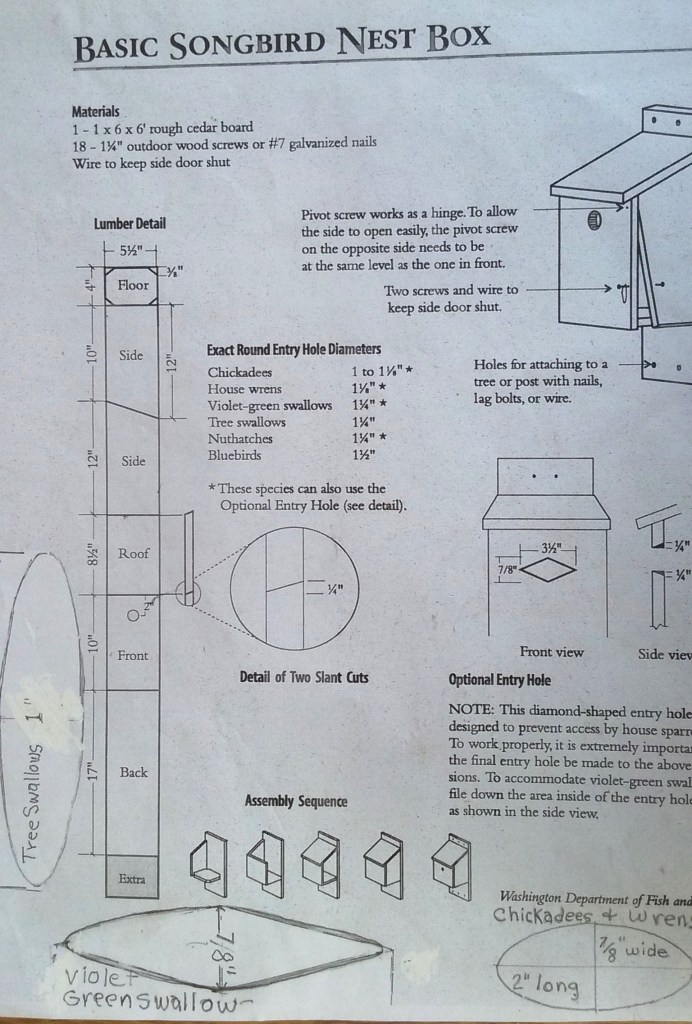
Nest box diagram from WDFW
Washington Department of Fish and Wildlife offers this helpful diagram. This will exclude House Sparrows.

It is highly recommended to put nest boxes in shade, especially afternoon shade, to protect it from heat. Heat waves kill chicks. For swallows, they like open areas, so sometimes shade is not available. In that case, you can put heat shields on the boxes. See Mel Hafting’s post here about that (scroll down below the Purple Martin section).

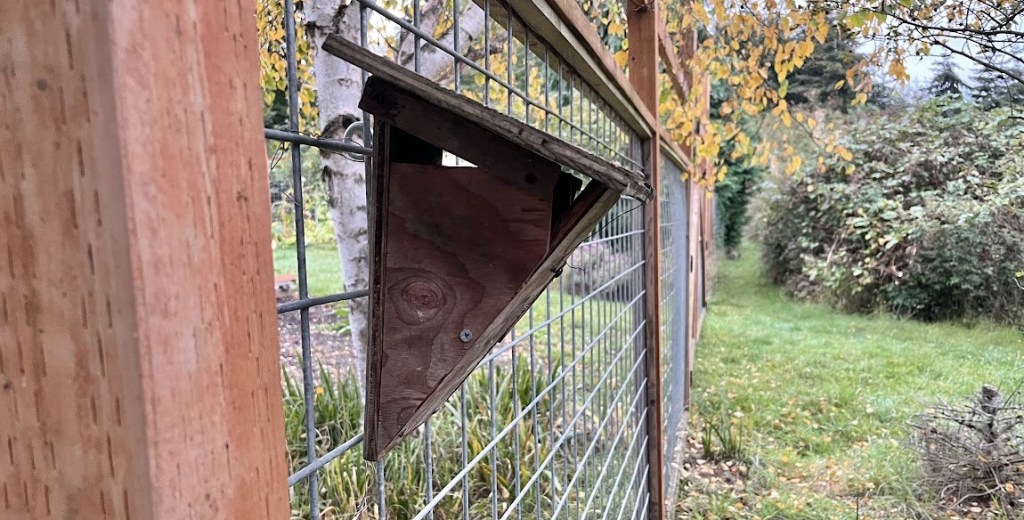
My nest box #1.
One of my five boxes. I take down my boxes and clean them out each fall, and then put them back up. If they weren’t used, I move the location a bit. Birds will begin scouting for nesting sites as early as March.
My triangle shaped wren box.
I made this box after seeing boxes for Lucy’s Warblers in Arizona. I thought wrens might use it. Sure enough, Bewick’s Wrens love it. The first year, the gaps where they enter were too big, and they were parasitized by a cowbird. (The female cowbird kept an eye on the nest for weeks!) This year I made the entrances smaller, and the wrens fledged four chicks.
This box (not mine) has not been maintained. They put up a hole reducer, presumably to discourage House Sparrows, but woodpeckers have created a new hole on the side of the box. House Sparrows nested there this year.
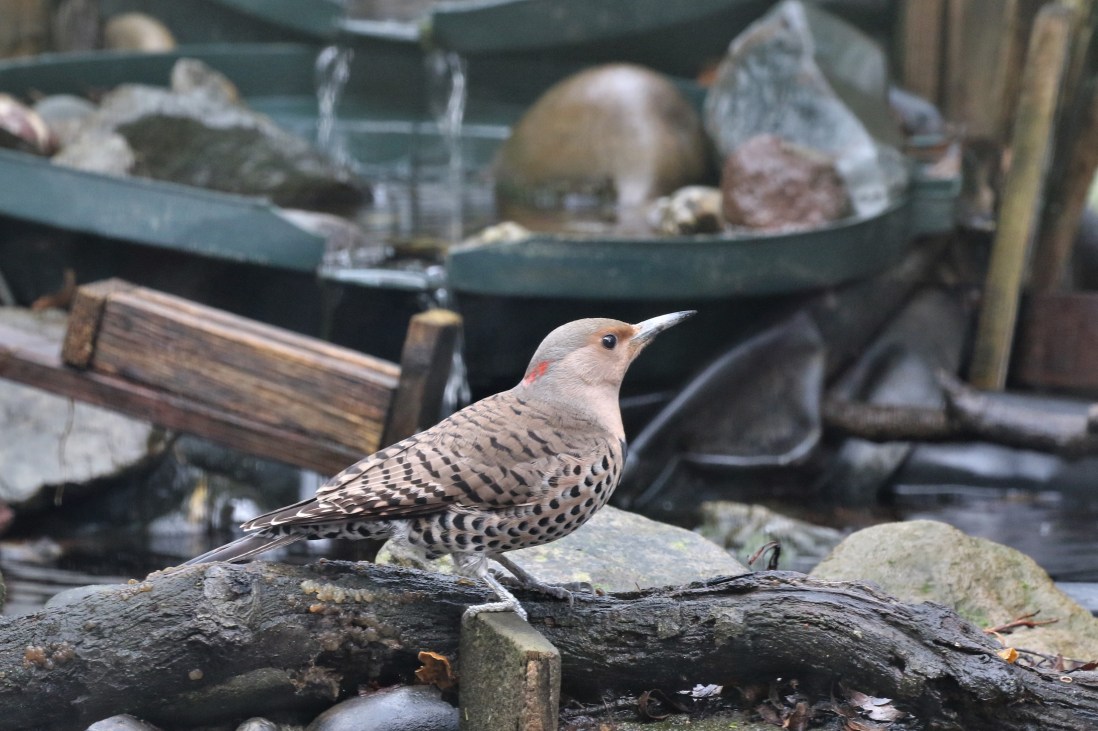
This intergrade Yellow-shafted x Red-shafted Northern Flicker spent two winters coming to my suet.

If you have questions, put them in the comments below and I’ll answer.

My backyard fountain and the birds that come to it

I’ve been asked quite a lot about my fountain and pond (in Davis, California) and why it is so successful in attracting birds. Here are some, I think, key elements:

  • The first is the sound of falling water. Birds hear this and come to investigate. The pond is rather simple. It all begins with an amoeba-shaped pre-fabbed pond liner, about 18″ deep. A small electric pump and hose carries the water about 3 feet up, where I feed the hose through a knot-hole in a piece of wood. From there, it falls into a plastic garbage can lid, and then pours thru a small cut into another garbage can lid, and finally into the pond itself. Each fall creates more trickling sound. I’ve put a flexible pond liner under the “waterfall” so that any water that wicks under the garbage can lids still ends up in the pond. The two lid pools are 1-2″ deep for bathing. Finally, all this stuff is covered up with rocks and driftwood.
  • Second, it’s all about context. The pond is essentially in a green grotto with lots of vertical structure above it, meaning that birds can come into a high tree, descend to a medium tree, and descend again to a shrub near the fountain, and then finally into one of the pools.  They do serious recon about where they drink and bathe; an individual often takes several minutes to come in. I think the horizontal structure — what’s 15′ away from the pond, matters less than what’s above it; they come down from above.
  • At the same time, they need some visibility and escape corridors in case a cat or Cooper’s Hawk comes. I’ve trimmed all the bushes around it 18″ off the ground so any stalking cat will be clearly visible. A Cooper’s Hawk is largely thwarted by all the vegetation.

With all this cover, the pond is mostly in the shade. That’s good for controlling algae growth, but bad for taking photos. But in my experience a birdbath out in the open sun attracts only a few species. I have installed a couple iPhone holders so I can do some live video feeds (e.g. Facebook Live) of the birds coming in. I’ve also situated the pond so I get a clear view from my kitchen table, from right here as I type this on my laptop. My binoculars and camera are beside me in case anything interesting comes in.

UPDATE: I moved to Port Townsend, Washington, and quickly built another pond. It has been just as successful. Here’s a pic of it: 

My pond in Port Townsend, Washington

For this one, I use a plastic rectangular cement batch mixing basin as the bottom receiving pool. I built this whole pond for less than $75. Here are the basic blueprints for my ponds:

blueprint

Finally, there is the issue of my house in Davis, which has windows that birds sometimes fly into. See this post about how to prevent birds from flying into your windows. 

I’ve recorded over 40 species using the pond in Davis. Here are some of them.

0V2A5983.JPG
Wilson’s Warblers
0V2A2400.JPG
Audubon’s Yellow-rumped Warblers
0V2A0971.JPG
Myrtle Yellow-rumped Warbler
0V2A5966.JPG
Nashville Warbler with a Western Tanager
0V2A5998.JPG
MacGillivray’s Warbler
0V2A0139.JPG
Black-throated Gray Warbler
0V2A9007.JPG
Yellow Warbler
0V2A8996.JPG
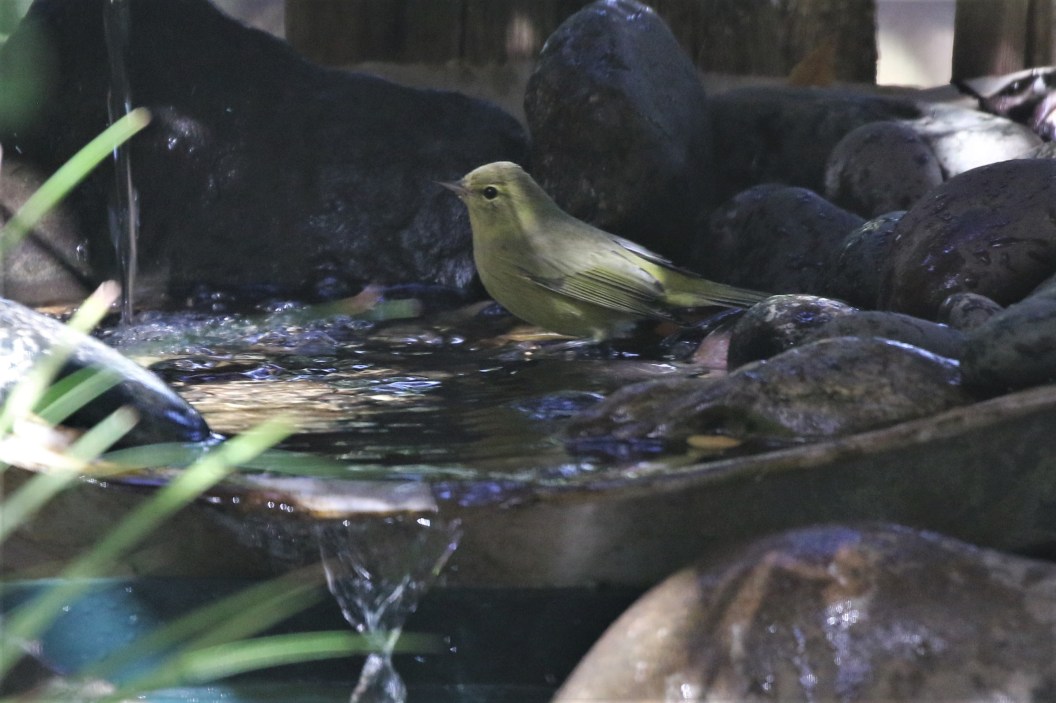
Orange-crowned Warbler
0V2A9335.JPG
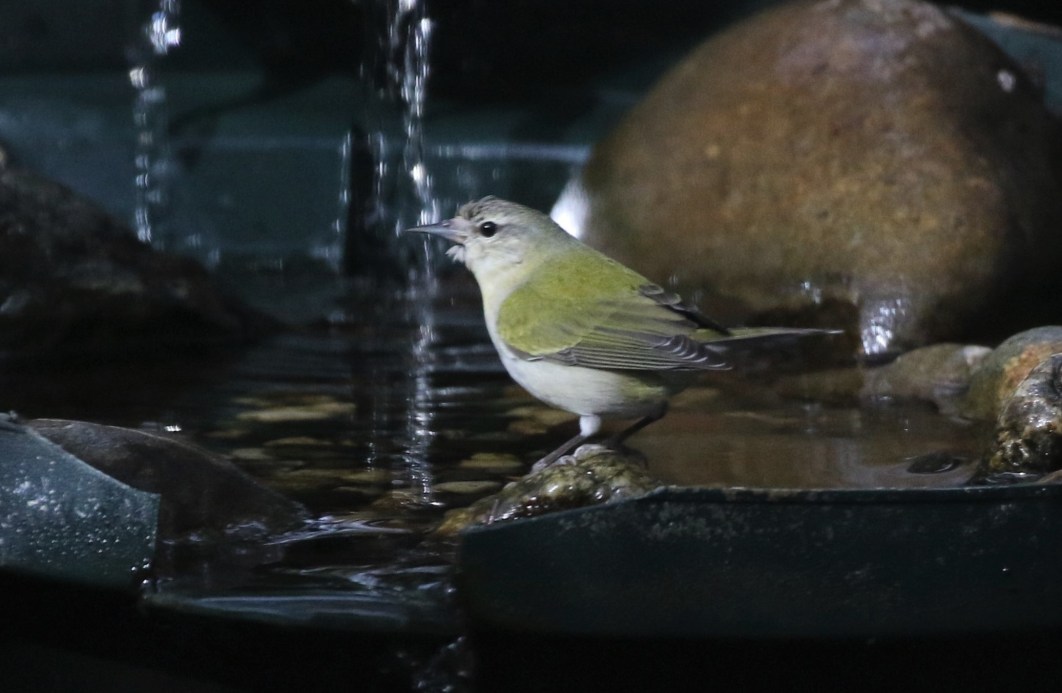
Tennessee Warbler– this bird appeared while I was working from home on a conference call. Needless to say, I managed a photo.
0V2A2602.JPG
Western Tanager
0V2A5898.JPG
Black-headed Grosbeak with Wilson’s Warbler
0V2A0100.JPG
Varied Thrush
0V2A0521.JPG
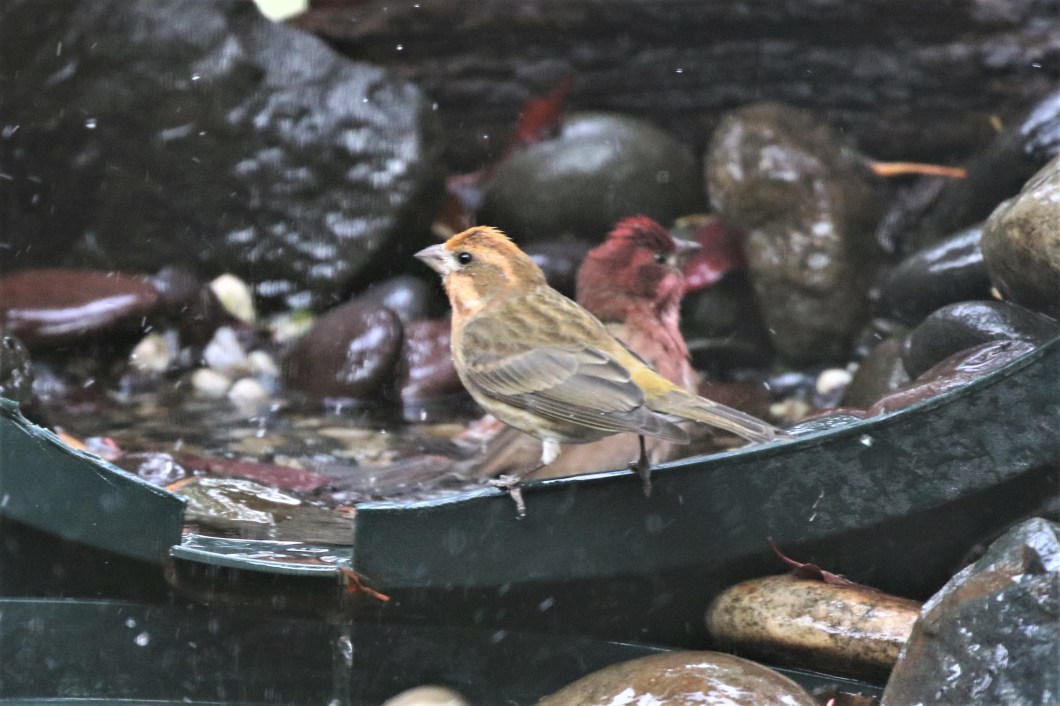
An unusual strawberry blond Purple Finch in front of a regular one
IMG_6544.JPG
Hooded Oriole
0V2A9147.JPG
A White-crowned Sparrow defends a bathing spot from a Western Tanager
0V2A9763.JPG
Hermit Thrush, typically the last visitor of any winter evening
0V2A8748.JPG
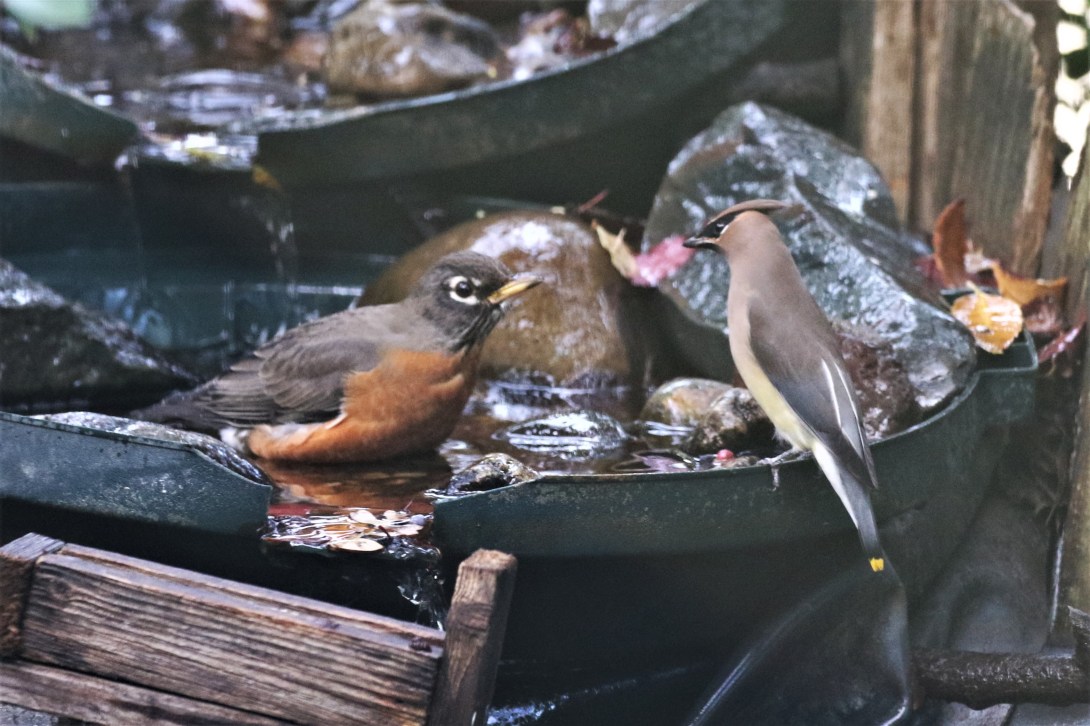
American Robin and Cedar Waxwing
0V2A9747.JPG
intergrade Northern Flicker
0V2A6675.JPG
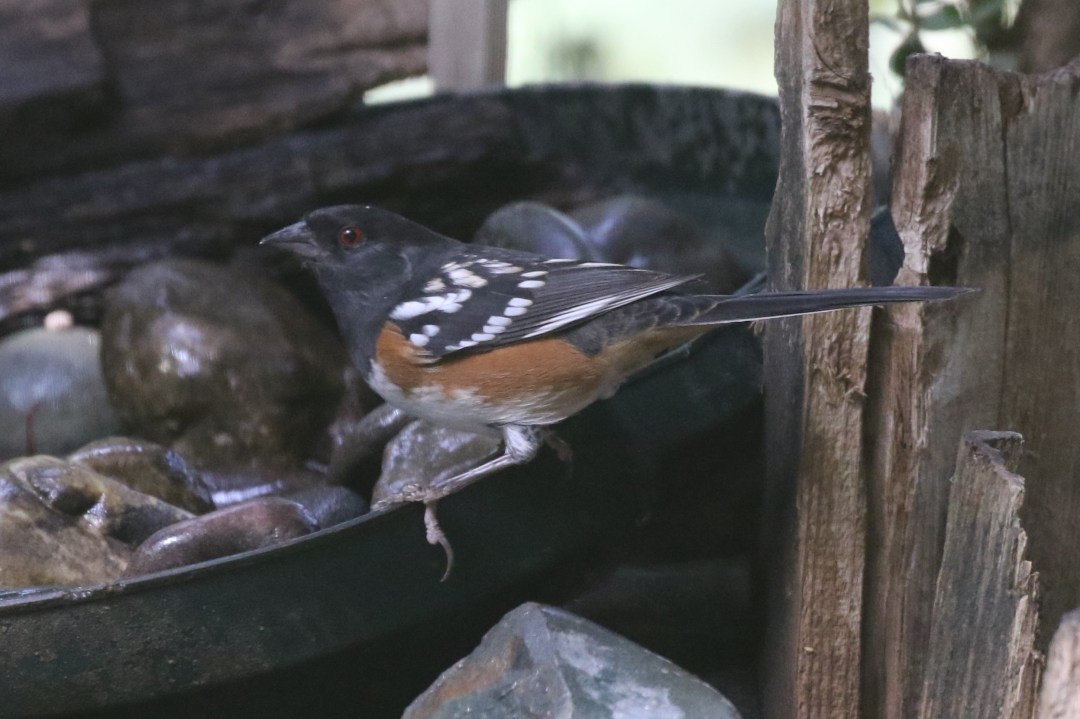
Spotted Towhee
0V2A0127.JPG
Slate-colored Junco
0V2A9756.JPG
Sooty Fox Sparrow in front of a Yellow-rumped Warbler
0V2A5880.JPG
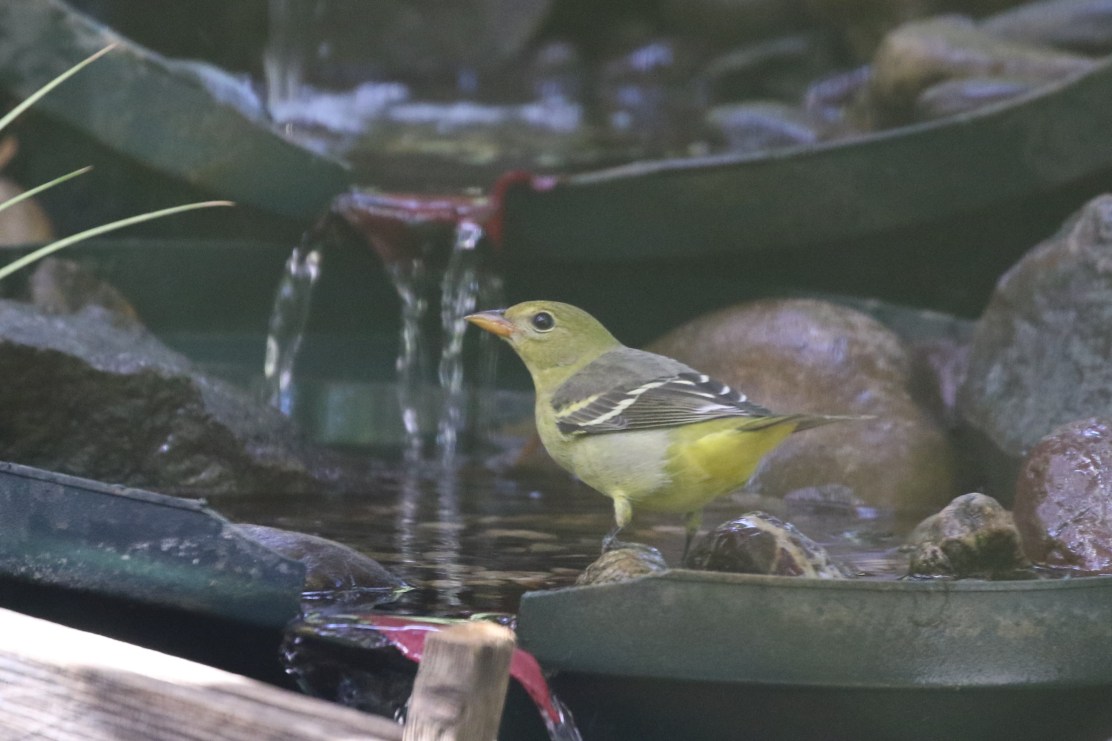
One more Western Tanager

Not shown: Anna’s Hummingbird, Wild Turkey, Willow Flycatcher, Pacific-slope Flycatcher, California Scrub-Jay, Warbling Vireo, Cassin’s Vireo, Northern Mockingbird, Red-breasted Nuthatch, Ruby-crowned Kinglet, Bushtit, Townsend’s Warbler, Hermit Warbler, House Finch, Cassin’s Finch, American Goldfinch, Lesser Goldfinch, Pine Siskin, California Towhee, Golden-crowned Sparrow, Lincoln’s Sparrow, Song Sparrow, House Sparrow… and probably some others.